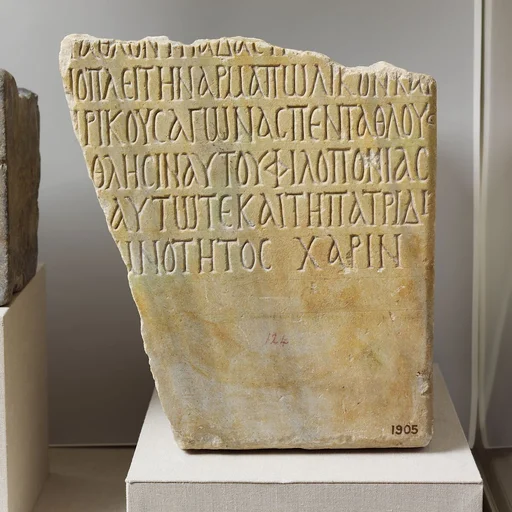
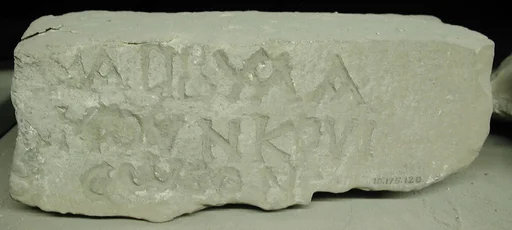
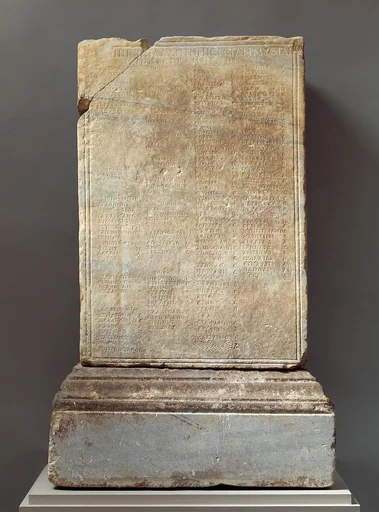
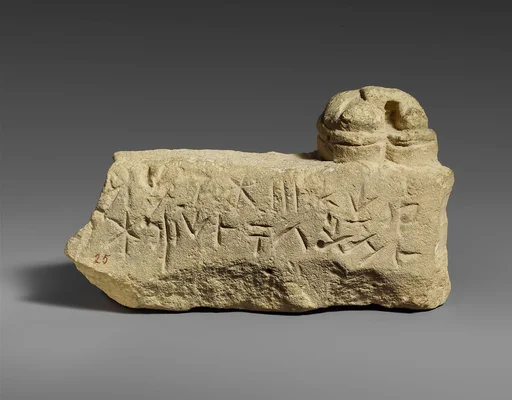
Front of a limestone block from the stepped base of a funerary monument
Phaidimos
mid-6th century BCE · Limestone · Greek and Roman Art
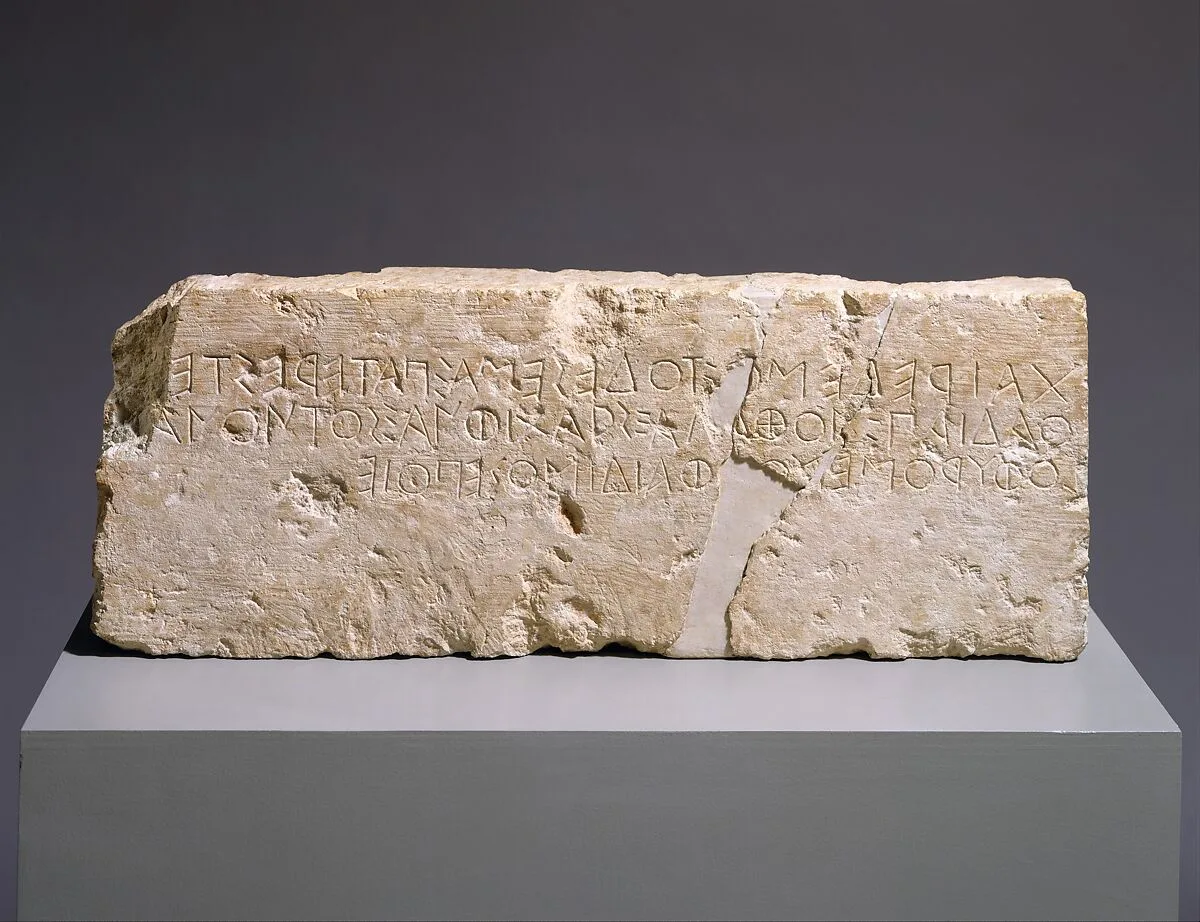
Inscribed: on the death of Chairedemos his father Amphichares set up this monument mourning a good son. Phaidimos made it. The epitaph consists of two lines of poetry in the special form (dactylic hexameter) that was used at this time to express grief over a death. It is followed by the name of the sculptor, Phaidimos, who is known from two other inscriptions found in Attica. These lines are inscribed to read alternately from right to left and left to right. The Phoenicians, from whom the Greeks derived the alphabet, wrote from right to left. The Greeks soon found that writing from left to right was more convenient, but, until the end of the sixth century B.C., lines of inscriptions were sometimes carved in alternating directions. This method of writing was called boustrophedon (ox-turning) because it turns at the end of each line, as the ox turns with the plow at the end of each furrow.
- Artist
- Phaidimos
- Date
- mid-6th century BCE
- Medium
- Limestone
- Culture
- Greek, Attic
- Department
- Greek and Roman Art
- Credit line
- Rogers Fund, 1916