Terracotta neck-amphora
Unknown
4th quarter of the 8th century BCE · Terracotta · Greek and Roman Art
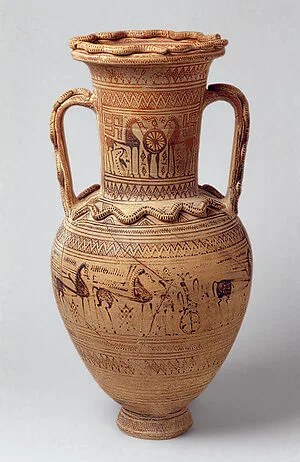
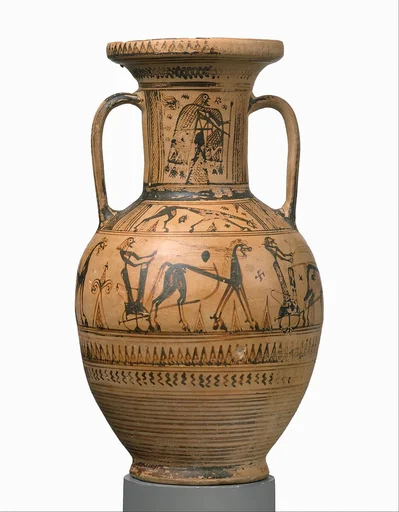
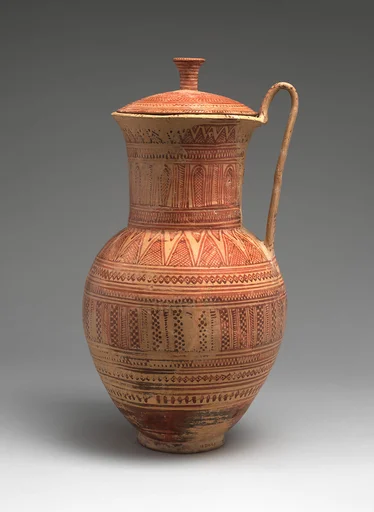
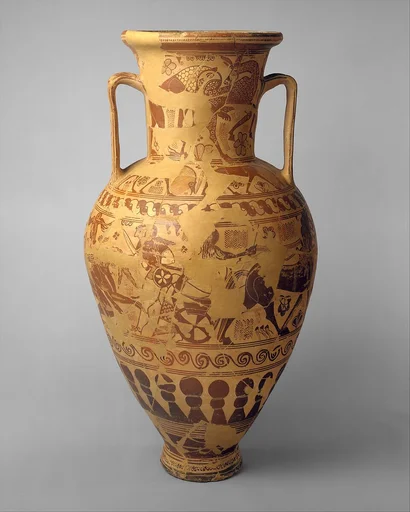
The iconography of this vase is emphatically martial. On the neck, a warrior appears between two horses; on the body is a procession of chariots. Armed warriors, chariots, and horses are the most familiar iconography of the Geometric period. Whether these images reflect a real world of military threat and conflict, or refer to the heroic deeds of ancestors, is a longstanding debate in studies of Geometric art.The painted decoration is enhanced by snakes added in clay. Snakes are traditionally associated with death because they can burrow under the ground and periodically shed their skin, a sign of renewal. This neck-amphora belongs to a group of eight terracotta vases (10.210.1-.8) that are said to be from Athens. Despite the absence of archaeological record, they were probably found together in a tomb. Such groups are well attested in excavated burials. Moreover, the iconography of the two neck-amphorae, particularly the one with the mourning women on the neck, is appropriate for a funerary purpose. The group displays stylistic changes that occurred from about 730-700 BCE, a time of artistic innovation that resulted in the end of the formal precision of the Geometric style and the rise of the exuberant Protoattic style.
- Artist
- Unknown
- Date
- 4th quarter of the 8th century BCE
- Medium
- Terracotta
- Culture
- Greek, Attic
- Department
- Greek and Roman Art
- Credit line
- Rogers Fund, 1910