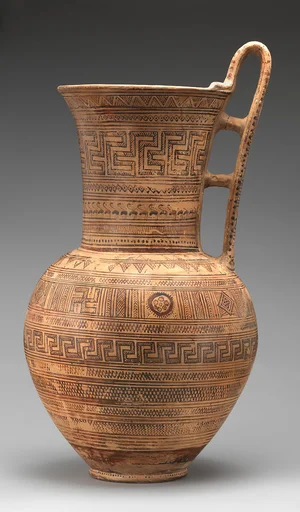
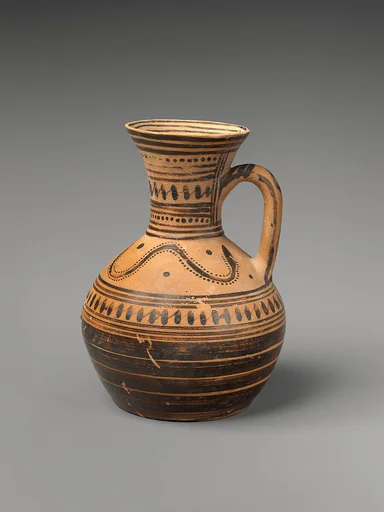
Terracotta oinochoe (jug) with lid
Unknown
4th quarter of the 8th century BCE · Terracotta · Greek and Roman Art
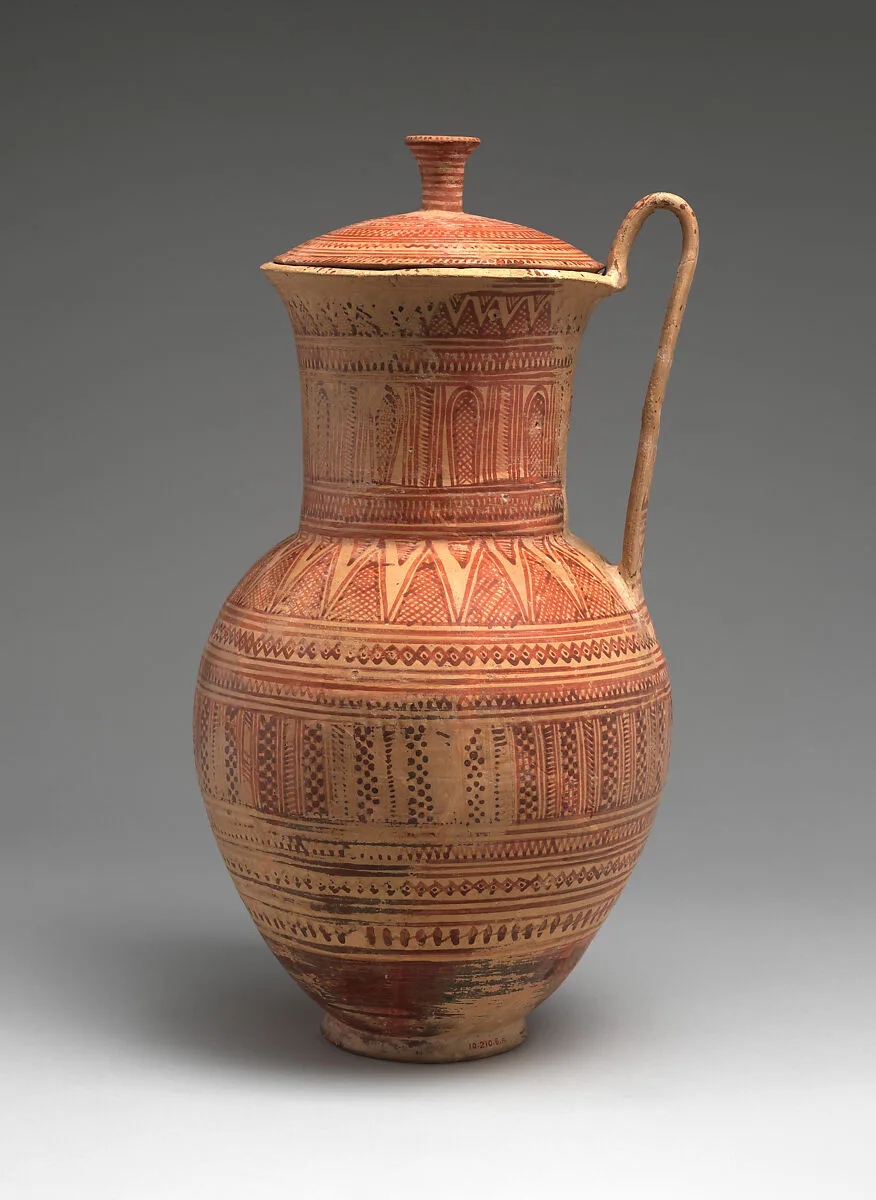
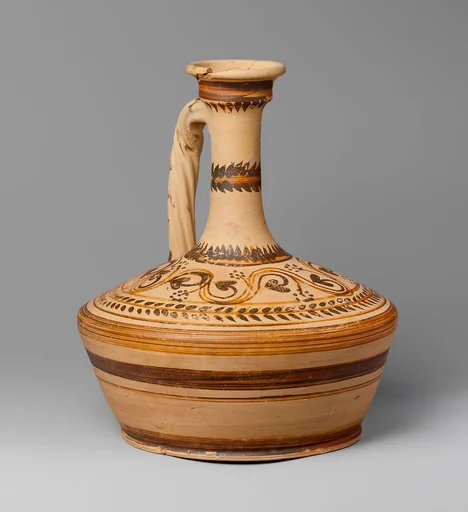
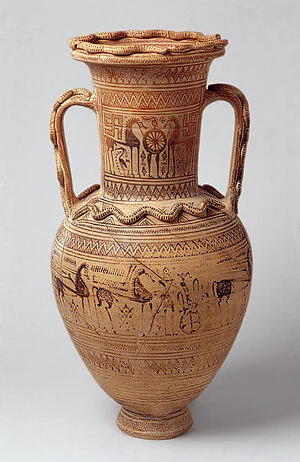
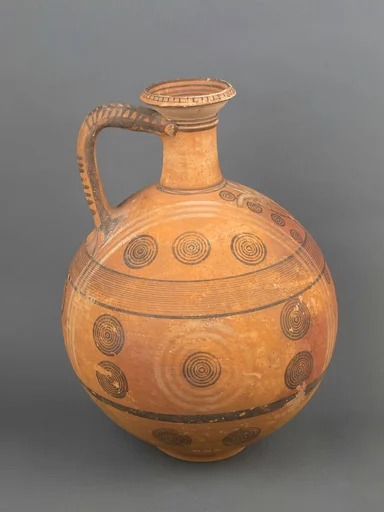
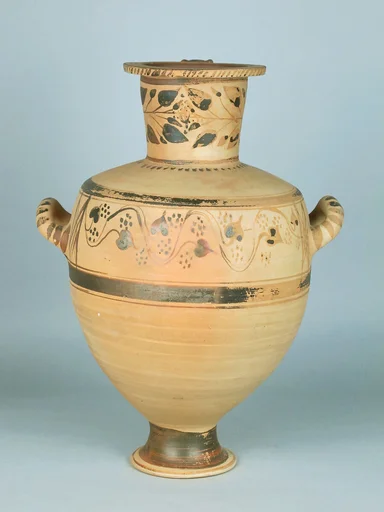
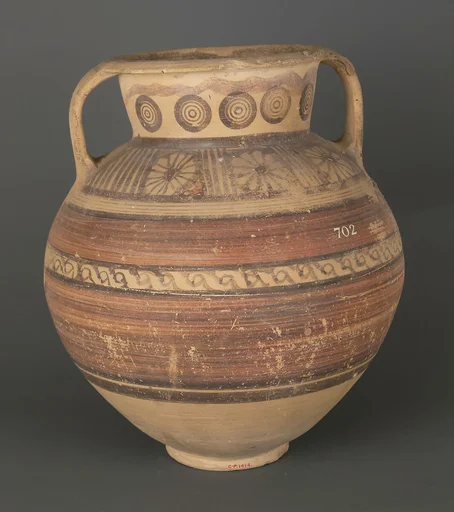
The large pitcher (jug) belongs to a group of eight terracotta vases (10.210.1-.8) that are said to be from Athens. Despite the absence of archaeological record, they were probably found together in a tomb. Such groups are well attested in excavated burials. Moreover, the iconography of the two neck-amphorae, particularly the one with the mourning women on the neck, is appropriate for a funerary purpose. The group displays stylistic changes that occurred from about 730-700 BCE, a time of artistic innovation that resulted in the end of the formal precision of the Geometric style and the rise of the exuberant Protoattic style. The pitcher is one of the earliest pieces of the group, as indicated by its strictly geometric painted decoration. Characterized by a globular belly, a gracefully curved high neck and a single vertical handle, monumental pitchers were a new shape of the Late Geometric style in Athens. It was the main shape produced by the so-called Workshop of Athens 706, to which this piece is attributed.
- Artist
- Unknown
- Date
- 4th quarter of the 8th century BCE
- Medium
- Terracotta
- Culture
- Greek, Attic
- Department
- Greek and Roman Art
- Credit line
- Rogers Fund, 1910