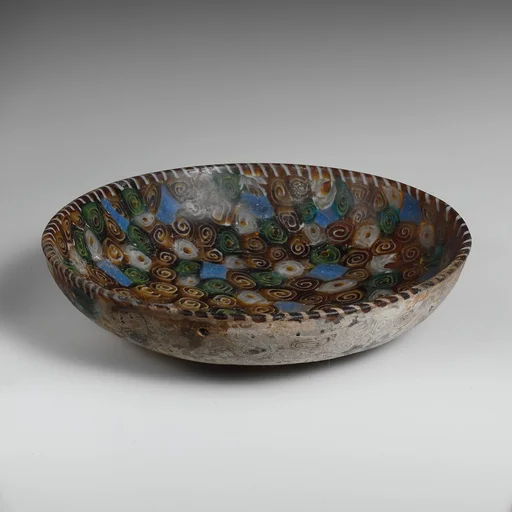
Glass mosaic dish
Unknown
2nd–mid-1st century BCE · Glass · Greek and Roman Art
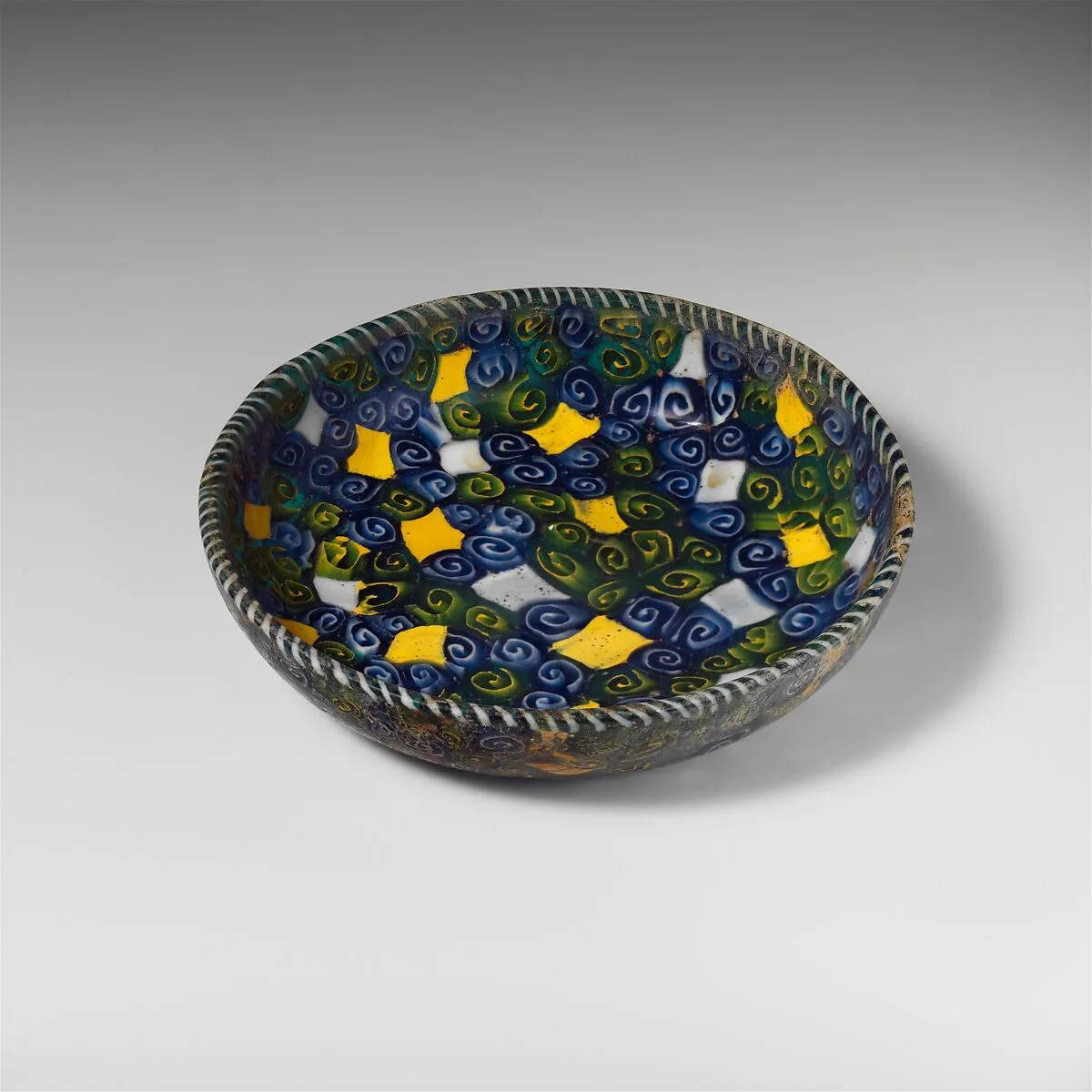
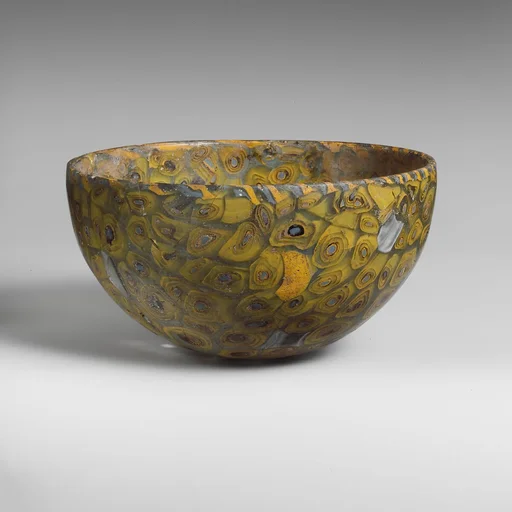
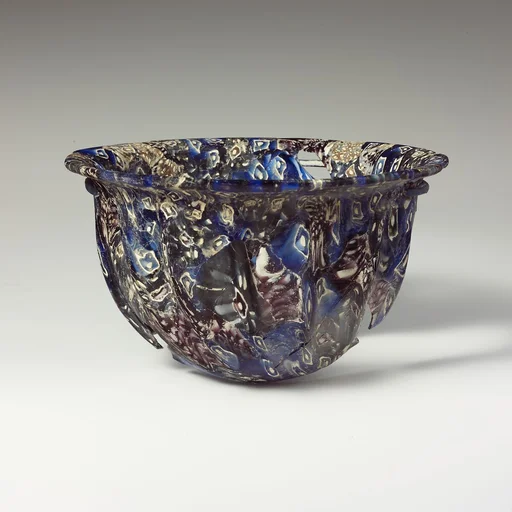
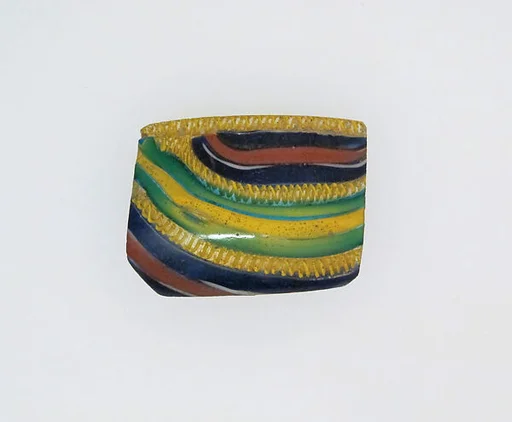
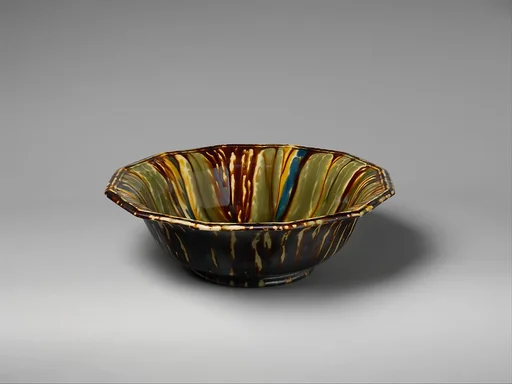
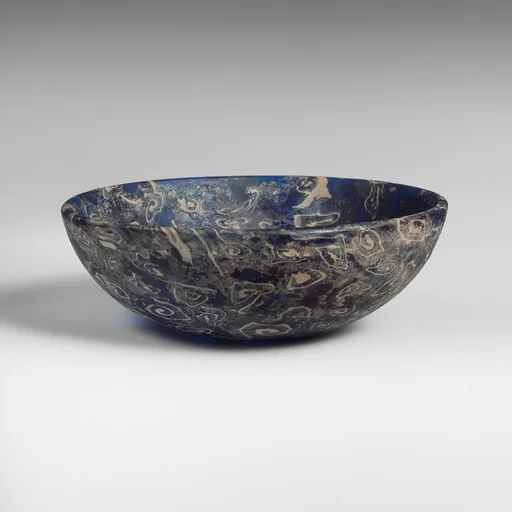
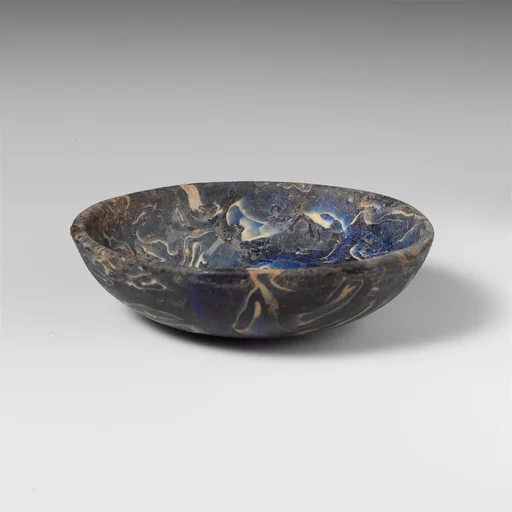
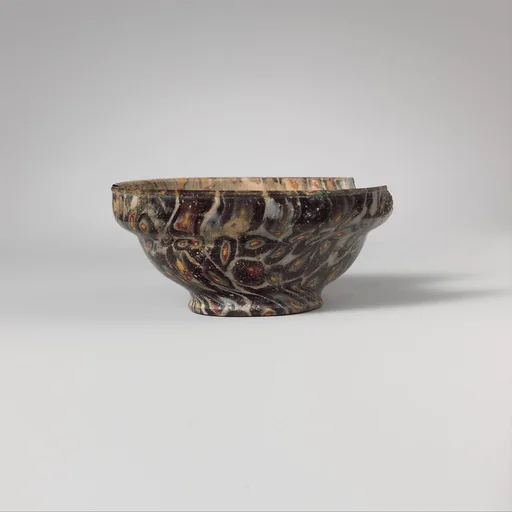
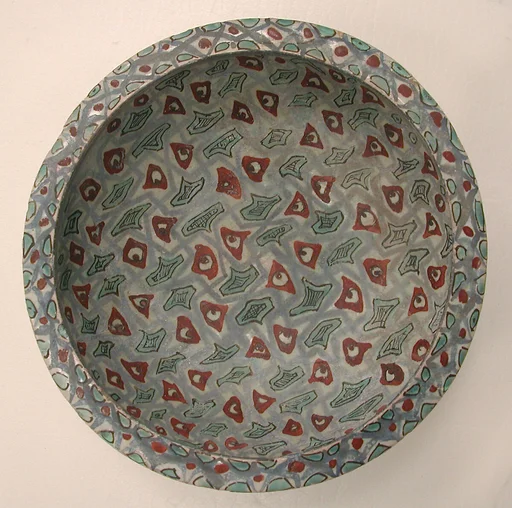
Translucent blue, translucent turquoise green, opaque white, and opaque yellow. Vertical rim; shallow, convex side, tapering downward to broad, slightly convex bottom. Composite mosaic pattern formed from polygonal sections and square segments of four canes: the first in a blue ground with a white spiral; the second in a turquoise green ground with a yellow spiral; the third in yellow segments, and the fourth in white segments. A turquoise green cane wound spirally with a single white thread is attached as a rim. Intact, but one chip and crack in bottom and two holes drilled in side below rim; pitting and dulling on interior, small patches of iridescent weathering, and soil encrustation on exterior. Rotary grinding marks on interior. This bowl is highly decorative, with spiral designs and contrasting patches of translucent and opaque glass. It imitates an even more luxurious type of tableware, for the prominent squares of yellow glass act as substitutes for sections of gold glass.
- Artist
- Unknown
- Date
- 2nd–mid-1st century BCE
- Medium
- Glass
- Culture
- Greek, probably Eastern Mediterranean
- Department
- Greek and Roman Art
- Credit line
- Gift of Henry G. Marquand, 1881