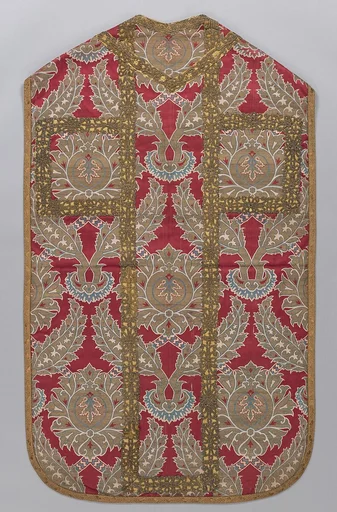
Chasuble
Unknown
second quarter 18th century · Cotton, drawn and painted resist and mordant, dyed, silk trim · European Sculpture and Decorative Arts
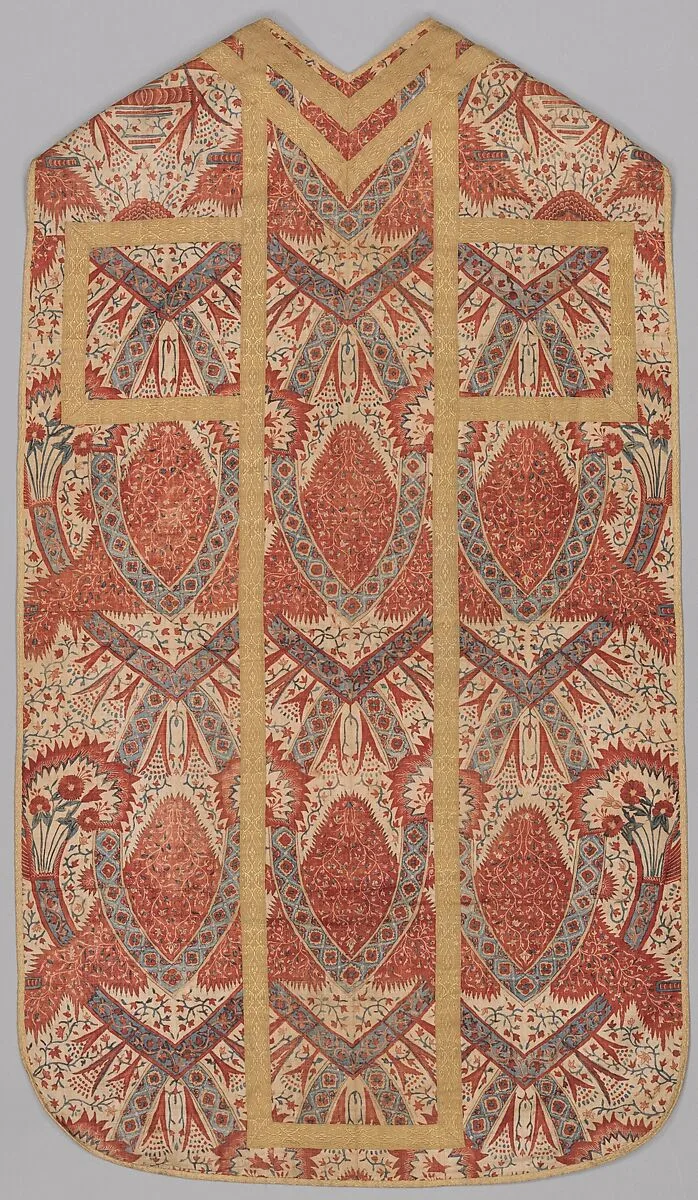
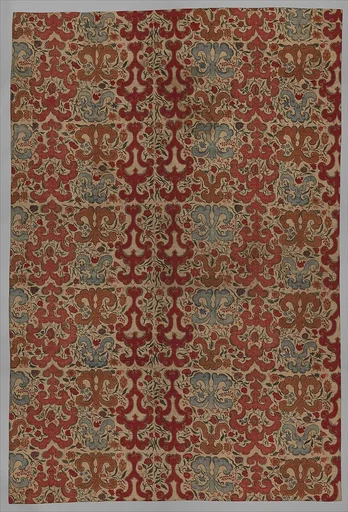
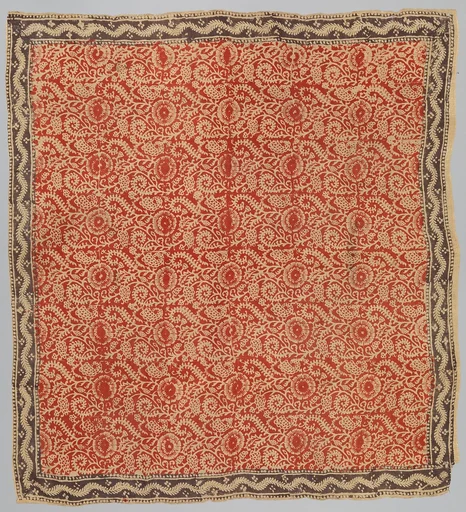
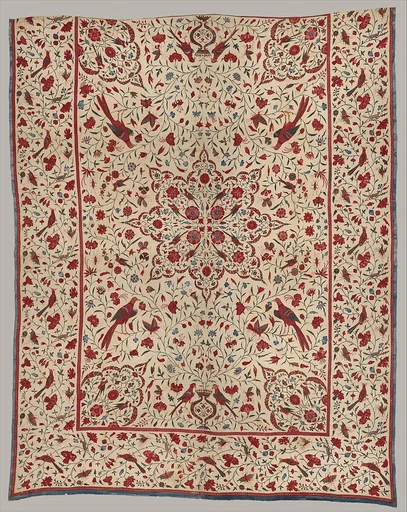
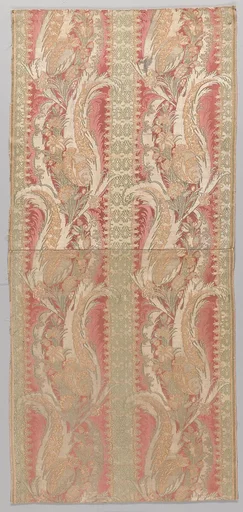
This glorious painted resist and mordant dyed hand-woven cotton can be attributed to the talented specialist painters, called Kalamkari, active in south-eastern India. Called "Chintz", from the Hindi "chint" meaning "speckled", late seventeenth- and eighteenth-century Europeans adored these textiles, exporting them in great numbers. Here, lengths from one chintz, or perhaps two separate, differently patterned chintzes, have been carefully repurposed, patched together and used to create a Roman Catholic priest's chasuble– the tabard-like tunic worn whilst conducting church services.
- Artist
- Unknown
- Date
- second quarter 18th century
- Medium
- Cotton, drawn and painted resist and mordant, dyed, silk trim
- Culture
- Indian, Coromandel Coast and Central European, for European market
- Department
- European Sculpture and Decorative Arts
- Credit line
- Gift of Mrs. William Sloane Coffin, 1975