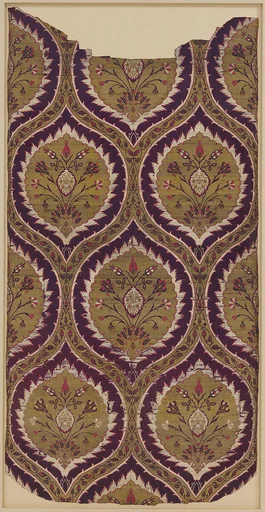
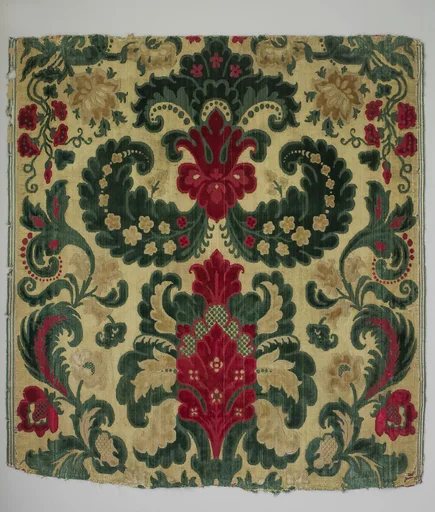
Rectangular Textile Fragment
Unknown
second half 16th century · Silk, metal wrapped thread; cut and voided velvet, brocaded · Islamic Art
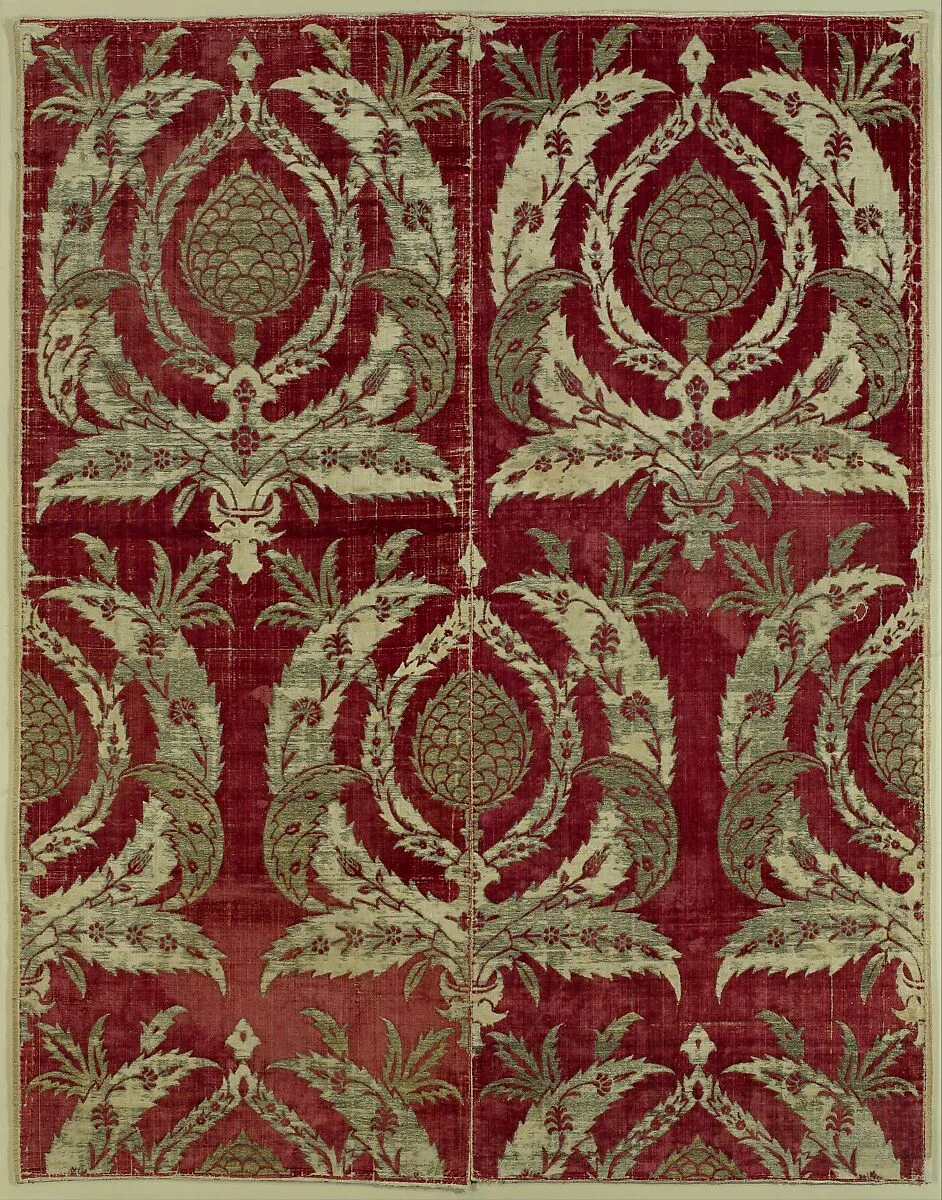
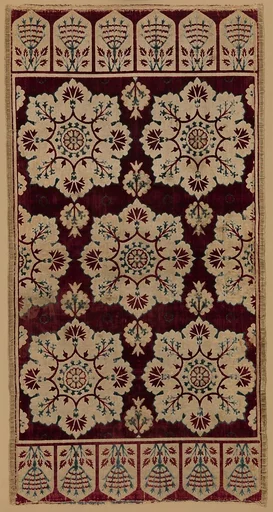
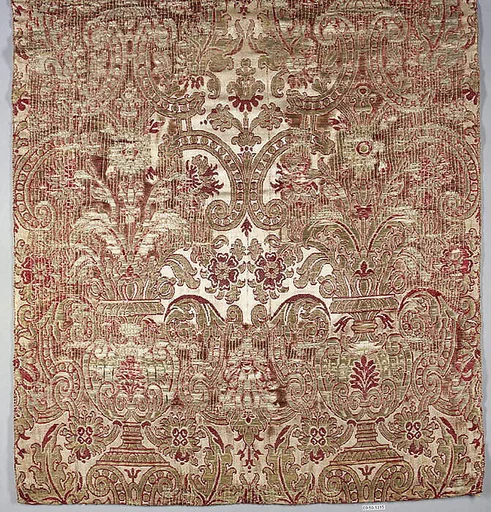
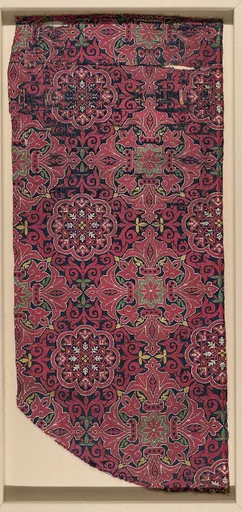
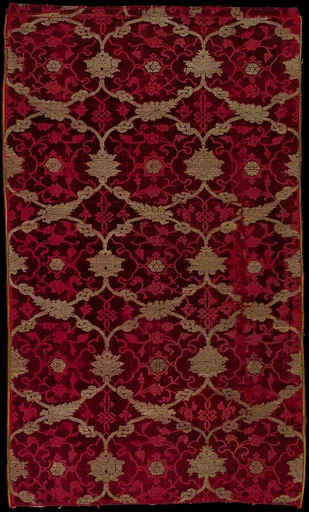
Bursa, a mountainside city in northwest Anatolia about 60 kilometers from Istanbul, was from the mid-fifteenth to the seventeenth centuries the major production center of velvets in the Ottoman empire. This splendid panel, composed of two loom-width pieces sewn together, typifies Bursa velvet weaving in the late sixteenth century. The motifs, especially the feathery leaves embracing the artichokes, are among the most frequently used by Ottoman weavers (and ceramicists) in this period. Fabrics such as this one were primarily employed in furnishings, such as cushions, curtains, and wall hangings, in the Ottoman empire. The many examples exported to Europe, on the other hand, were most often used in ceremonial costumes.
- Artist
- Unknown
- Date
- second half 16th century
- Medium
- Silk, metal wrapped thread; cut and voided velvet, brocaded
- Department
- Islamic Art
- Credit line
- Rogers Fund, 1917