Pomegranate textile
Cheney Brothers|Associated Artists
ca. 1883 · Silk and cotton, woven · The American Wing
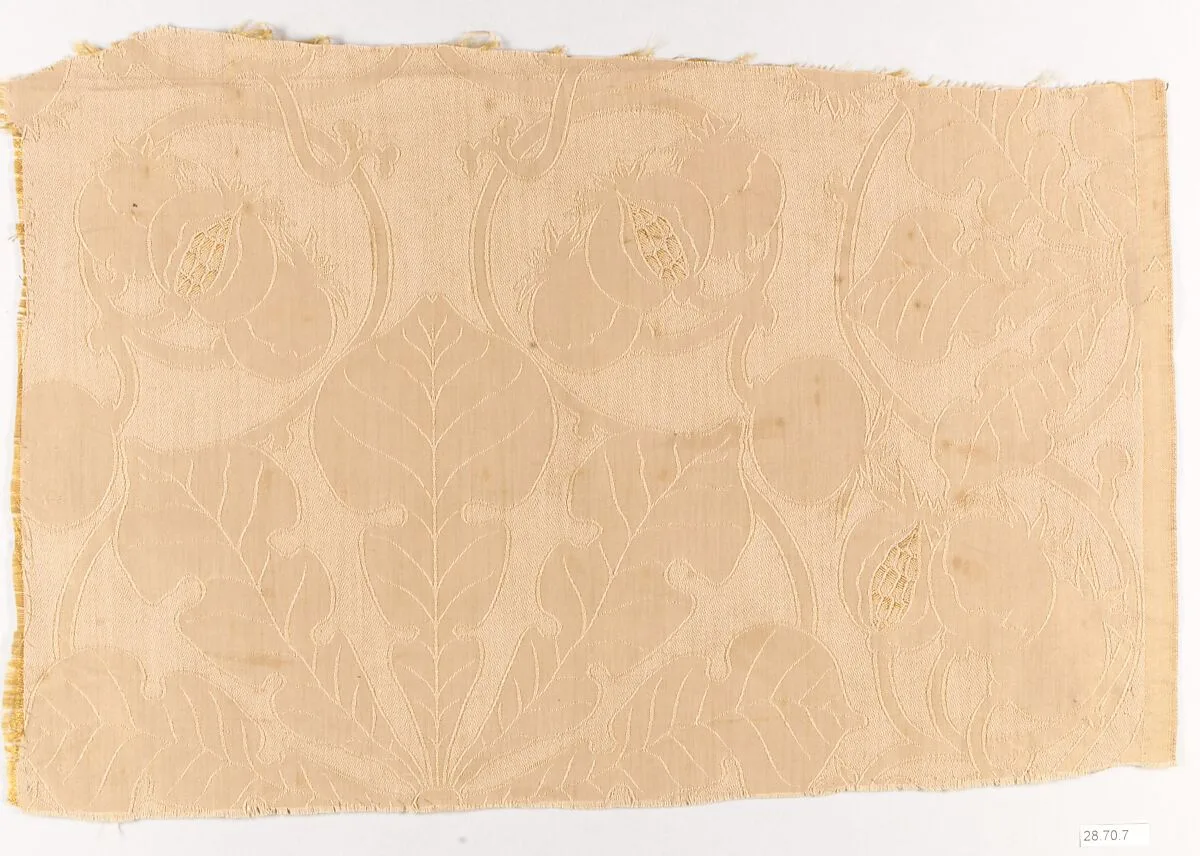
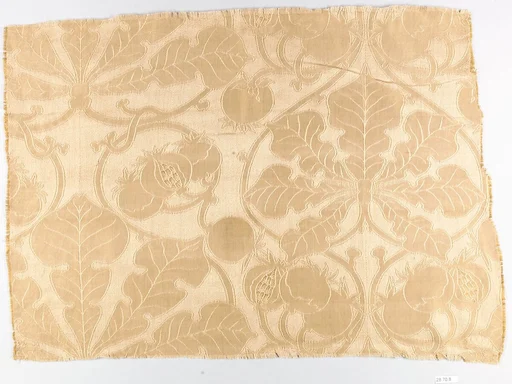
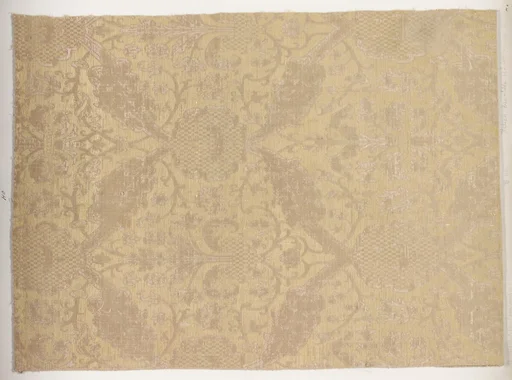
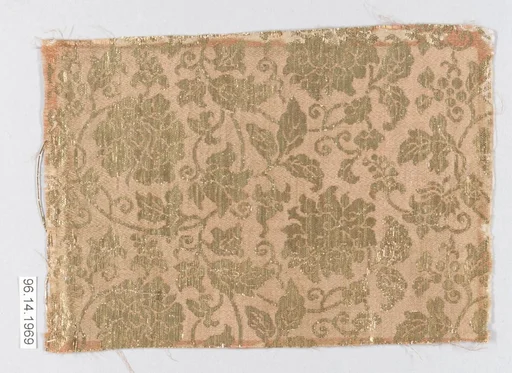
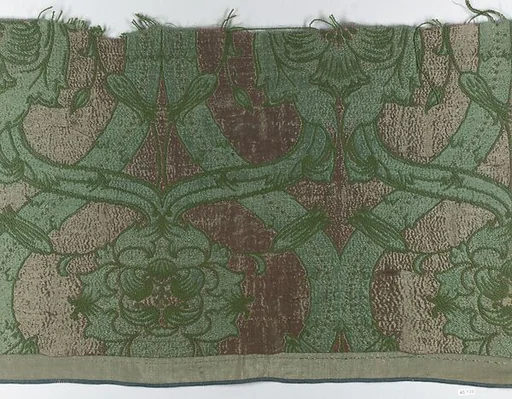
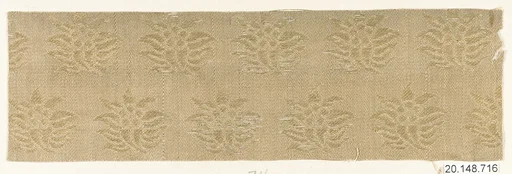
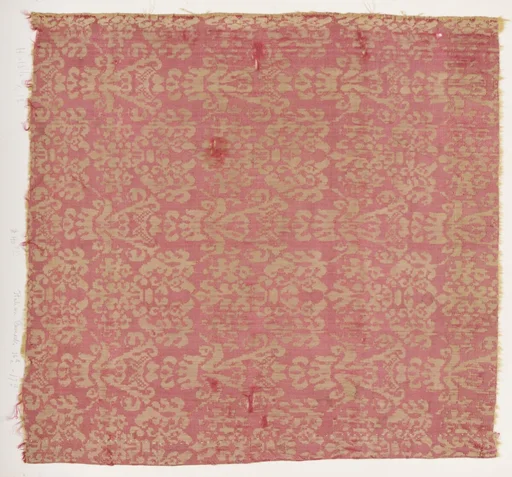
The pomegranate has a long history in Western art as a symbol of fertility because many seeds are contained in each fruit. It is especially common in fifteenth-century figured velvets of the Italian Renaissance, which feature patterns of pomegranates enclosed by sinuous stems and tendrils. These probably inspired Candace Wheeler (1827-1923) in the 1890s when she was searching for historical precedents. In the Library in the Woman’s Building at the 1893 Chicago World's Columbian Exposition, Wheeler employed a slightly modified version of this pattern—a heavy blue brocade rather than the damask seen here. The brocade was made into wide portieres and was also used to fill the fireplace opening of the room’s ornately carved mantelpiece.
- Artist
- Cheney Brothers|Associated Artists
- Date
- ca. 1883
- Medium
- Silk and cotton, woven
- Culture
- American
- Department
- The American Wing
- Credit line
- Gift of Mrs. Boudinot Keith, 1928