Chasuble
Unknown
early 17th century · Velvet brocade · European Sculpture and Decorative Arts
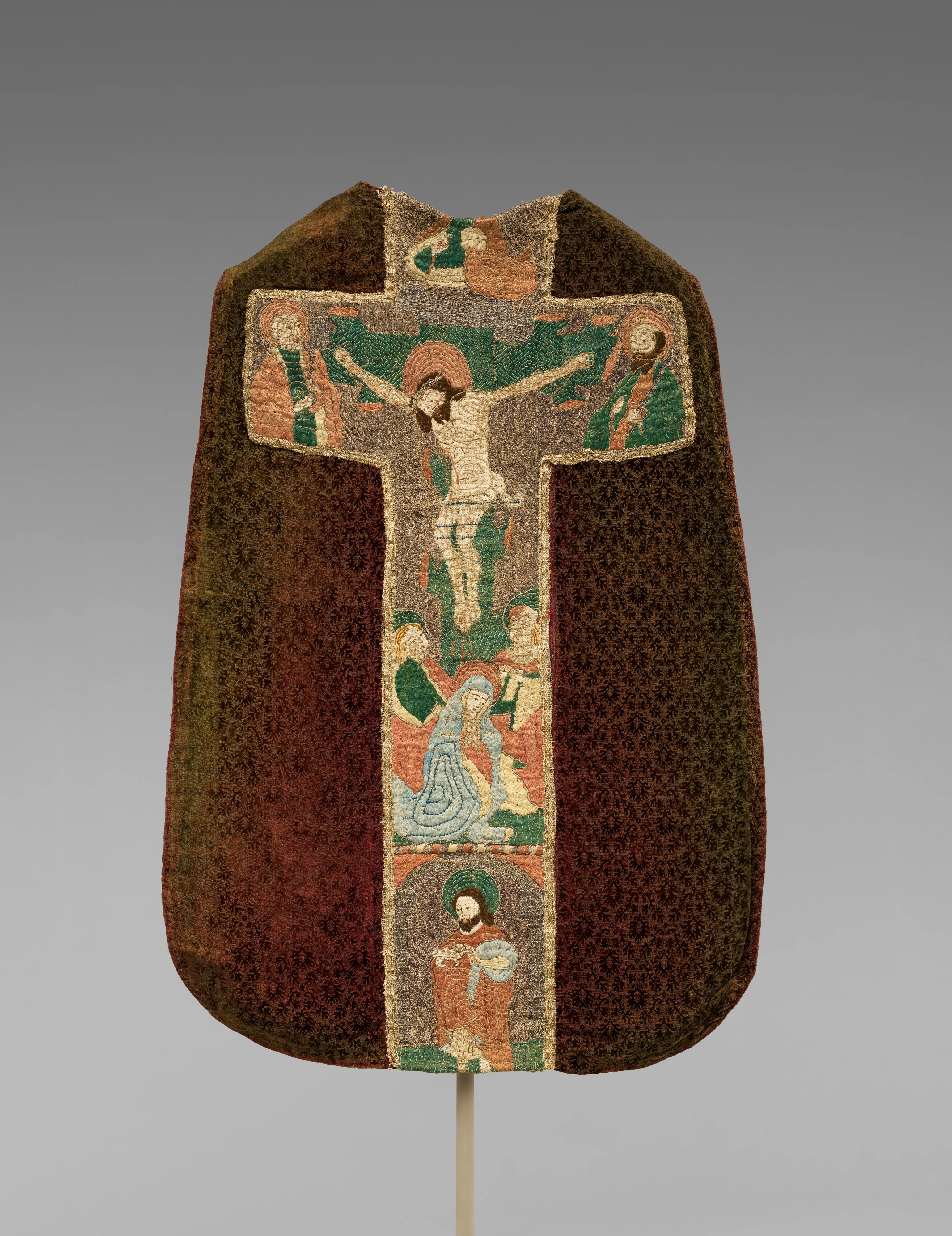
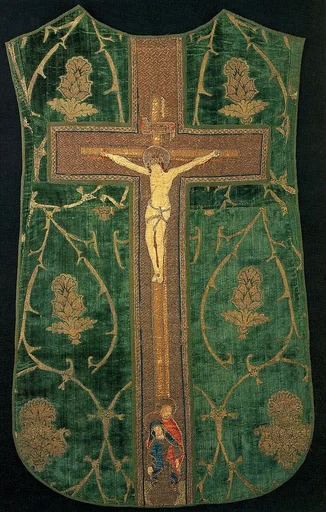
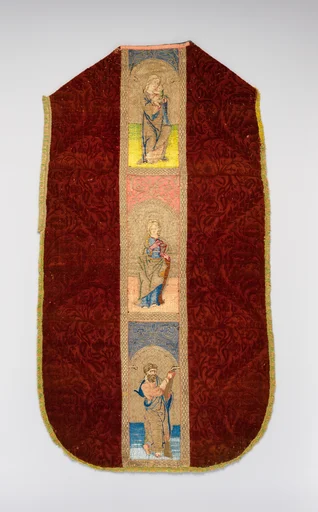
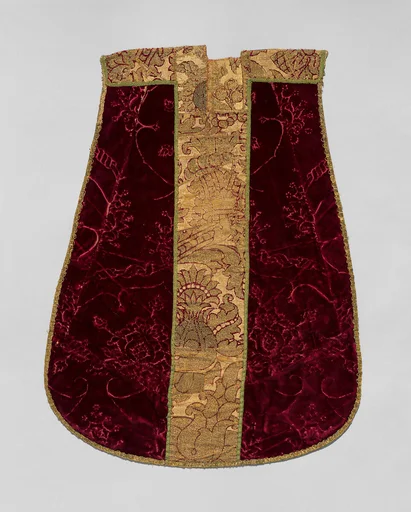
The cross-shaped orphrey on the reverse of this chasuble– the tabard-like garment worn by a Catholic priest during church services– has been applied (perhaps at a later date) to a fascinating velvet, with cut and uncut pile now appearing red but originally also green (now only visible on the underside). The curious ombre effect is not intentional, but a result of the unequal degradation of the differently colored piles. Typical of German figurative needlework of the late medieval and early modern periods, colored silks of the orphrey are couched onto linen with satin and stem stitches in unexpected and exuberant patterns and concentric shapes. Heavily restored in the nineteenth century, the front of the chasuble has been cut and completely reshaped to a more fashionable, tear-drop silhouette, with the central orphrey on the front incongruously replaced with a strip of machine-woven, low quality silk decorated with a repeat floral motif.
- Artist
- Unknown
- Date
- early 17th century
- Medium
- Velvet brocade
- Culture
- German, Cologne
- Department
- European Sculpture and Decorative Arts
- Credit line
- Frederick C. Hewitt Fund, 1914