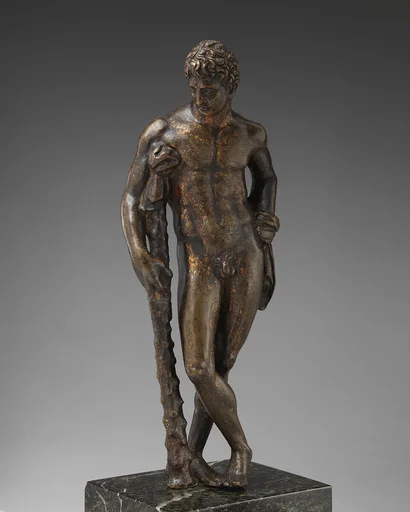
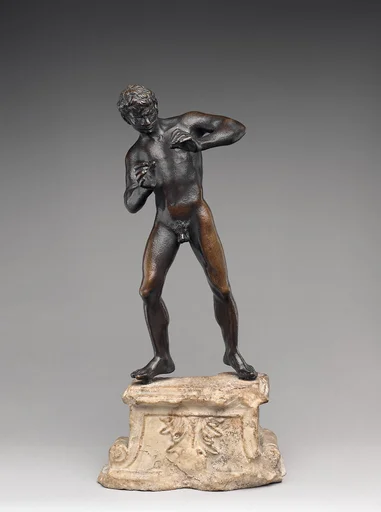
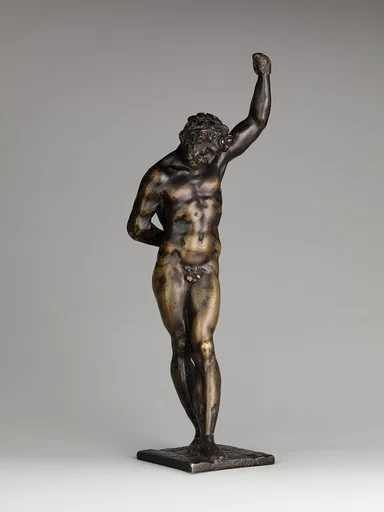
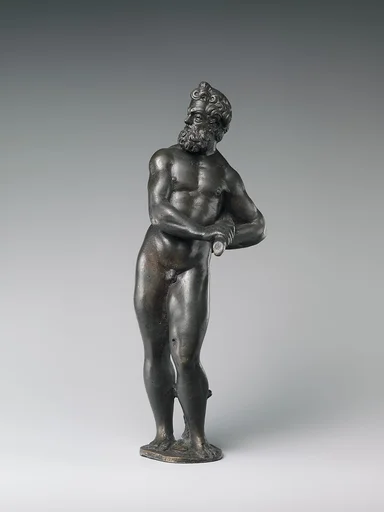
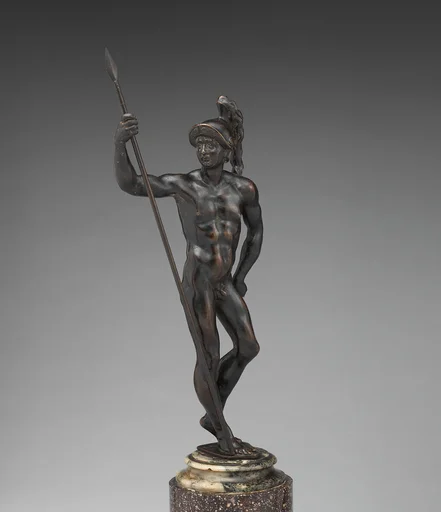
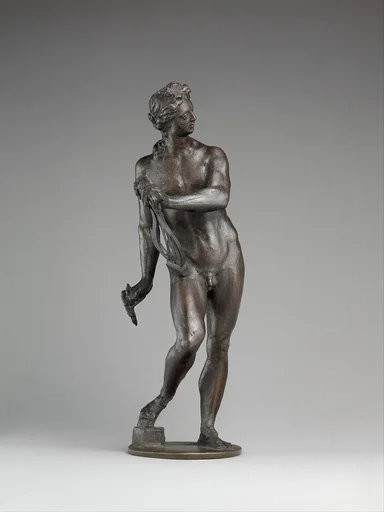
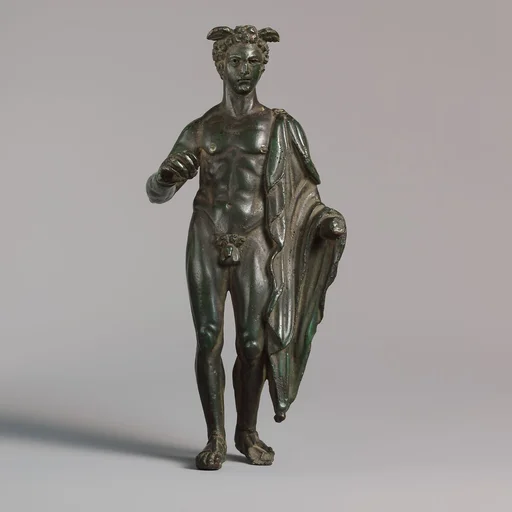
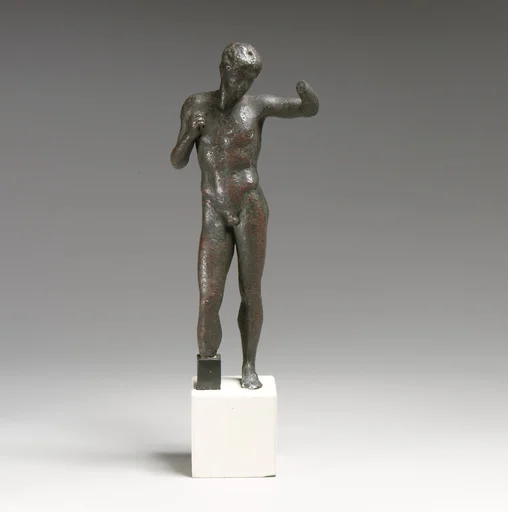
Standing Hercules
Unknown
19th century · Bronze, silvering (eyes and wreath) · European Sculpture and Decorative Arts
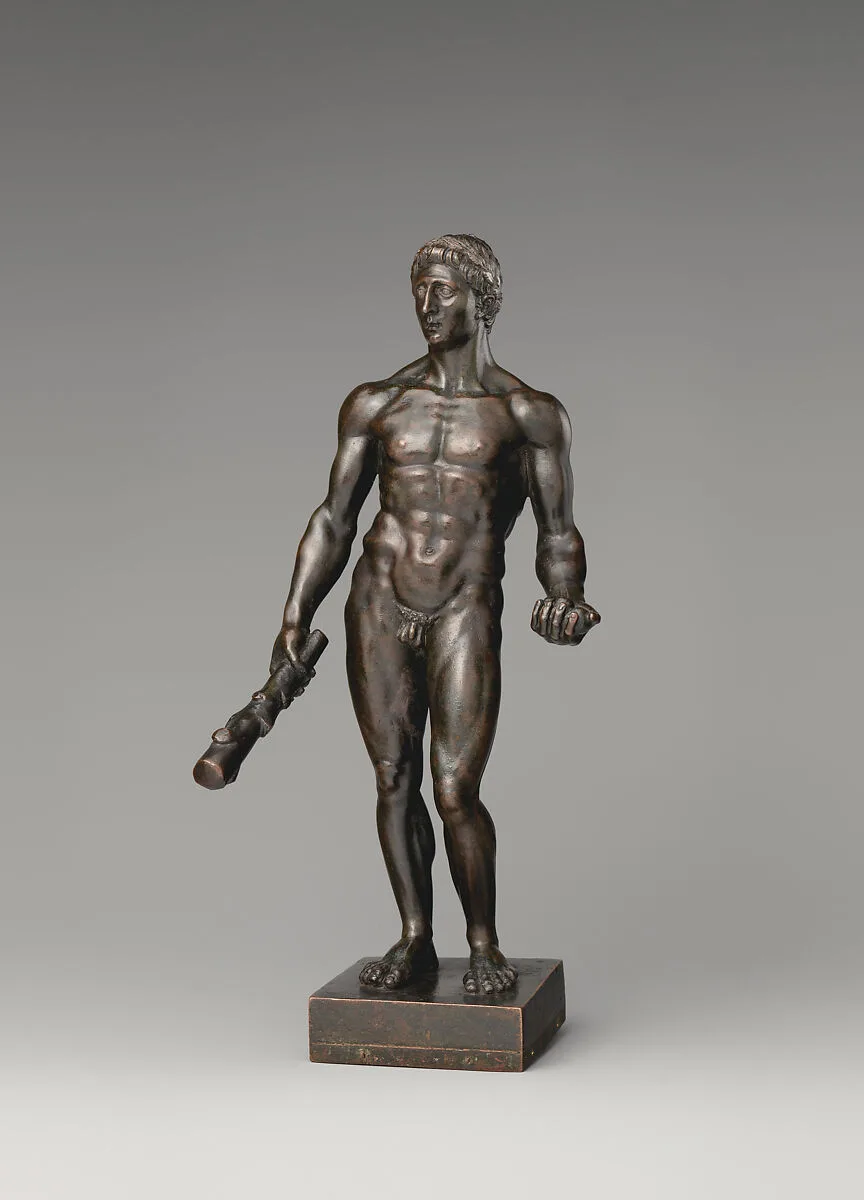
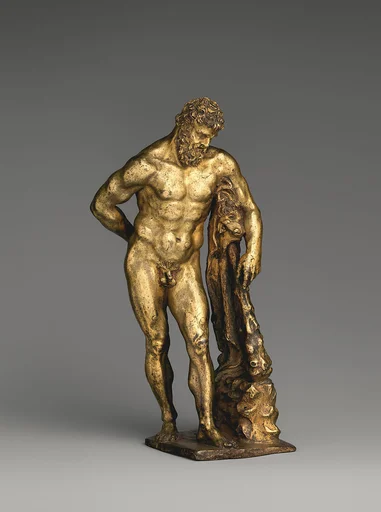
A reduction of the gilt-bronze colossus in the Palazzo dei Conservatori, Rome, famous in antiquity and ever since it was dug up in the fifteenth century, this bronze Hercules differs from the original in several respects.[1] The position of the legs is reversed, and the torso has lost torsion and authority, thereby compromising the contrapposto. The head is larger in relation to the whole, the hair artfully feathered, and the gnarly club shorter. In cataloguing the statuette for The Met, Johanna Hecht noted similarities in the stances of two ancient ones in the Bibliothèque Nationale, Paris,[2] but their poses are more coherent, and our imitator’s conception probably derived, ultimately, from the large work in Rome. -JDD Footnotes (For key to shortened references see bibliography in Allen, Italian Renaissance and Baroque Bronzes in The Metropolitan Museum of Art. NY: The Metropolitan Museum of Art, 2022.) 1. Haskell and Penny 1981, pp. 227–29. 2. Inv. bronzes .519, .549.
- Artist
- Unknown
- Date
- 19th century
- Medium
- Bronze, silvering (eyes and wreath)
- Culture
- Italian, possibly Rome
- Department
- European Sculpture and Decorative Arts
- Credit line
- Gift of C. Ruxton Love Jr., 1964