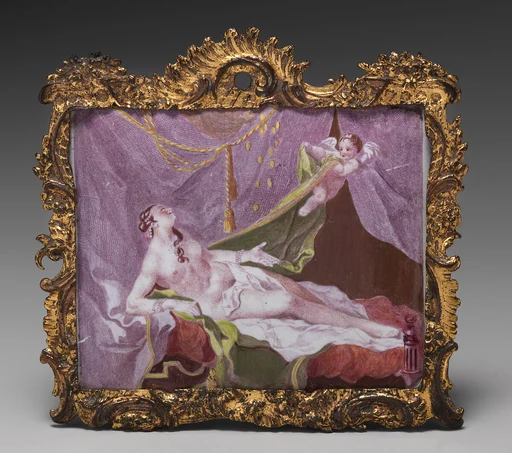
Venus Begging Arms From Vulcan
Simon-François Ravenet
1753–56 · Enamel on copper; transfer-printed · European Sculpture and Decorative Arts
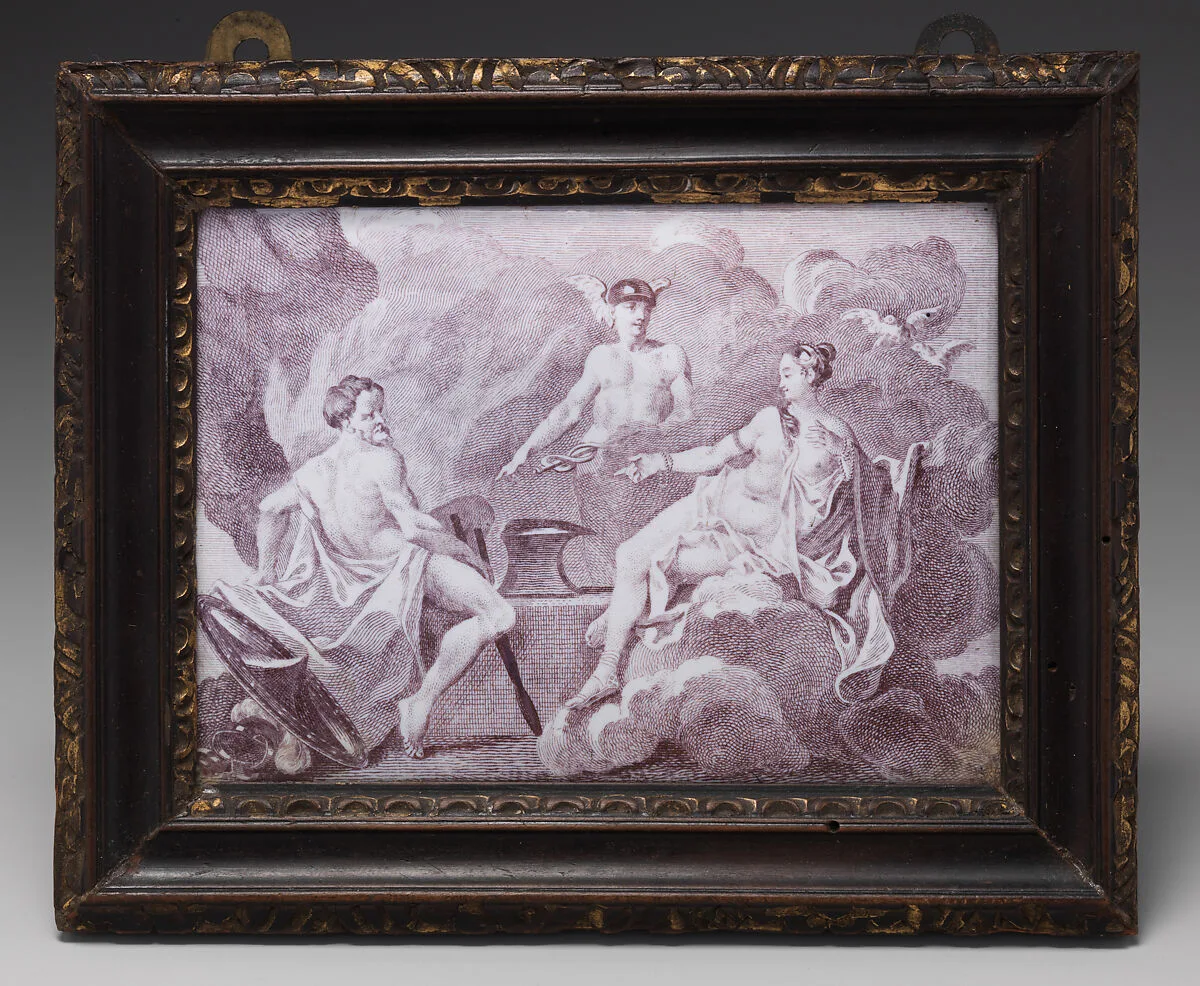
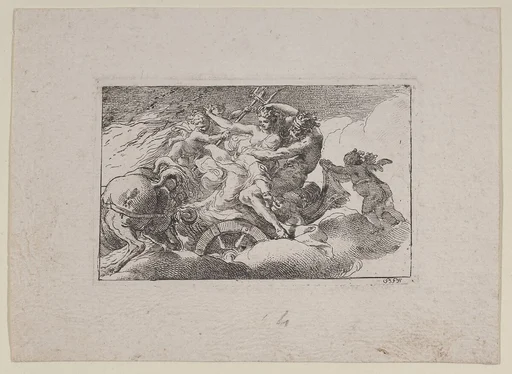
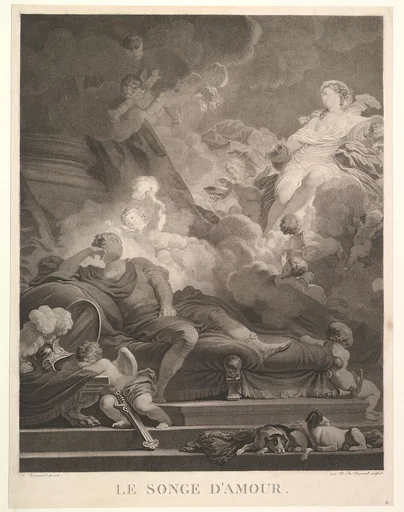
This decorative plaque depicts Venus persuading Vulcan to forge weapons for her son Aeneas, as described by Virgil in the Aeneid. Mercury, identifiable by his winged helmet and distinctive staff (caduceus), appears to be supporting Venus’ plea. Despite operating for just a few years between 1753 and 1756, the York House factory in Battersea remains the most renowned of all British enamel manufactories because of the superior quality of its transfer printed designs. Enameled objects like this one were intended to imitate the lustrous quality of porcelain at more affordable prices. By the middle of the eighteenth century, technological innovations had made it possible to roll copper, instead of the far costlier gold, into very thin sheets. Powdered glass mixed with minerals (to determine the opacity and color of the enamel) would then be applied onto the copper sheets and fired at high temperatures. A design—whether a famous portrait, generic pastoral scene, or floral motif— could be painted on by hand or copied from an engraving through the newly invented process of transfer printing. Many enameled objects combined both methods of decoration and would be refired after the application of each new layer or color.
- Artist
- Simon-François Ravenet
- Date
- 1753–56
- Medium
- Enamel on copper; transfer-printed
- Culture
- British, Battersea, London
- Department
- European Sculpture and Decorative Arts
- Credit line
- Gift of Irwin Untermyer, 1964