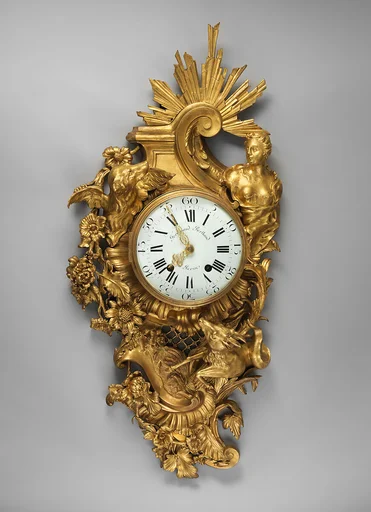
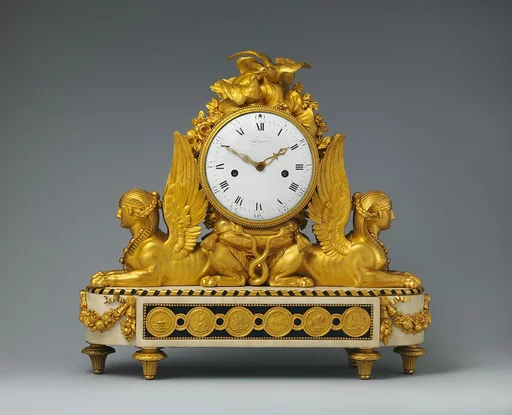
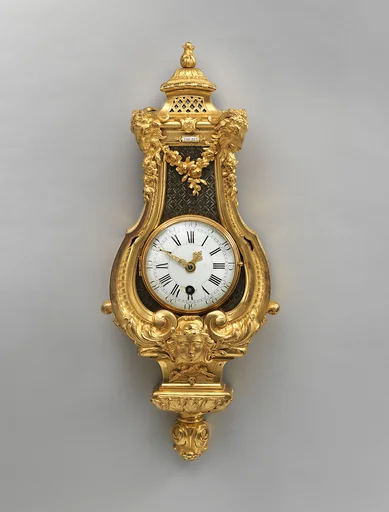
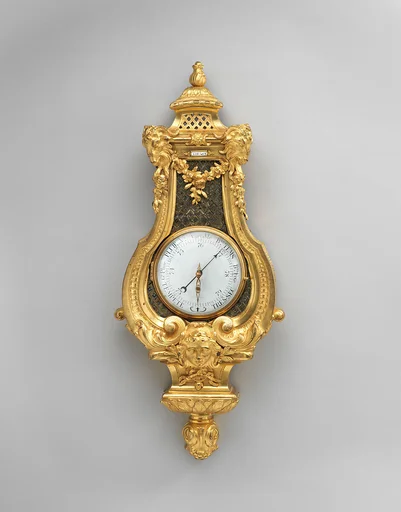
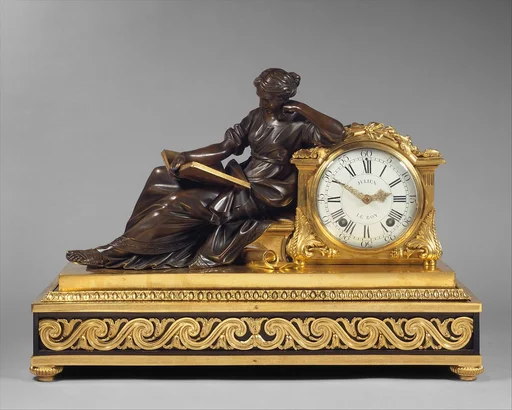
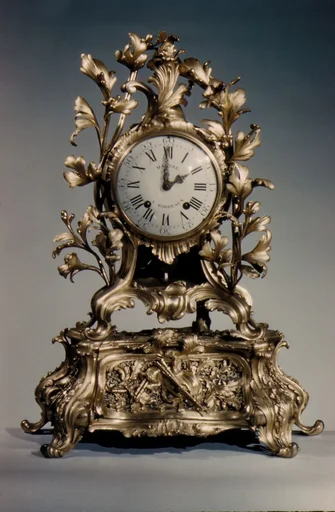
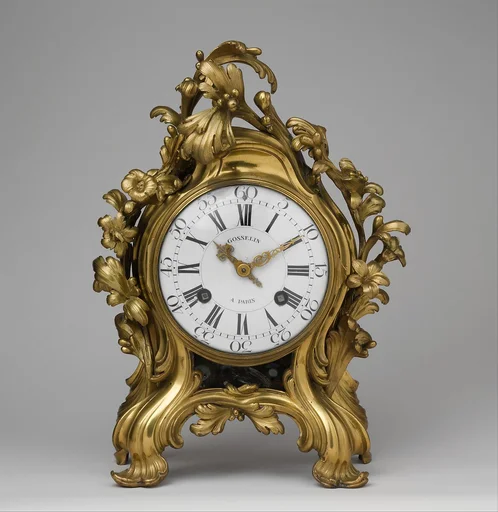
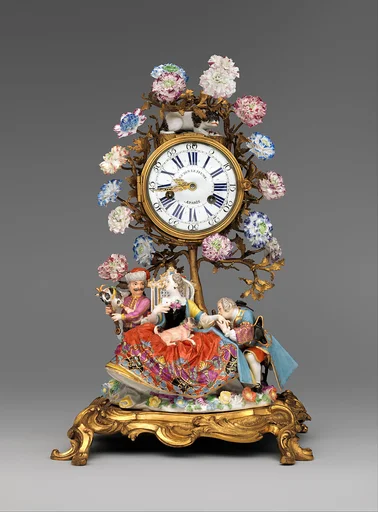
Clock
Jules-Simon Deverberie|Laurent Ridel
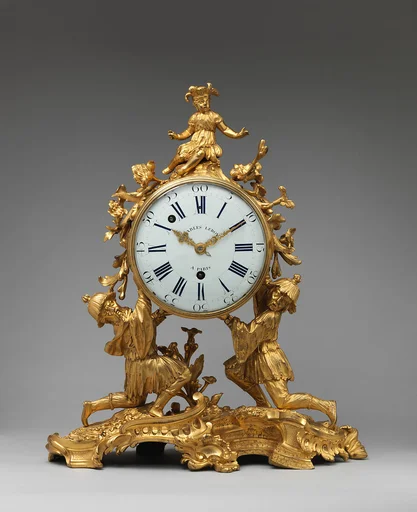
ca. 1800 · Case: partly patinated and partly gilded bronze, gilded brass, and paste jewels; Dial: white enamel with gilded brass and steel hands; Movement: brass and steel · European Sculpture and Decorative Arts
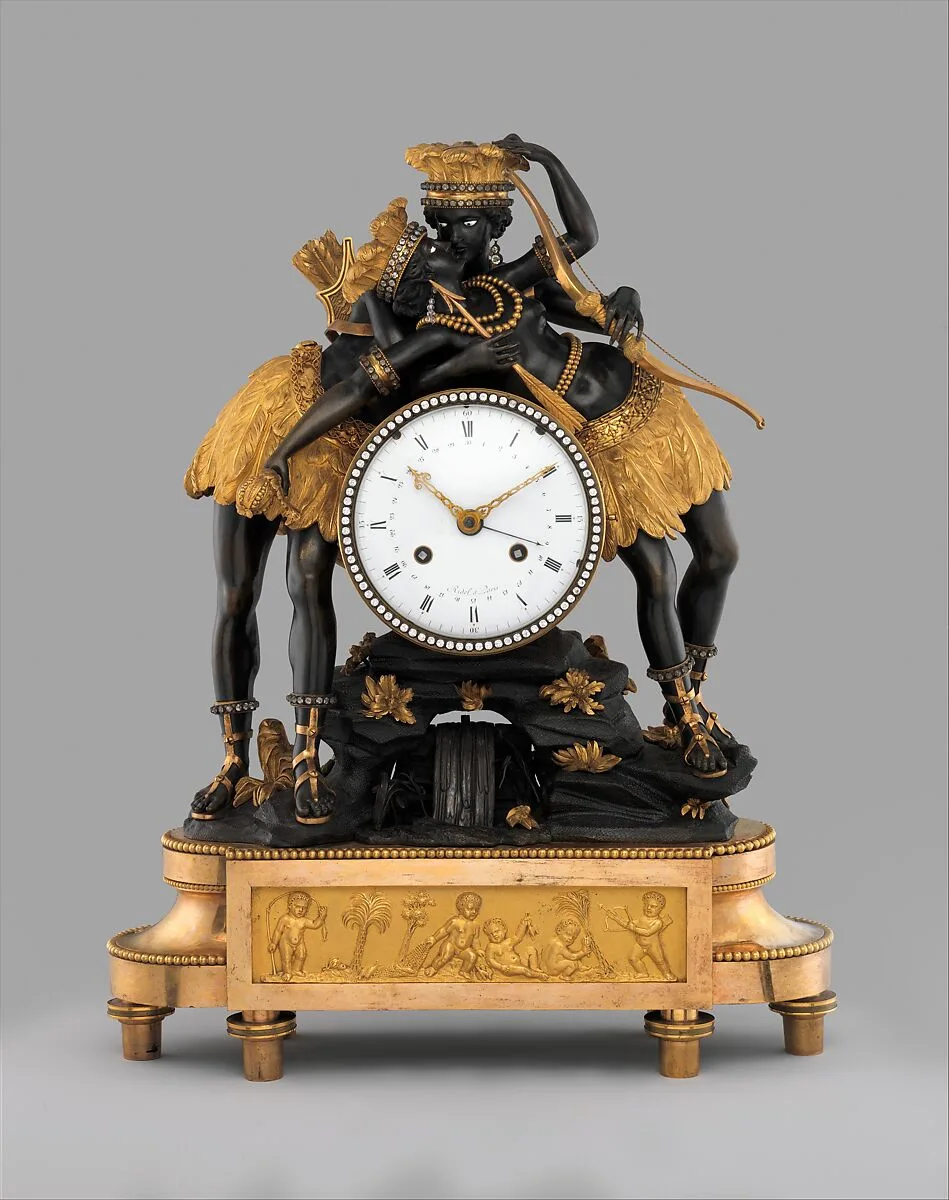
In 1800, Deverberie & Cie, a Parisian factory that made ornamental bronzes of various kinds, was prepared to supply more than thirty varieties of clockcases, each of a different design. Jean-Simon Deverberie designed the cases and made the basic models for casting, and they were cast, gilded, and assembled in his factory. The bronzes had interchangeable parts that could be assembled in various ways, and some cases were provided by the factory with movements by Parisian clockmakers, Ridel among them. To judge from the number of surviving examples, one of the more popular products of the factory was the pendule aux indiens, or clock with Native American figures. These figures were ultimately derived from European personifications of the Four Continents, in which the natives of America are to be identified by their feathered skirts and headdresses. But as with the Chinese figures, European ideas of faraway peoples were sometimes hazy during this period, and on the Museum’s clock, as elsewhere, Native Americans were portrayed with the features and color of Africans.
- Artist
- Jules-Simon Deverberie|Laurent Ridel
- Date
- ca. 1800
- Medium
- Case: partly patinated and partly gilded bronze, gilded brass, and paste jewels; Dial: white enamel with gilded brass and steel hands; Movement: brass and steel
- Culture
- French, Paris
- Department
- European Sculpture and Decorative Arts
- Credit line
- Gift of Estate of James Hazen Hyde, 1959