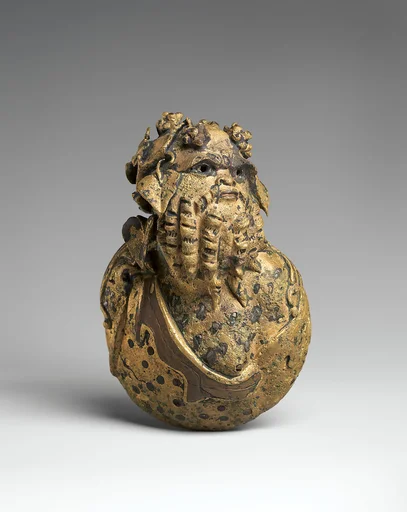
Bottoms-up cup or stirrup cup (Sturzbecher)
Unknown
ca. 1550–70 · Salt-glazed stoneware · European Sculpture and Decorative Arts
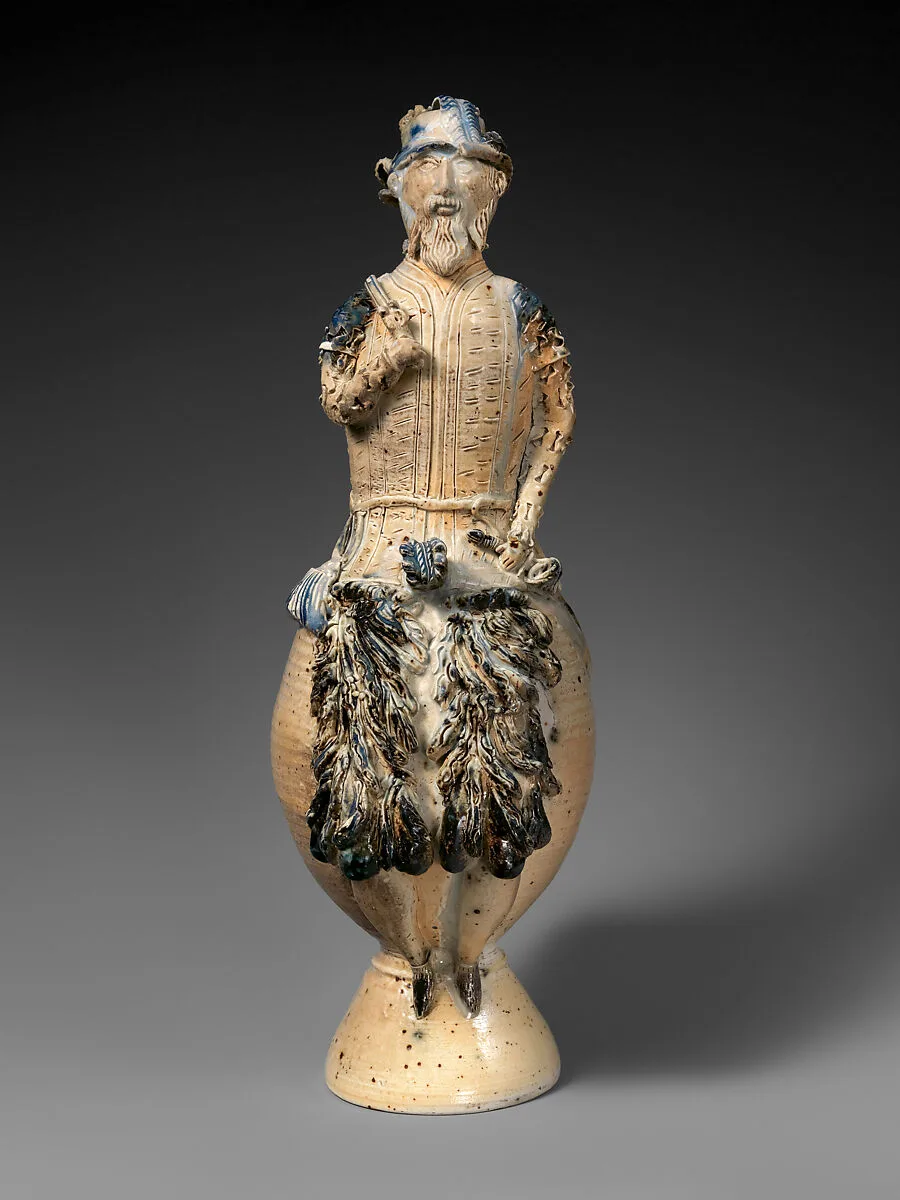
Clay enabled a spontaneity of modeling impossible for goldsmiths; stoneware objects could be made quickly and at a fraction of the cost of metal ones. The potter turned this vessel on a wheel to manipulate its basic form, pressing on the separately made head, arms, and other details; the glaze was applied so hastily its trickles are discernable. Traditionally, a departure would be marked by a farewell or Godspeed toast drunk in honor of Saint Gertrude, patron of travelers. "Bottoms-up" (or stirrup) cups are associated with this ceremony. With no base to be set down upon, they are intended to be used on horseback and the liquid downed in a gulp. [Elizabeth Cleland, 2017]
- Artist
- Unknown
- Date
- ca. 1550–70
- Medium
- Salt-glazed stoneware
- Culture
- German, Cologne
- Department
- European Sculpture and Decorative Arts
- Credit line
- Gift of R. Thornton Wilson, in memory of Florence Ellsworth Wilson, 1954