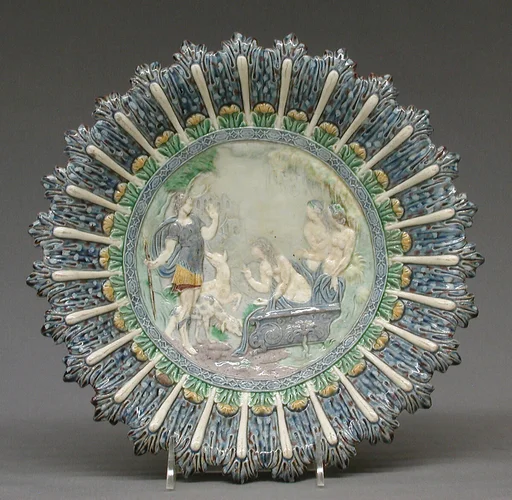
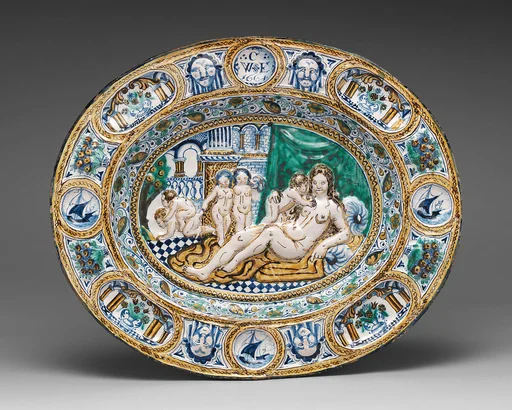
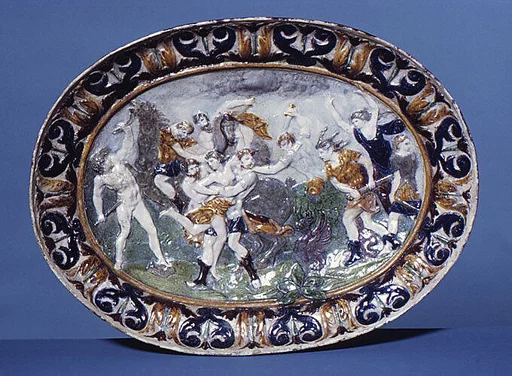
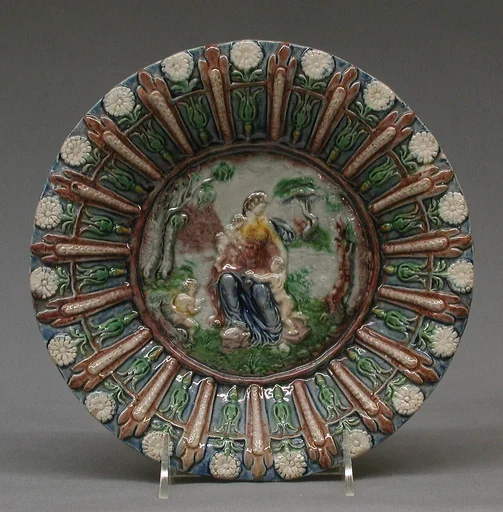
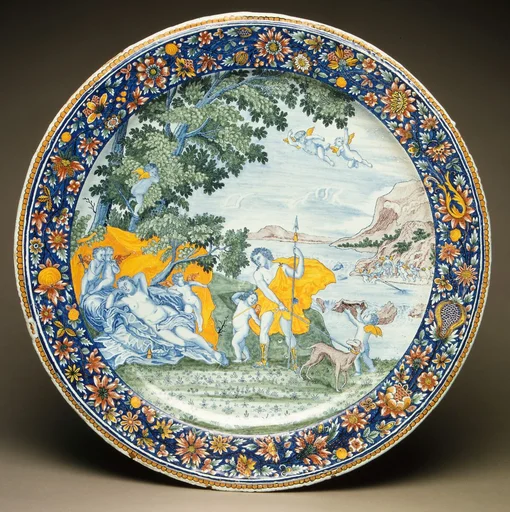
Dish with Diana, the Nymph of Fontainebleau
René Boyvin|Bernard Palissy|Pierre Milan|Rosso Fiorentino
late 16th–early 17th century · Lead-glazed earthenware · European Sculpture and Decorative Arts
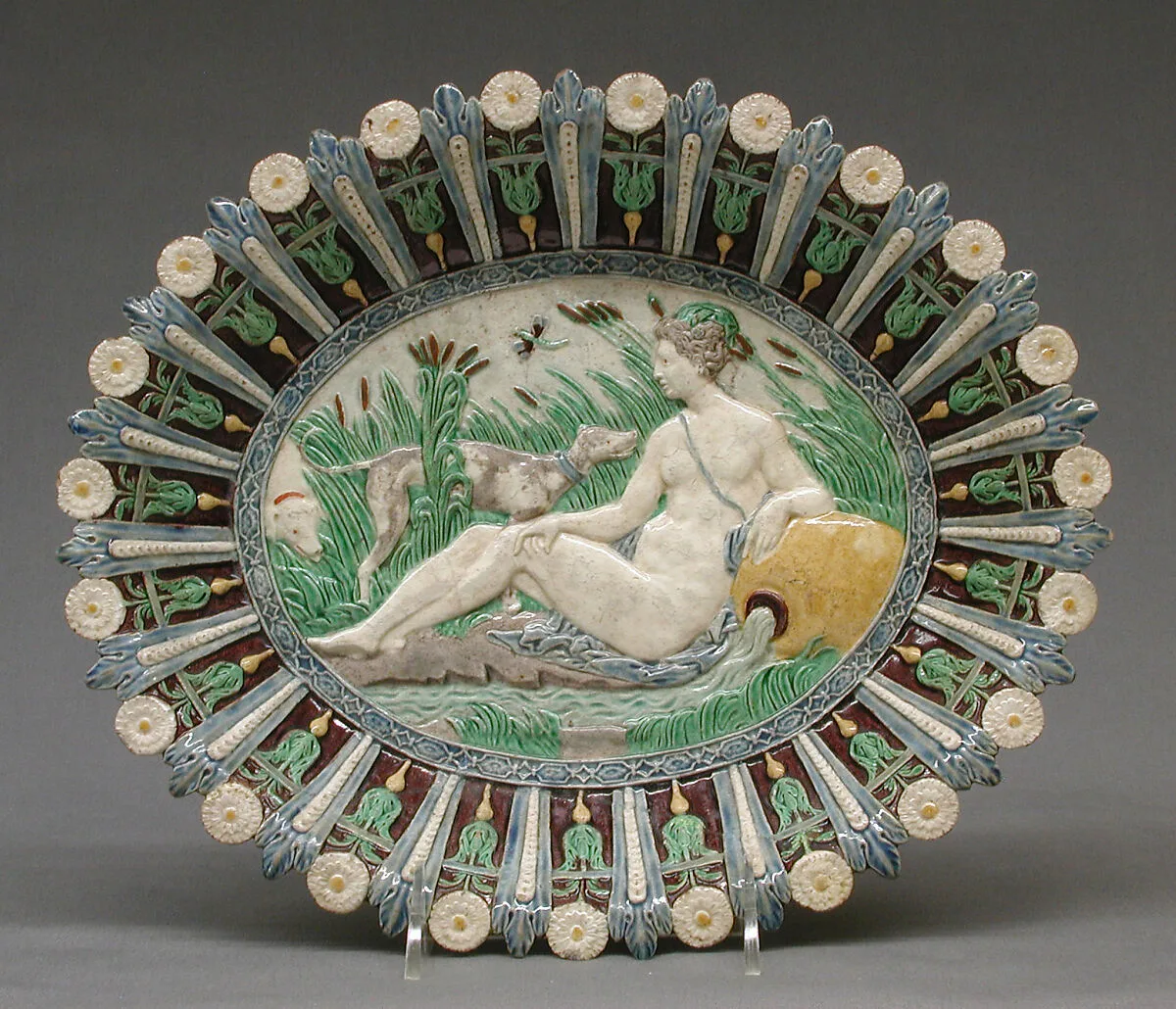
The scene on this plate is based on a print begun by the skilled Parisian engraver Pierre Milan and finished several years later by an assistant to Milan, René Boyvin. The original composition is after a fresco by Rosso Fiorentino ("Il Rosso"). The subject refers to the origin of the name of Fontainebleau: a thirsty hunting dog named Bleau separated from its master and found in the forest a clear, pure spring; his master, "one of our kings," named the spring after him "la Fontaine de Bleau." The image of Diana, Nymph of Fontainbleau, enjoyed great popularity: the Museum has two other versions of this composition, notably a copy of the engraving in the Department of Drawings and Prints (32.105), and an oil on wood painting in the Department of European Paintings (42.105.12).
- Artist
- René Boyvin|Bernard Palissy|Pierre Milan|Rosso Fiorentino
- Date
- late 16th–early 17th century
- Medium
- Lead-glazed earthenware
- Culture
- French
- Department
- European Sculpture and Decorative Arts
- Credit line
- Gift of Julia A. Berwind, 1953