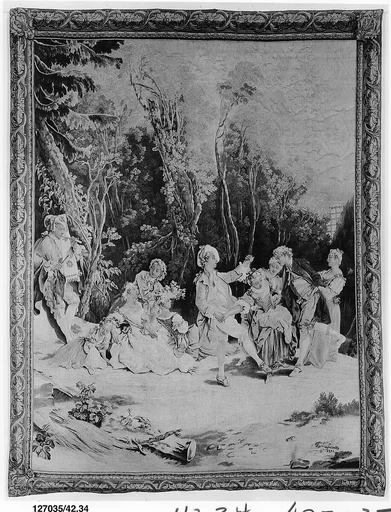
Shepherds and Shepherdesses Dancing from a set of Mythological Subjects after Giulio Romano
Manufacture Nationale des Gobelins|Pierre Monier|Antoine Coypel|Giulio Romano|Louis XIV, King of France|Jean-Baptiste Corneille|Jean Lefebvre the Elder|Jean Jans the Younger
designed 1684–86, woven 1689–92 · Wool, silk, metal thread (20-26 warps per inch, 8-12 per cm.) · European Sculpture and Decorative Arts
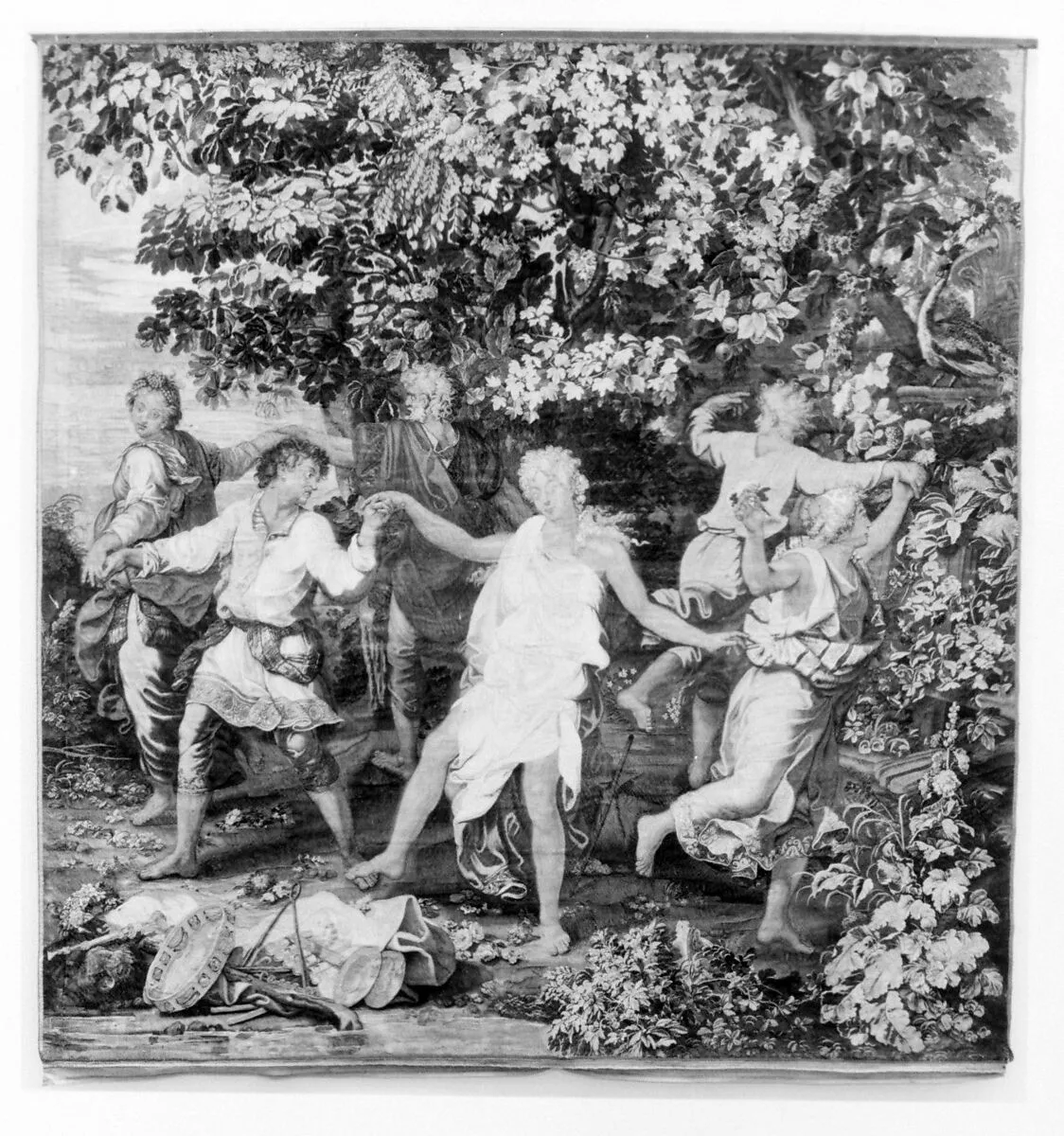
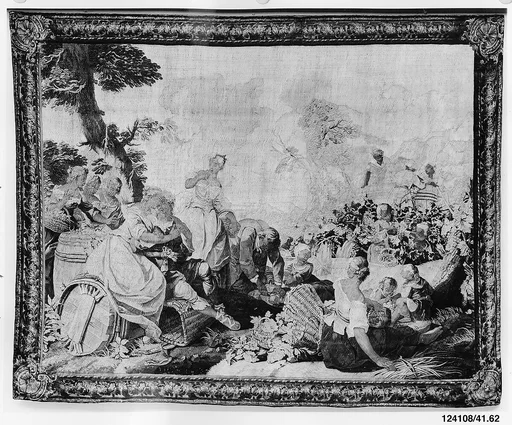
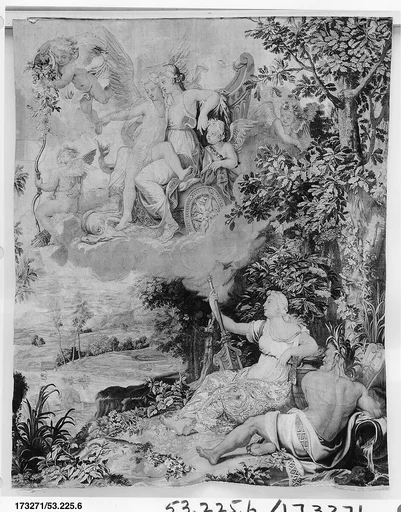
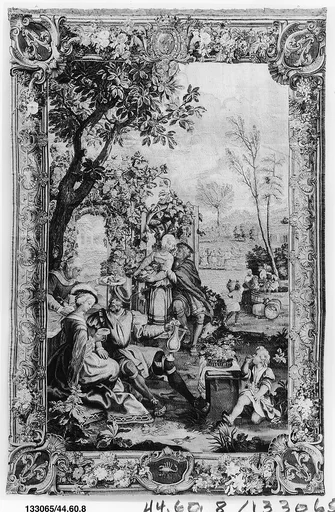
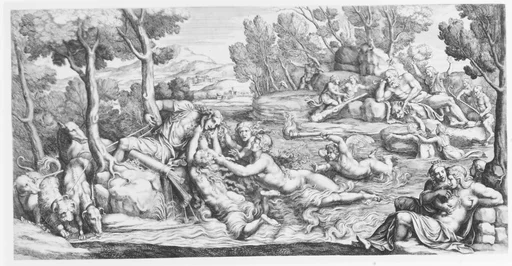
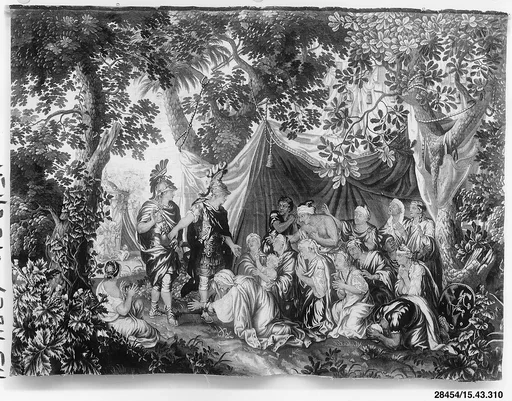
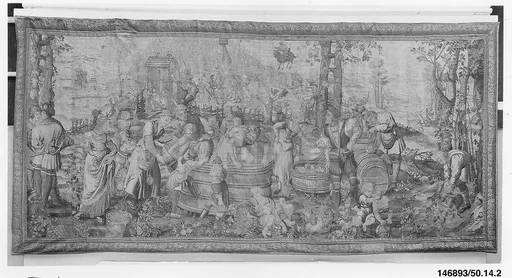
In a woodland setting, three men and three women dance in a ring. A pile of musical instruments lies in front of them on the bank of a stream. For centuries, these bucolic figures have been called shepherds and shepherdesses, although there are no attributes specifically identifying them as such. This tapestry is from a set of eight, traditionally called Les Sujets de la Fable. The designs for all eight tapestries are based in part upon drawings then in Louis XIV's collection- now preserved in the Louvre- which were all, at that time, attributed to Giulio Romano. Four of the tapestries in this series- all of which are part of The Met’s collection- ultimately take as their inspiration frescos by Giulio Romano and his assistants in the Palazzo Te, Mantua. The design source of this tapestry is Giulio’s fresco depicting folk born under the constellation of the Goat celebrating its ascendency, painted in the Palazzo’s sala dei venti.
- Artist
- Manufacture Nationale des Gobelins|Pierre Monier|Antoine Coypel|Giulio Romano|Louis XIV, King of France|Jean-Baptiste Corneille|Jean Lefebvre the Elder|Jean Jans the Younger
- Date
- designed 1684–86, woven 1689–92
- Medium
- Wool, silk, metal thread (20-26 warps per inch, 8-12 per cm.)
- Culture
- French, Paris
- Department
- European Sculpture and Decorative Arts
- Credit line
- Gift of Julia A. Berwind, 1953