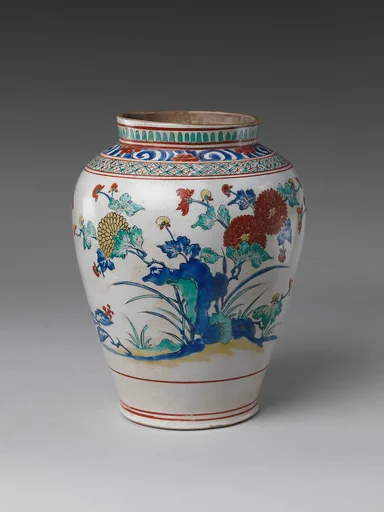
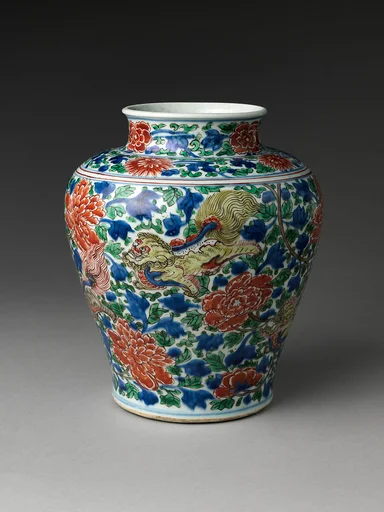
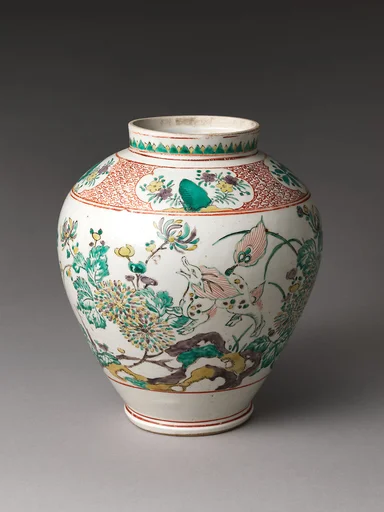
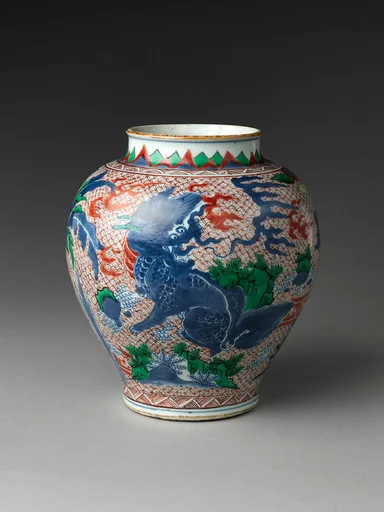
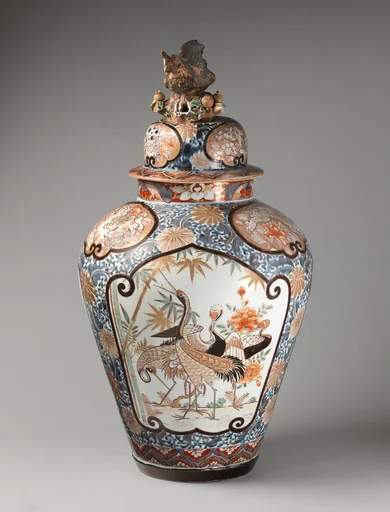
Jar
Jean Antoine Fraisse|Chantilly
ca. 1735–40 · Tin-glazed soft-paste porcelain decorated in polychrome enamels · European Sculpture and Decorative Arts
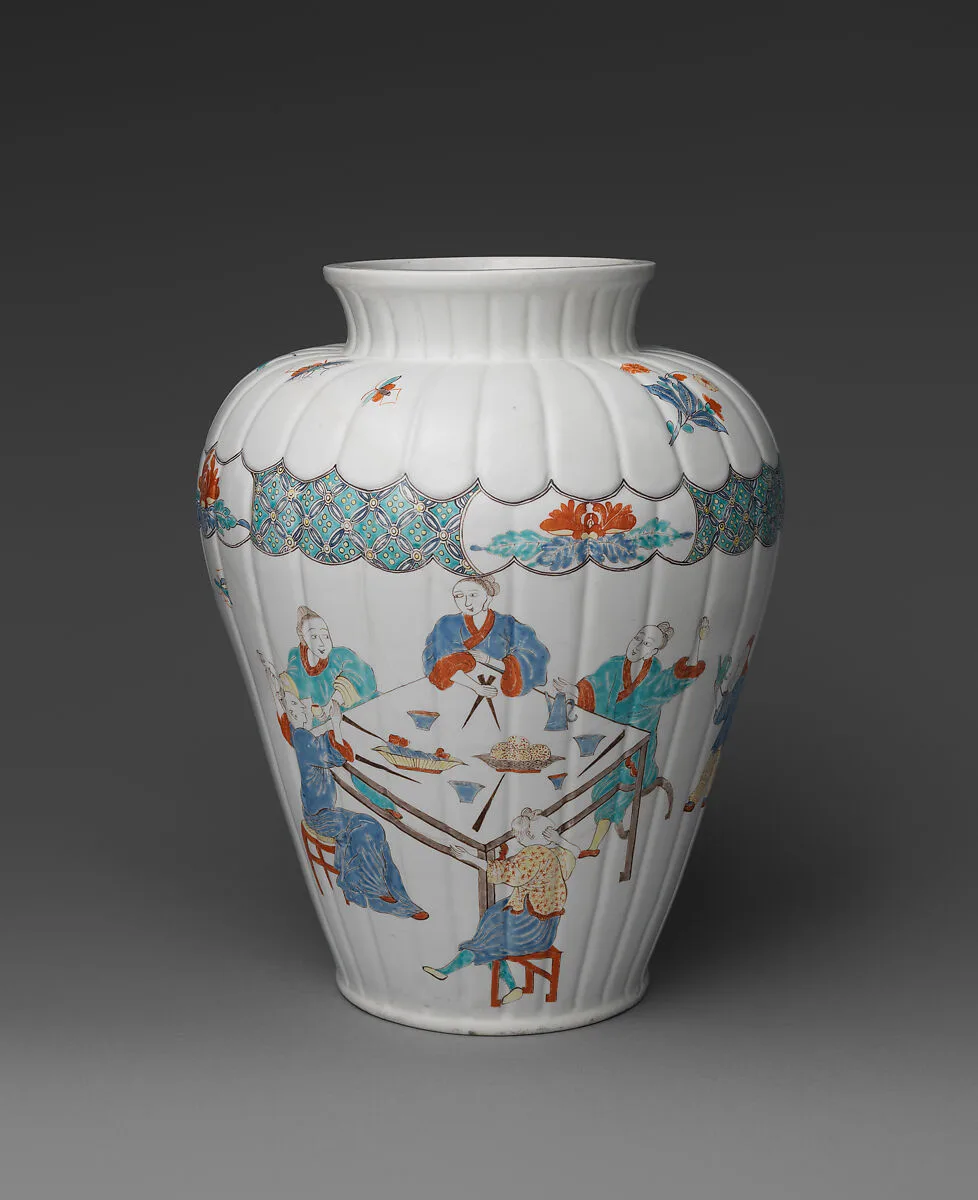
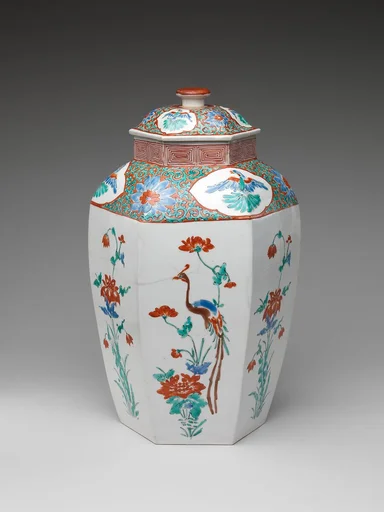
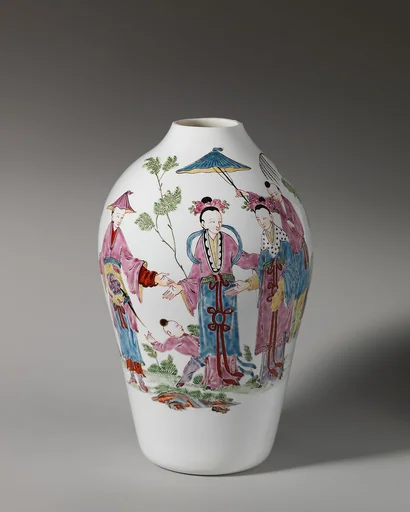
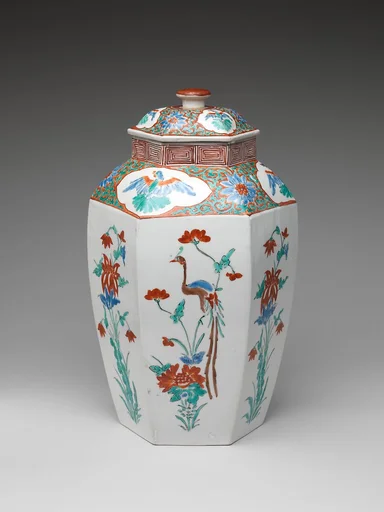
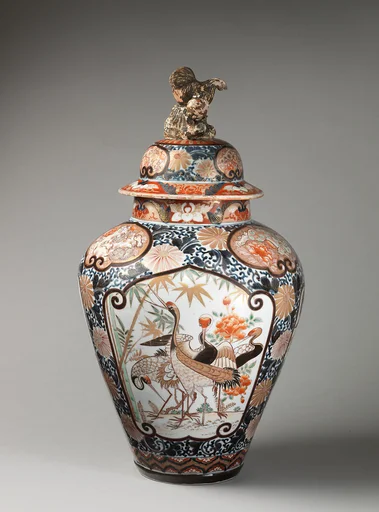
A soft-paste porcelain factory was established in about 1730 by the duc de Bourbon on the grounds of his château at Chantilly. The duc was a passionate collector of Asian ceramics, particularly porcelain from Japan. It is clear that the production of Japanese-style porcelains was made a priority at Chantilly; even the patent granted to the factory by Louis XV in 1735 specifically describes the right to make porcelain "in imitation of the porcelain of Japan." This jar, one of the largest and most ambitious pieces made at Chantilly, copies a Japanese form, and the decoration is self-consciously Japanese in inspiration. The jar's painted scenes are derived from the prints of a designer named Jean Antoine Fraisse (French, active ca. 1680–1739), who was employed by the duc. Numerous motifs found throughout his Book of Chinese Designs, published in 1735, were copied by the factory's painters. The Chantilly factory commonly used a tin glaze for its porcelain. The addition of tin to the lead-based glaze created an opaque, milky white surface that masked the slightly yellow cast of Chantilly's soft-paste porcelain body.
- Artist
- Jean Antoine Fraisse|Chantilly
- Date
- ca. 1735–40
- Medium
- Tin-glazed soft-paste porcelain decorated in polychrome enamels
- Culture
- French, Chantilly
- Department
- European Sculpture and Decorative Arts
- Credit line
- Gift of R. Thornton Wilson, in memory of Florence Ellsworth Wilson, 1950