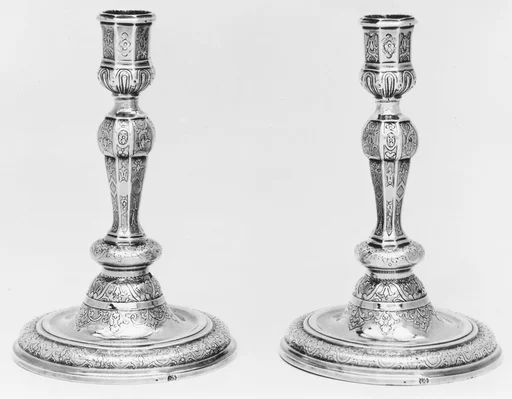
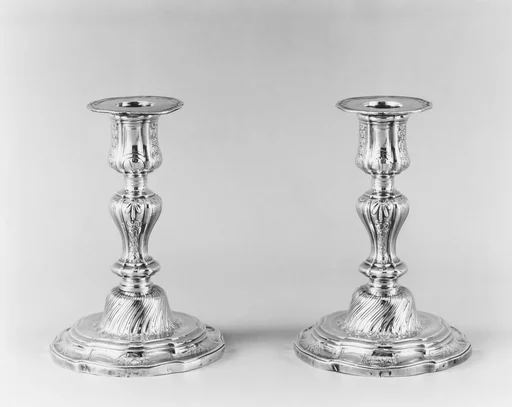
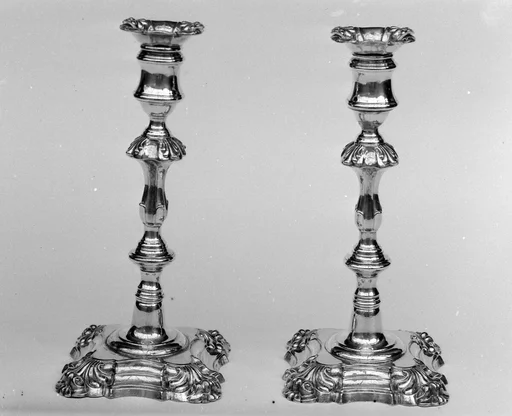
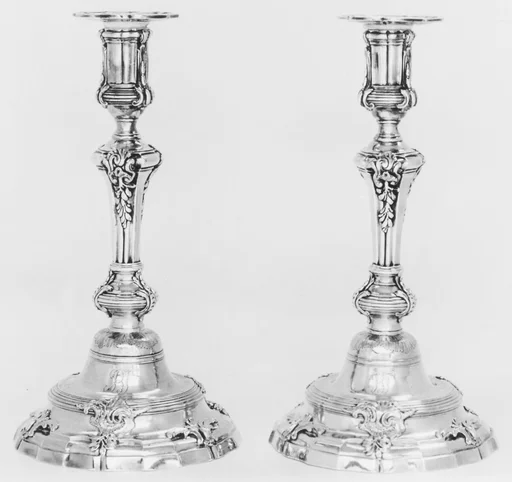
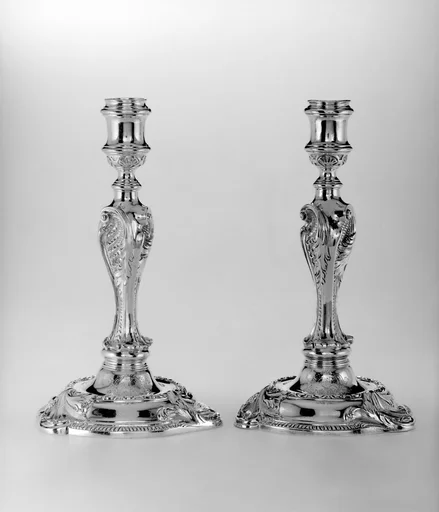
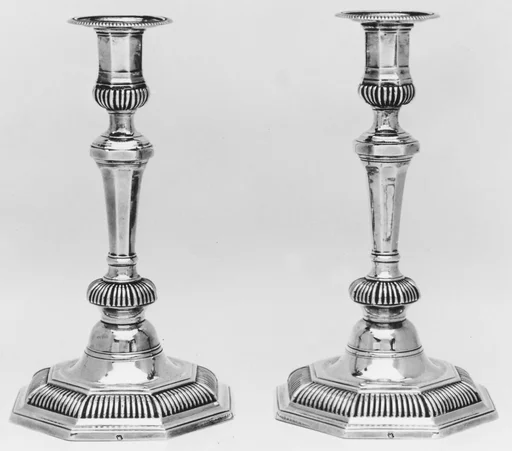
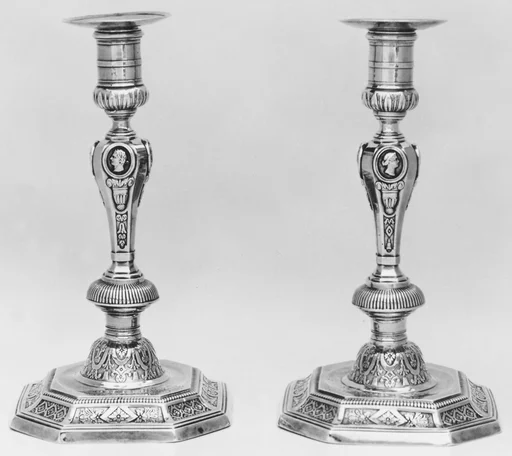
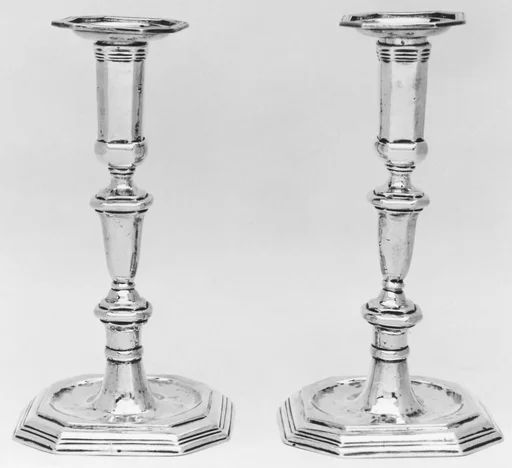
Pair of candlesticks
Jacques Delavigne
1723–25 · Silver · European Sculpture and Decorative Arts
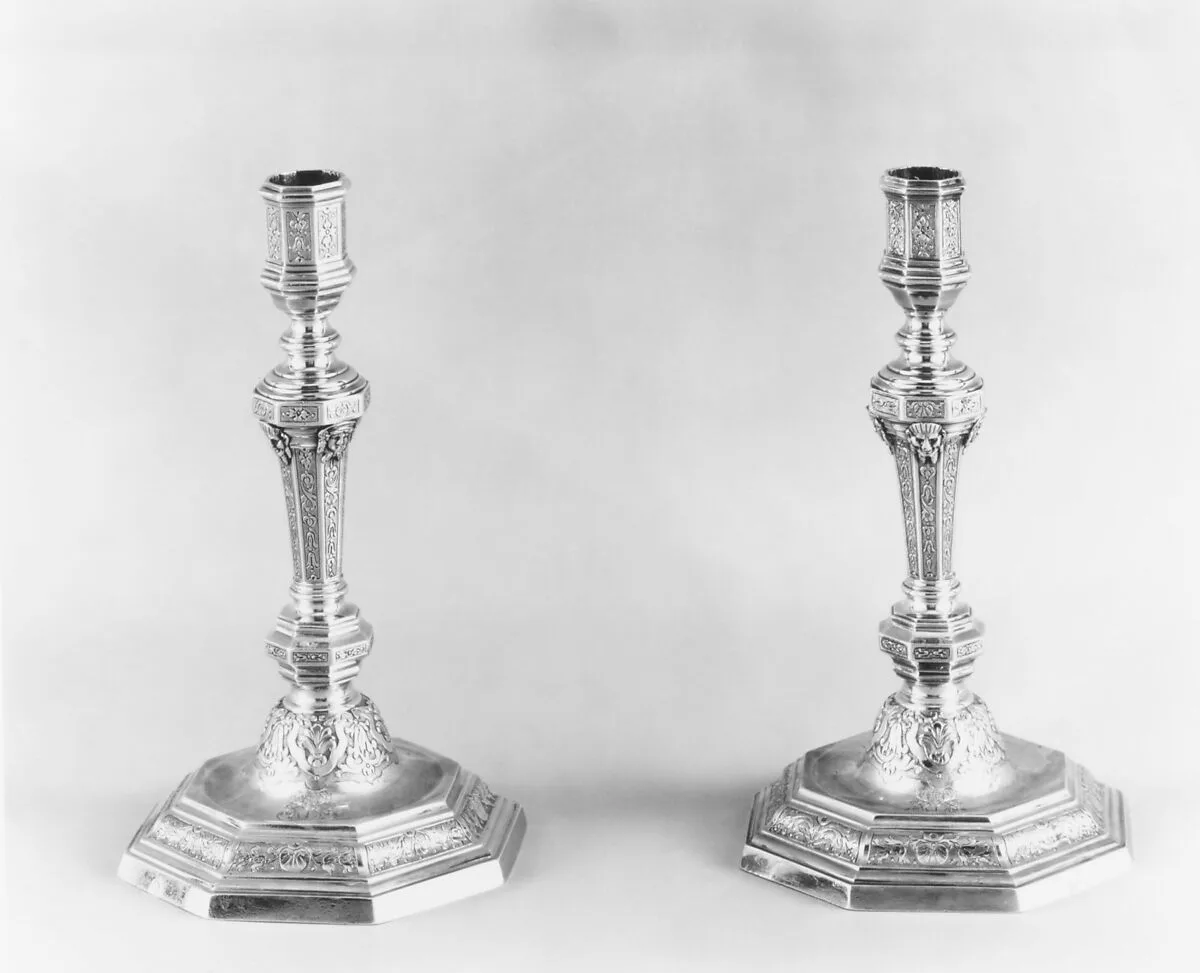
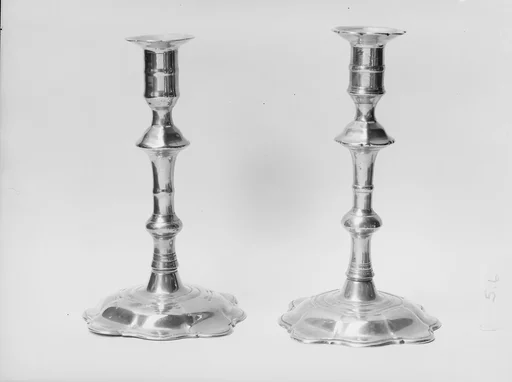
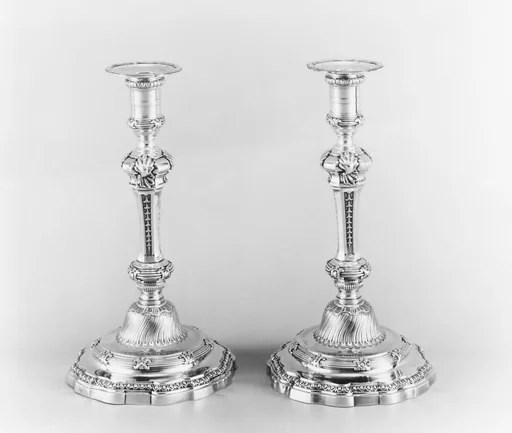
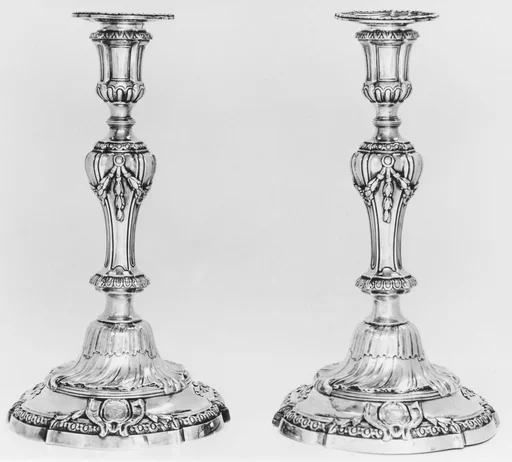
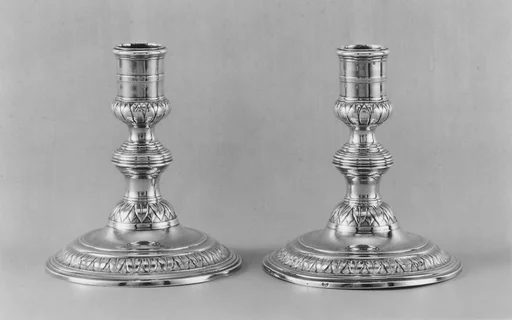
In the era before gas lighting and electricity, candles played a principal role in illuminating the domestic interior. The number of candles lit was an indication of the wealth and status of the owner: beeswax candles burned clean, had a pleasant smell, but were quite expensive compared to those made of tallow. In late seventeenth-century France, a change in dining habits had a significant effect on the production of silver candlesticks. Entertainment was increasingly orientated towards the evening; the use of domestic space changed and as a result, elegant lighting became an important part of the interior decoration. In both shape and decoration, these candlesticks are of a model which was extremely popular in France from about 1690 through the 1720s. The angled baluster stem and the densely patterned ornamentation are characteristic of this type. The chased decoration of foliate ornament and intricate bands of strapwork reflect the influence of the court designer Jean Bérain (1640–1711). Bérain’s numerous prints provided models for the decoration of silver, ceramics, furniture, and wall-paneling. Daughter of one of the founders of the Weyerhaeuser Timber Company, Catherine D. Wentworth (1865–1948) was an art student and painter who lived in France for thirty years. She became one of the most important American collectors of eighteenth-century French silver and on her death in 1948 bequeathed part of her significant collection of silver, gold boxes, French furniture, and textiles to the Metropolitan Museum. The collection is particularly strong in domestic silver as illustrated by this pair of candlesticks.
- Artist
- Jacques Delavigne
- Date
- 1723–25
- Medium
- Silver
- Culture
- French, Paris
- Department
- European Sculpture and Decorative Arts
- Credit line
- Bequest of Catherine D. Wentworth, 1948