Wine taster
Unknown
1775–76 · Silver · European Sculpture and Decorative Arts
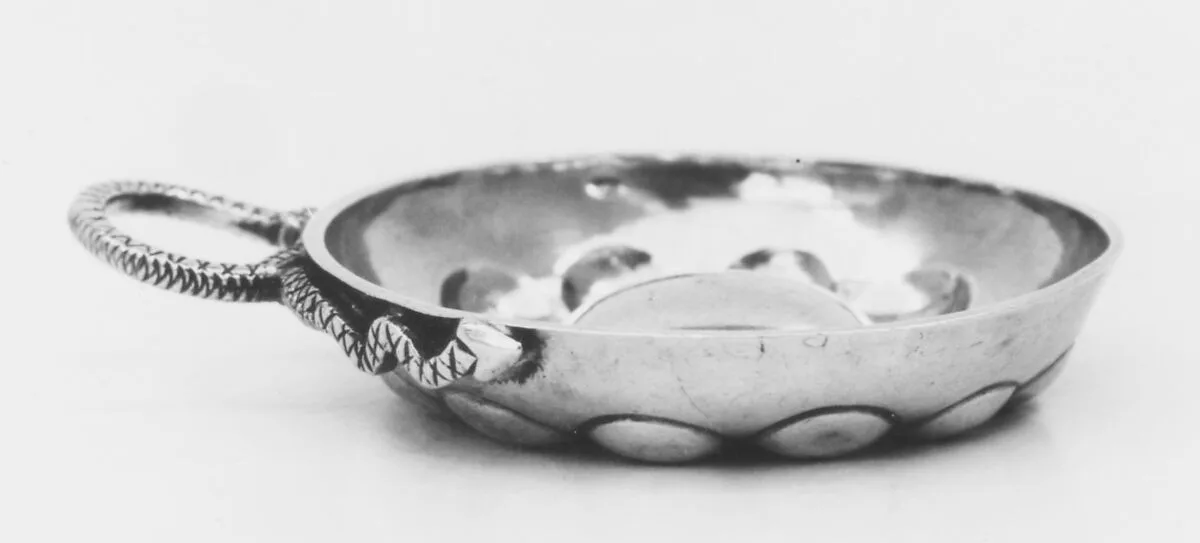
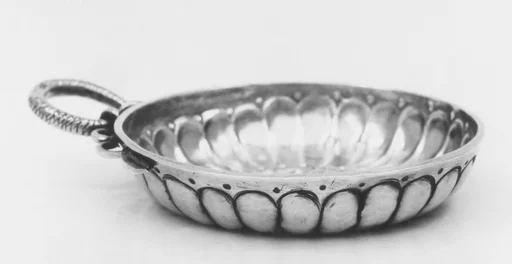
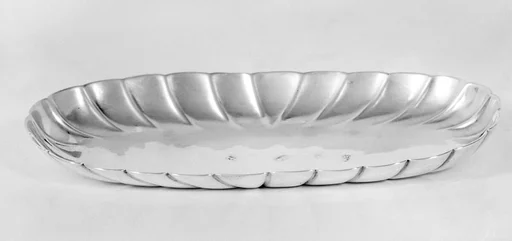
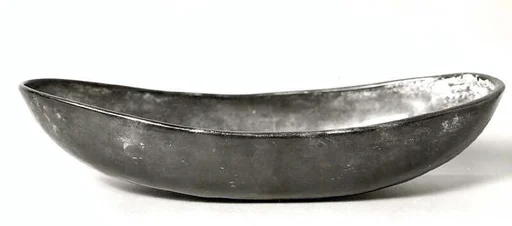
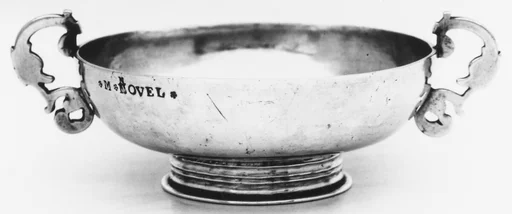
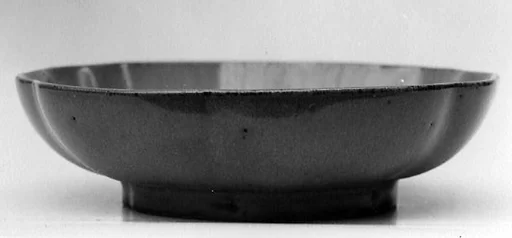
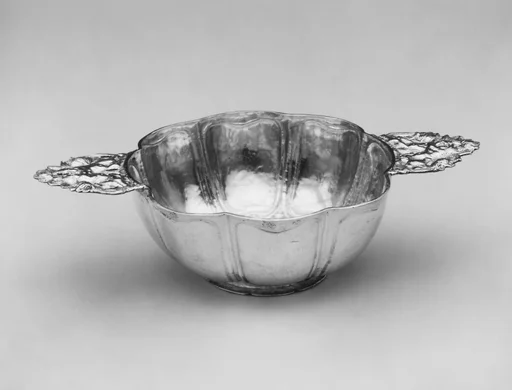
Also known as a tasse à vin, a tâte-vin, or a tastevin, a wine taster was used by a wine merchant to assess the quality, clarity, and color of wine. The reflective properties, resistance to corrosion, and the fact that it would not taint the wine in any way, made silver the ideal material for a winetaster. Shallow in form, these bowls frequently have a convex bottom. The polished surface, either left smooth or embellished with gadrooning and other decorations, would catch the light and reflect it throughout the wine so that it could be checked for impurities. Holding just a small amount of wine, silver wine tasters are often personalized with initials, names, and dates or coats-of-arms. Made by an unknown Parisian silversmith, the ring-shaped handle of this wine taster comprises a reticulated serpent, a symbol of Dionysus, the god of wine. Daughter of one of the founders of the Weyerhaeuser Timber Company, Catherine D. Wentworth (1865–1948) was an art student and painter who lived in France for thirty years. She became one of the most important American collectors of eighteenth-century French silver and on her death in 1948 bequeathed part of her significant collection of silver, gold boxes, French furniture and textiles to the Metropolitan Museum. The collection is particularly strong in domestic silver, much of it made in provincial centers.
- Artist
- Unknown
- Date
- 1775–76
- Medium
- Silver
- Culture
- French, Paris
- Department
- European Sculpture and Decorative Arts
- Credit line
- Bequest of Catherine D. Wentworth, 1948