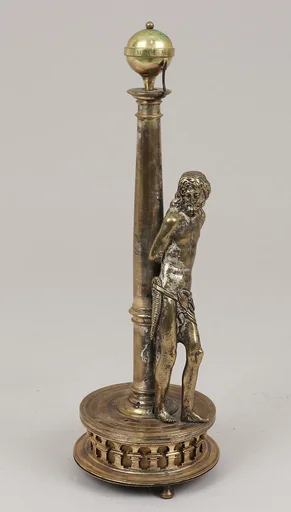
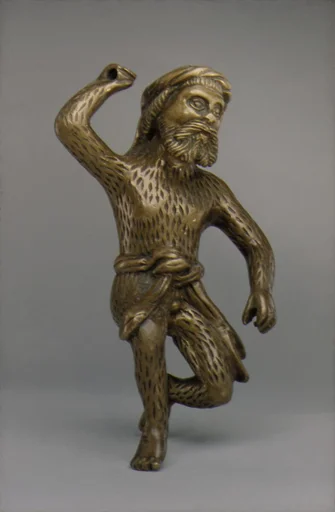
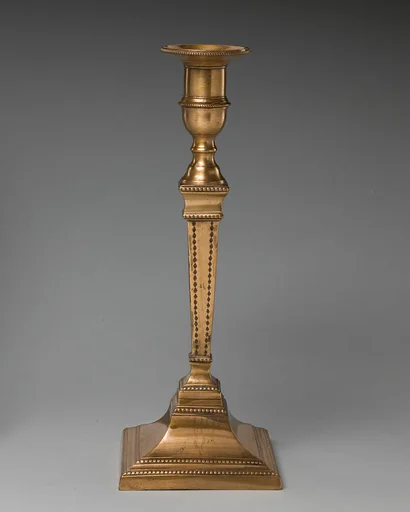
Candlestick
Agostino Veneziano (Agostino dei Musi)
late 16th century · Low zinc brass · European Sculpture and Decorative Arts
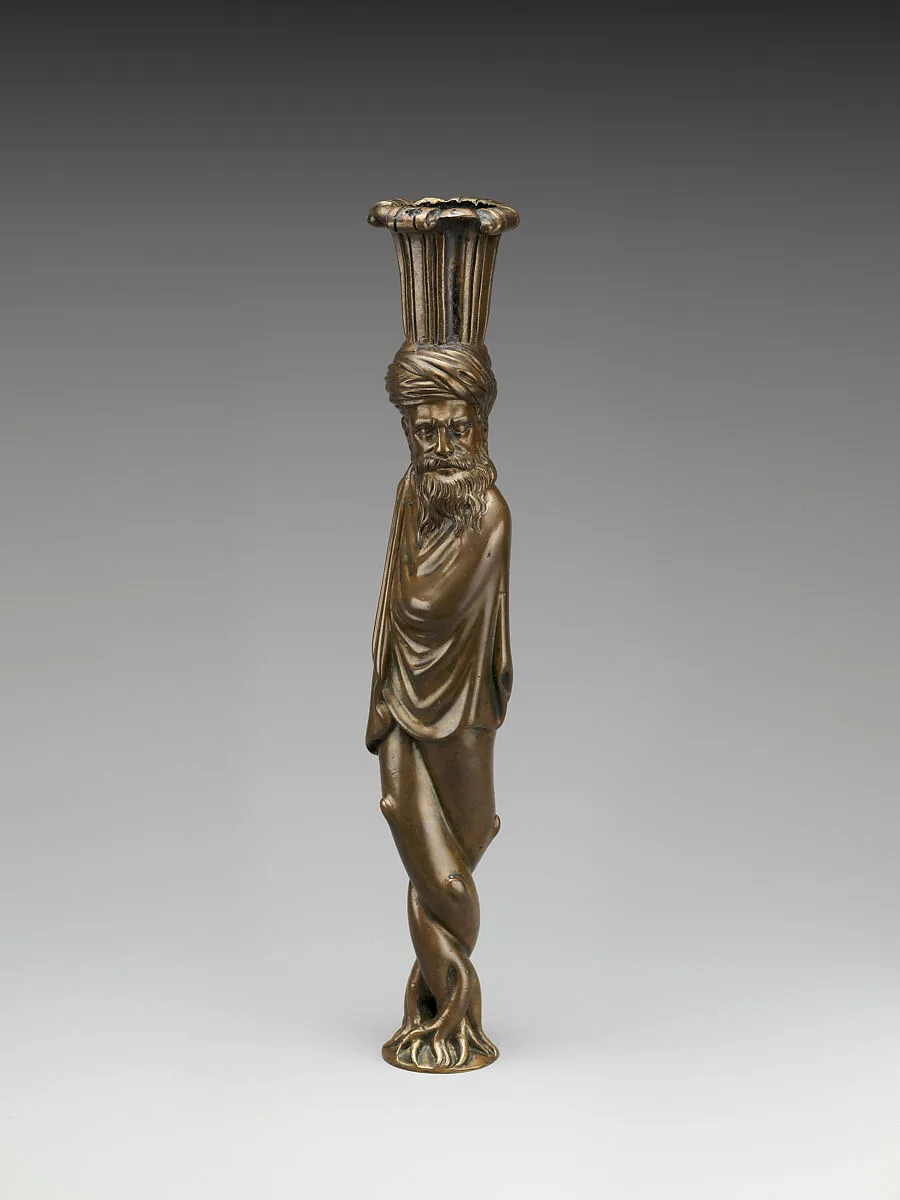
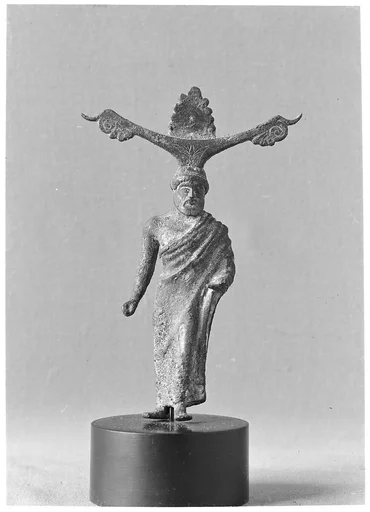
With the widespread availability of brass, cheaper and easier to work than bronze, the middle classes could aspire to own artistically inventive household objects. Brass foundries were initially associated with the Netherlandish Meuse region, particularly the town of Dinant, prompting the designation dinanderie for such objects. Following the Sack of Dinant, Nuremberg became the industry’s center, producing works for the open market. Objects like these brought simplified versions of the latest designs to a wide class of consumers. The candlestick, for example, is loosely inspired by engravings by the Italian Renaissance artist Agostino Veneziano, perhaps by way of the Flemish artist Pieter Coecke van Aelst, whose tapestries and printed books feature similar turban-wearing column figures. [Elizabeth Cleland, 2017]
- Artist
- Agostino Veneziano (Agostino dei Musi)
- Date
- late 16th century
- Medium
- Low zinc brass
- Culture
- German
- Department
- European Sculpture and Decorative Arts
- Credit line
- Gift of George Blumenthal, 1941