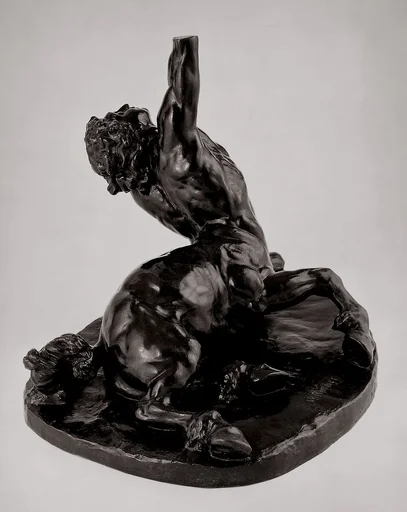
The Falling Gladiator
William Rimmer
1861; cast 1907 · Bronze · The American Wing
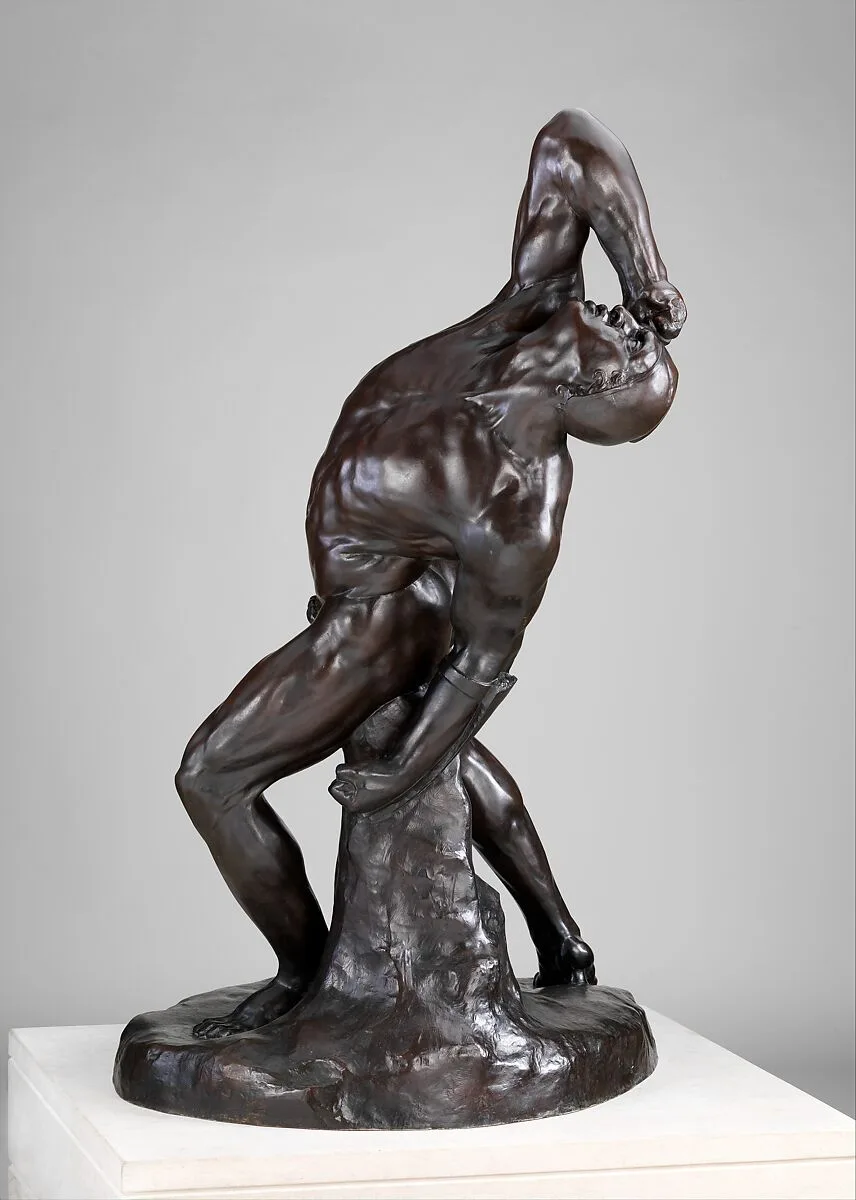
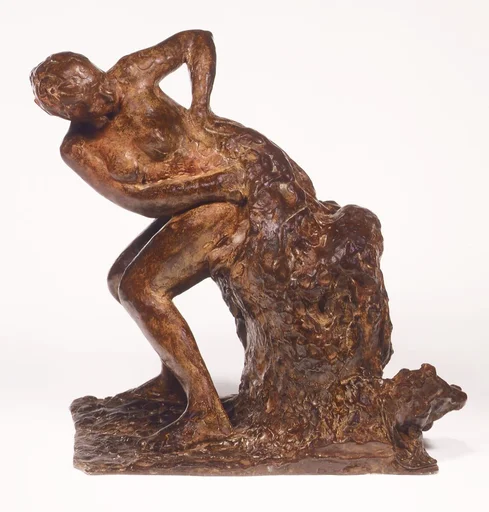
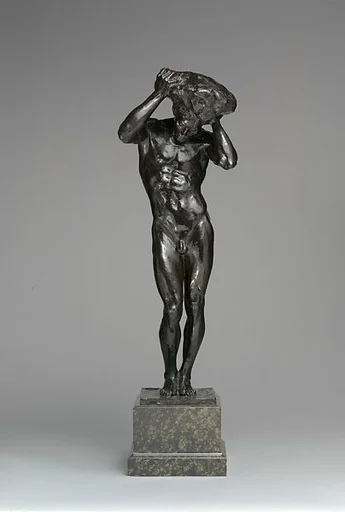
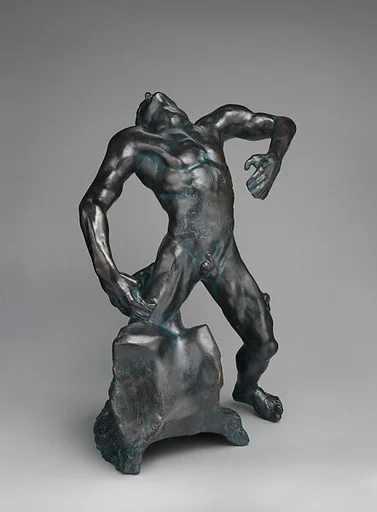
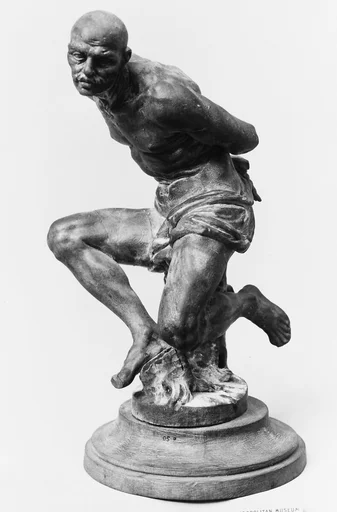
The Boston-based Rimmer was a practicing physician with a superb command of anatomy. He turned to sculpture in the late 1850s, eventually abandoning his medical practice to head a successful art school. In this work, Rimmer conveys the wounded warrior’s physical stress by accentuating his rippling skin and the taut, straining muscles beneath. The tension between the raised arm and the dramatic, collapsing posture enhances the work’s emotional intensity and reflects Rimmer’s fascination with figures that rise and fall simultaneously. Although classical in theme, "The Falling Gladiator" differs from most contemporaneous American sculptures because it lacks a specific literary reference. He rendered the figure with a blunt sword—an element that would identify him as a Gaul, perhaps an association with the artist’s father who, according to family legend, lost a valid claim to the throne of France in his youth. The sculpture was rejected from the Paris Salon, a prestigious annual exhibition, allegedly because the judges thought it was cast from a live model. The Met bronze was produced posthumously in 1907 from a plaster cast after Rimmer’s original plaster (now Smithsonian American Art Museum, Washington, DC).
- Artist
- William Rimmer
- Date
- 1861; cast 1907
- Medium
- Bronze
- Culture
- American
- Department
- The American Wing
- Credit line
- Rogers Fund, 1907