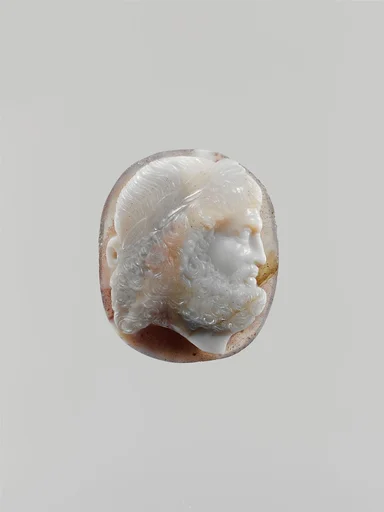
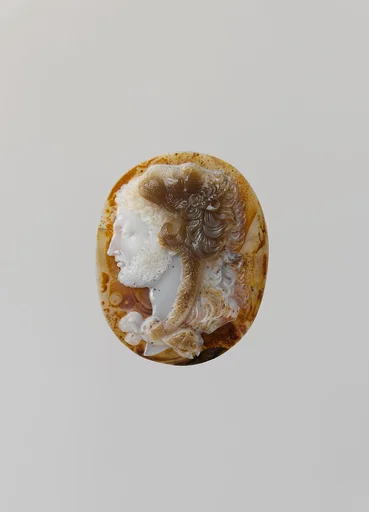
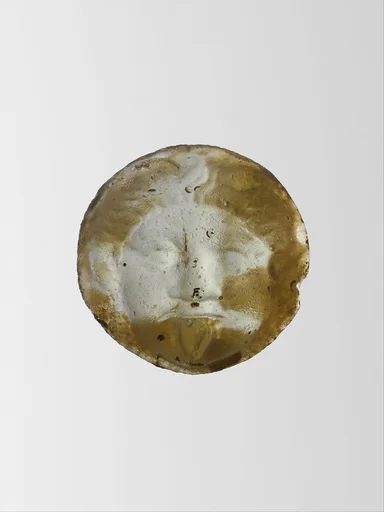
Bust of a Roman Emperor, possibly Galba
Unknown
probably mid-16th century · Agate · European Sculpture and Decorative Arts
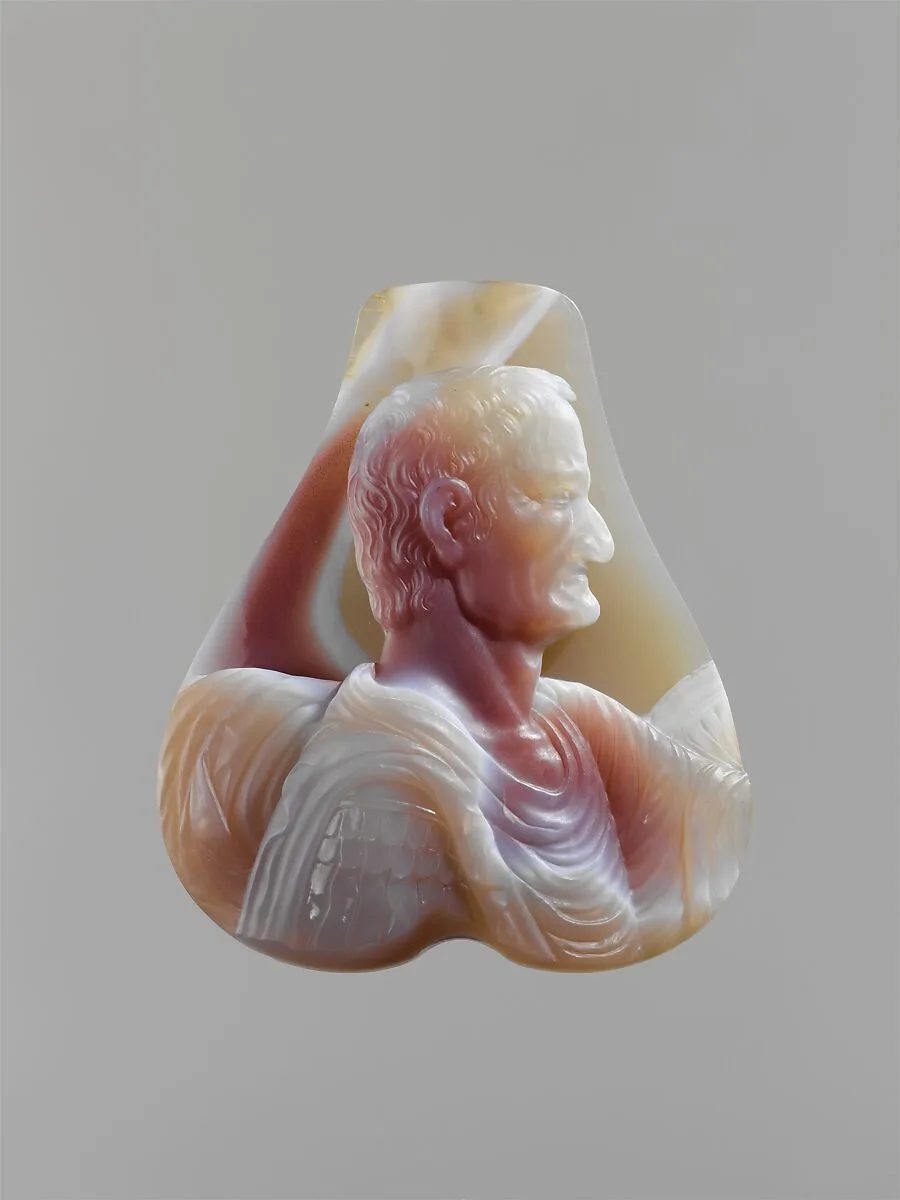
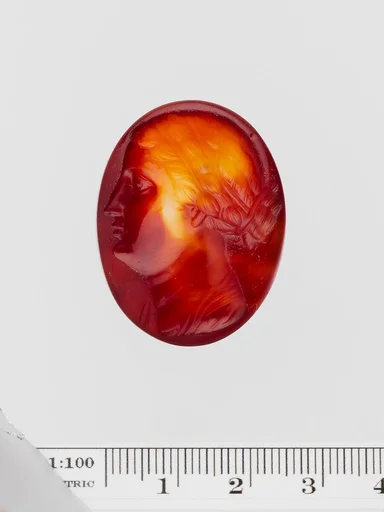
Carved from the same attractive piece of stone as 38.150.6, banded in pink, white, and gray, the bust formed the side of a gunpowder flask. The Italian Renaissance brought with it a wholehearted embrace of classical antiquity throughout the fifteenth and sixteenth centuries. Emulation of ancient cameos played a large part. Carvers invested ancient myths with increasingly refined compositions and techniques, paying close attention to the latest archaeological discoveries. Demand for Italian carvers took them to all the courts of Europe. Milan in particular developed a taste for cameos with wondrous atmospheric effects.
- Artist
- Unknown
- Date
- probably mid-16th century
- Medium
- Agate
- Culture
- Italian
- Department
- European Sculpture and Decorative Arts
- Credit line
- The Milton Weil Collection, 1938