Chasuble
Unknown
early 18th century · Silk satin embroidered with silk and metal thread; metal lace · European Sculpture and Decorative Arts
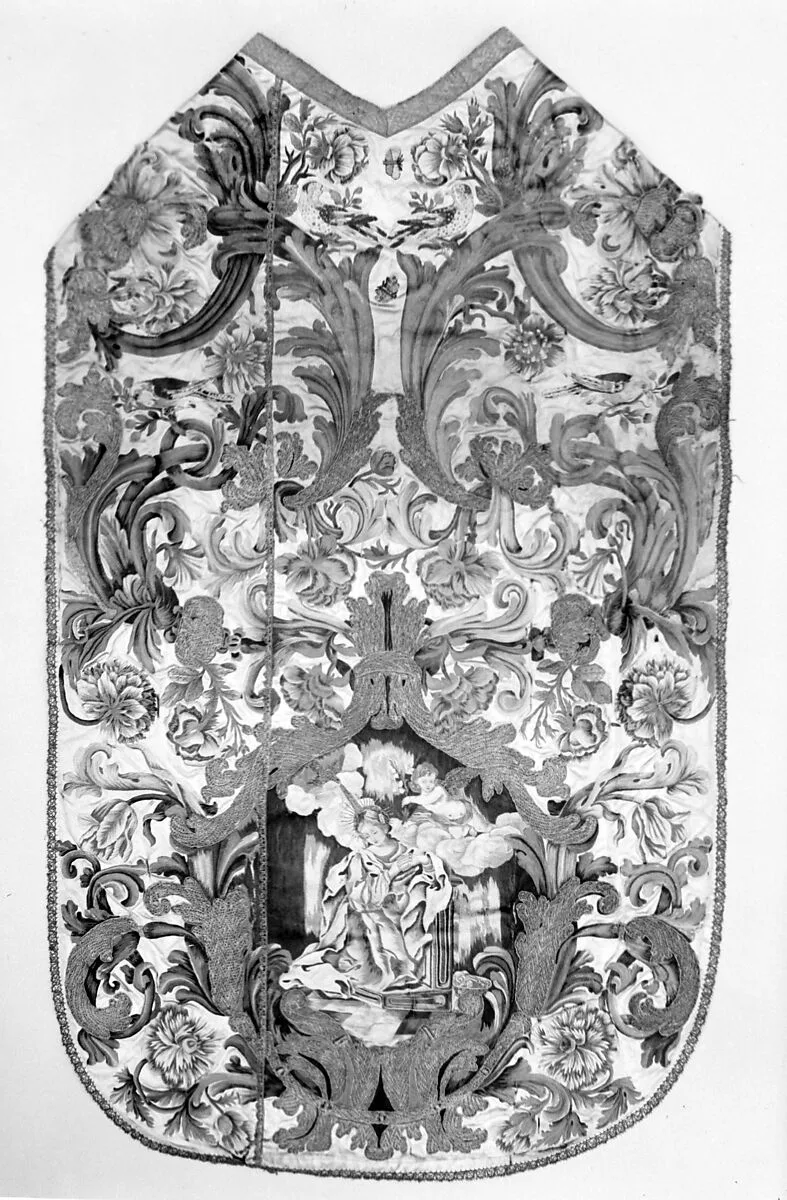
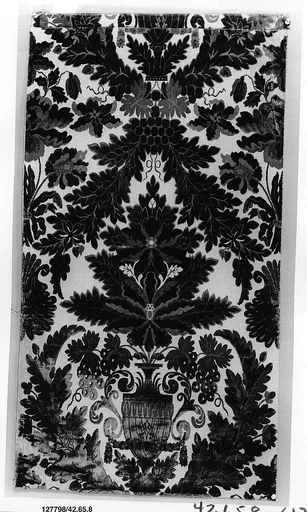
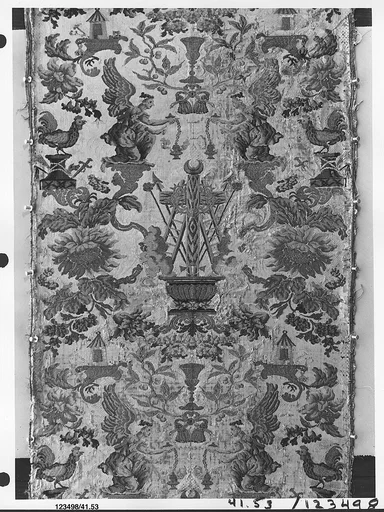
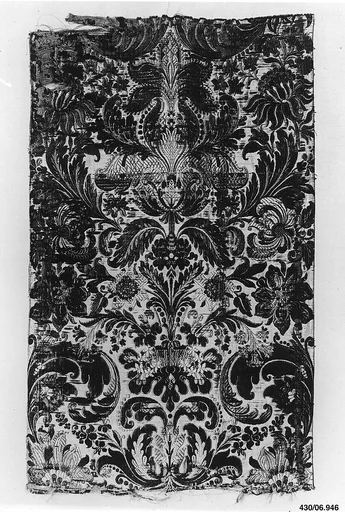
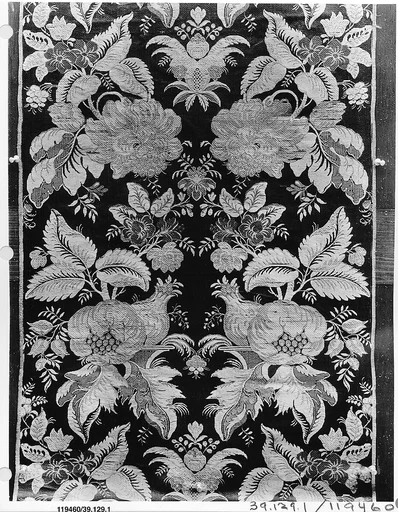
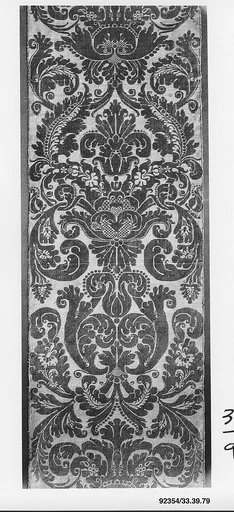
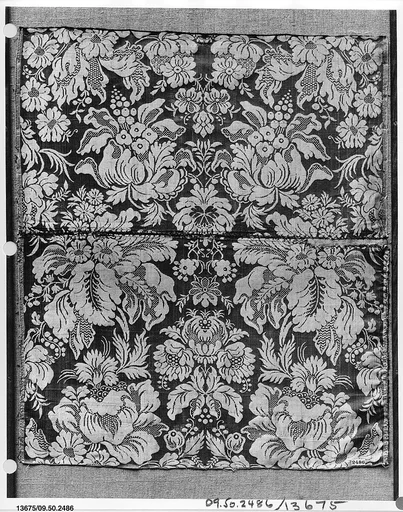
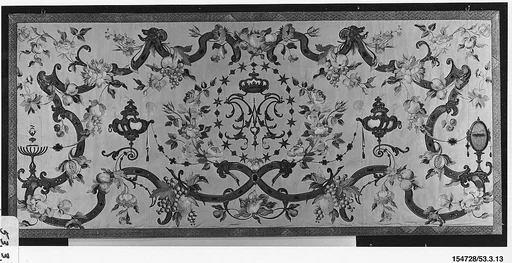
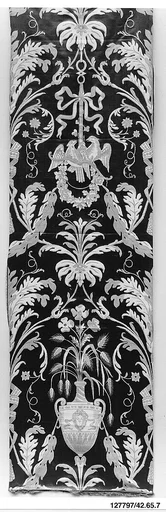
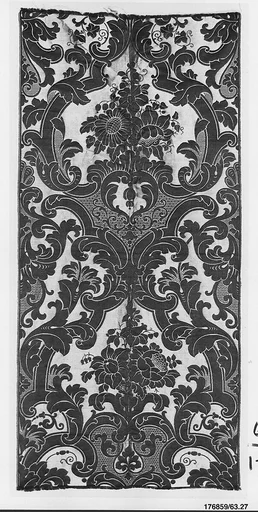
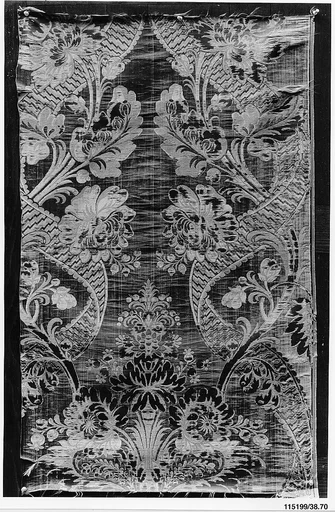
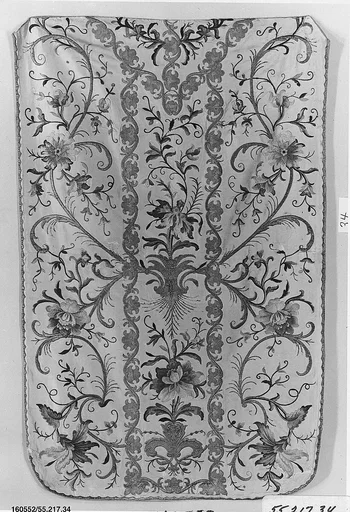
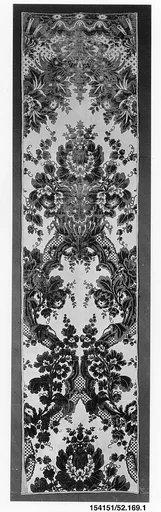
Against a ground of cream silk, a baroque exuberance of brilliant green acanthus leaves and flowers– including pink tulips open to their fullest and blue ipomoea ("morning glory")– scroll across both sides of this priests' garment. In the center of the front, a large oval medallion represents the Christ Child walking hand-in-hand with Saint Joseph; on the reverse, the Dove of God communes with the Annunciate Virgin. Thick textured gilded passementerie and appliqués complete the sumptuous effect of this object. However, cleverly hidden seams, and the slightly disconcerting scale and placement of the figurative elements betray that this garment was not the textile's original format. The embroidered silk was originally part of a large, horizontal altar hanging- in Italian, a paliotto- decorated with scenes of the infancy of Christ, which was apparently cut up and repurposed approximately half a century after its creation: tailored to create a set of vestments including this chasuble, as well as a related maniple (38.86.7), stole (38.86.8) and chalice veil (38.86.9) also in The Met's collection.
- Artist
- Unknown
- Date
- early 18th century
- Medium
- Silk satin embroidered with silk and metal thread; metal lace
- Culture
- Italian
- Department
- European Sculpture and Decorative Arts
- Credit line
- Gift of Mrs. Samuel Stiefel, 1938