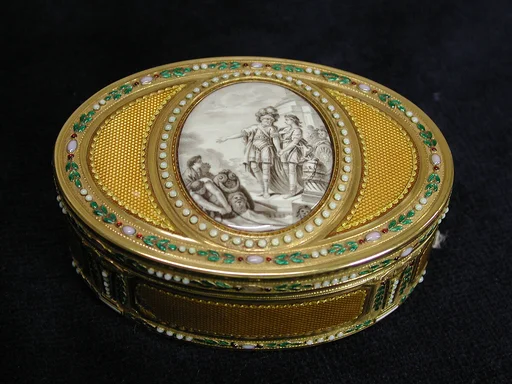
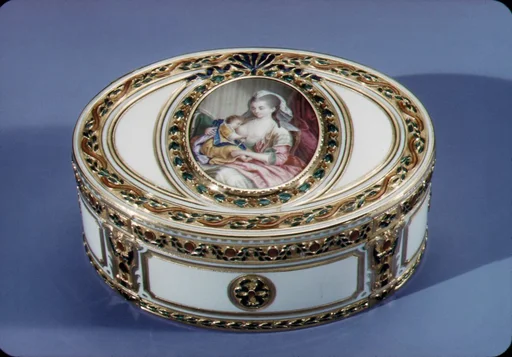
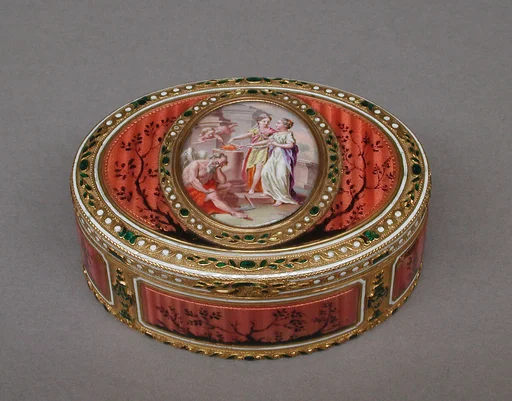
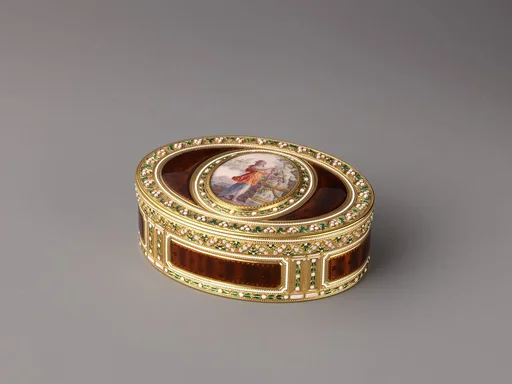
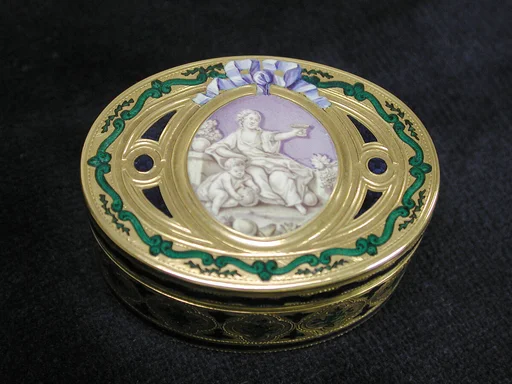
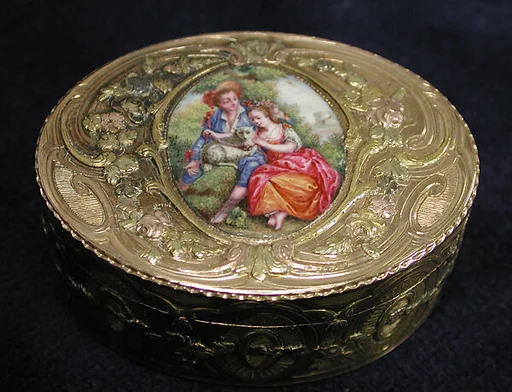
Snuffbox with miniature of sleeping Endymion and Selene
Unknown
1772–73 · Gold and composition; tortoiseshell; ivory · European Sculpture and Decorative Arts
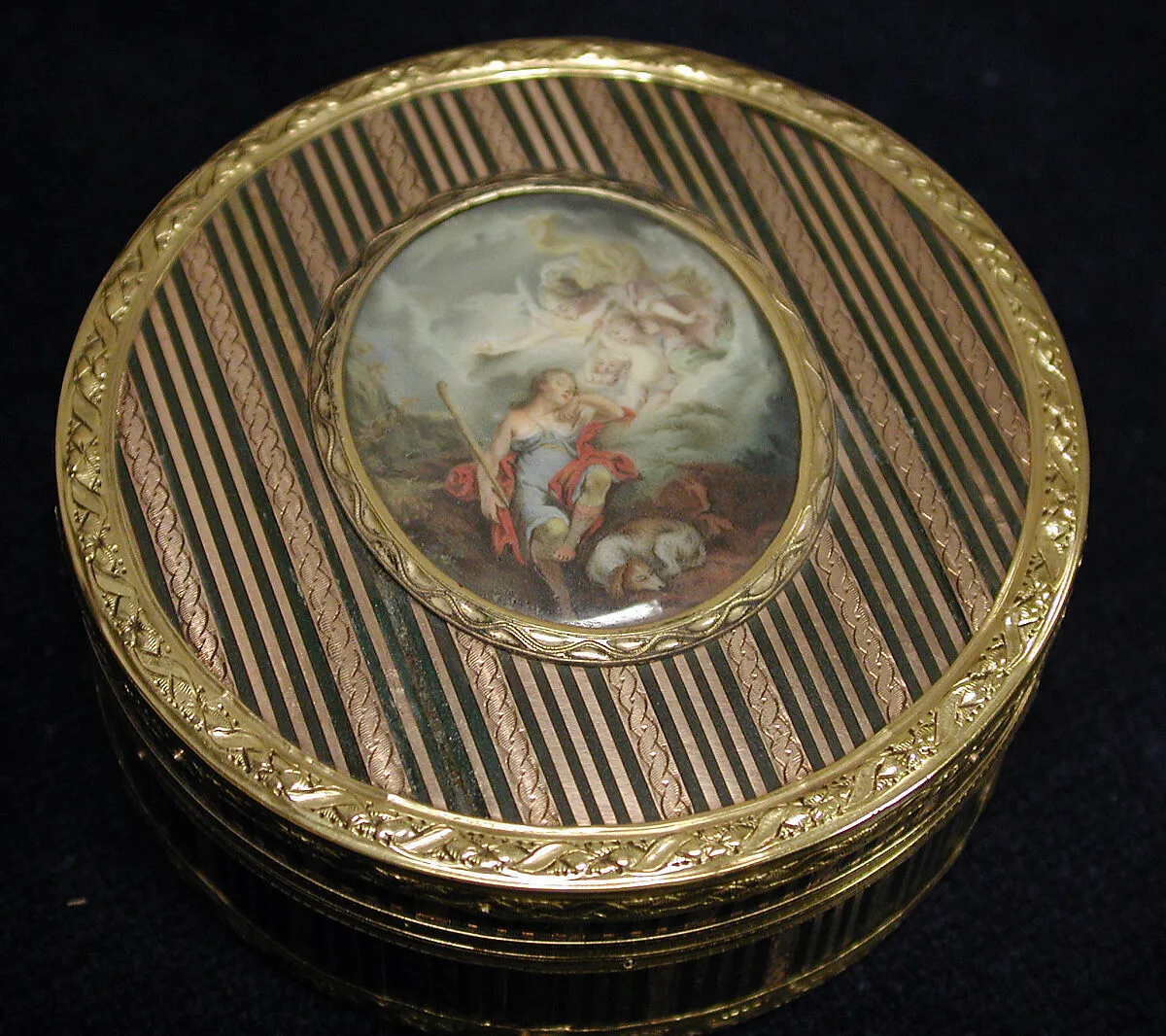
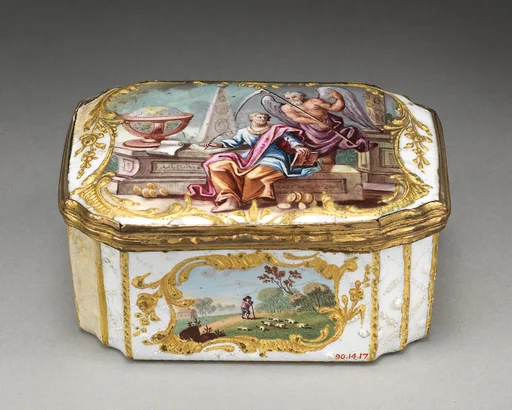
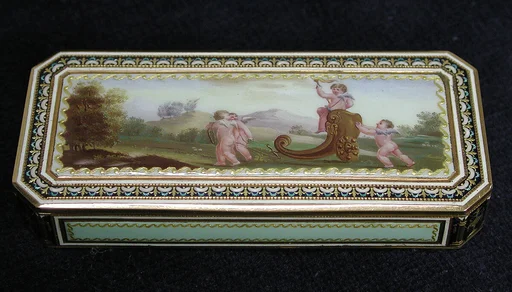
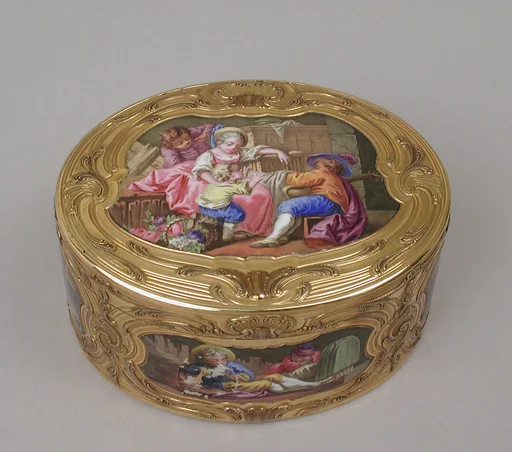
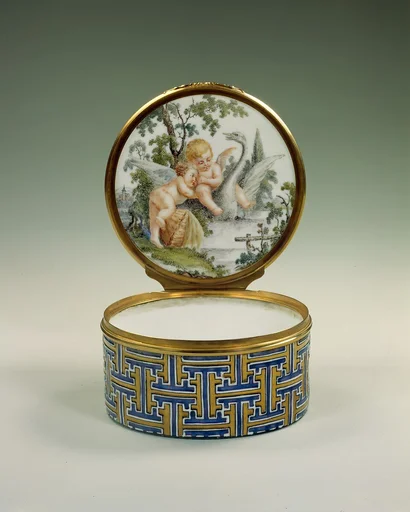
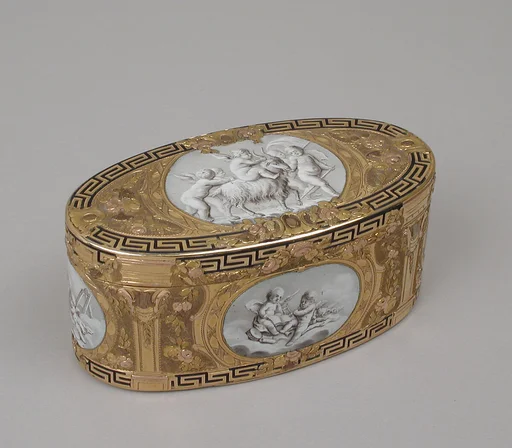
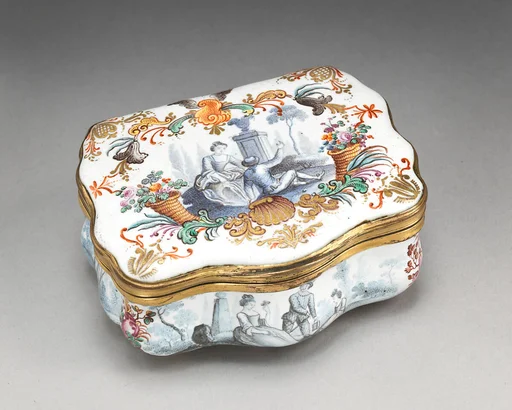
In eighteenth-century Europe, Paris led the production of high-quality luxury goods. Parisian goldsmiths made a wide range of small, personal articles such as snuffboxes; étuis to hold sealing wax, tweezers, or utensils for sewing; souvenirs, which contained thin ivory tablets for note taking; and shuttles for knotting lace. Gold snuffboxes and boxes decorated with portrait miniatures were prized and frequently given as royal gifts, often to ambassadors or members of the court in lieu of cash payments for their services. Coveted and admired, these boxes were produced from a variety of materials. The best were skillfully made of gold and embellished with diamonds, enameled decoration, lacquer, and other luxurious materials. By the middle of the century, the taking of snuff had become an entrenched social ritual, and the snuffbox, too, had become an important social prop. Snuffboxes were considered highly fashionable accessories, with some merchants advertising new boxes with each change of season. The popularity of snuffboxes extended to all levels of society, and for those who could not afford gold, boxes were produced in less expensive materials such as silver, tortoiseshell, porcelain, or domestically produced lacquer.
- Artist
- Unknown
- Date
- 1772–73
- Medium
- Gold and composition; tortoiseshell; ivory
- Culture
- French, Paris
- Department
- European Sculpture and Decorative Arts
- Credit line
- Bequest of Kate Read Blacque, in memory of her husband, Valentine Alexander Blacque, 1937