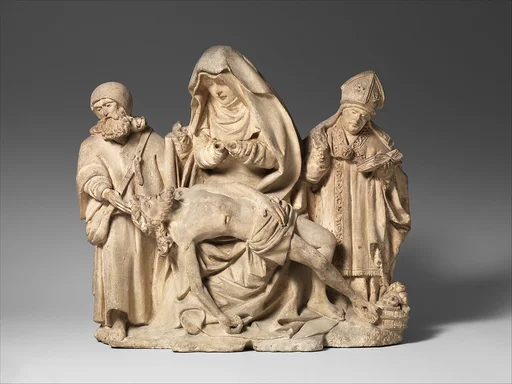
Pietà
Unknown
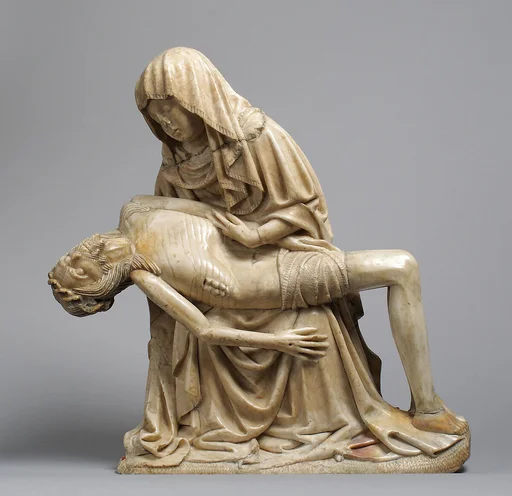
second quarter 16th century · Alabaster, with traces of original polychromy · European Sculpture and Decorative Arts
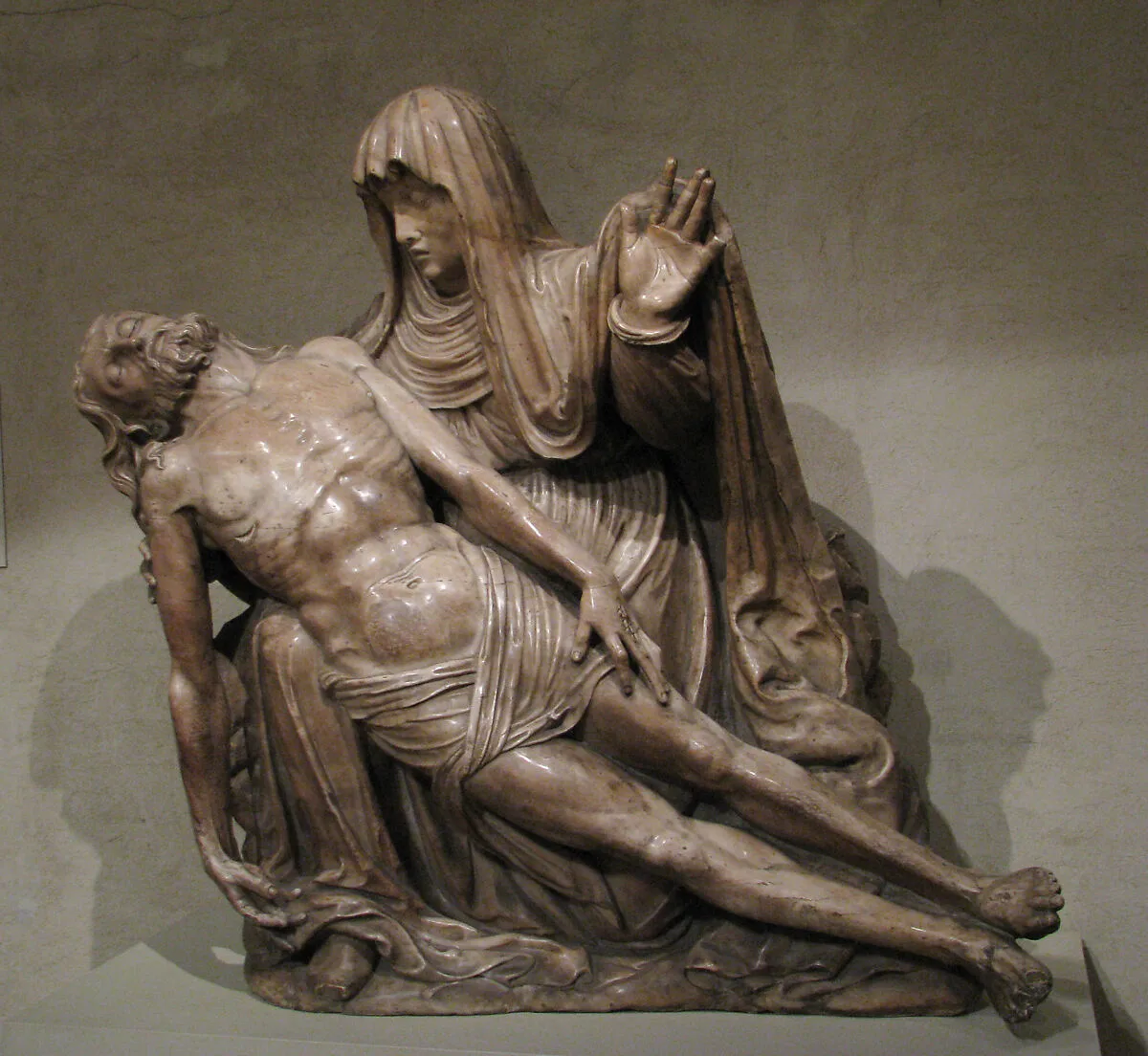
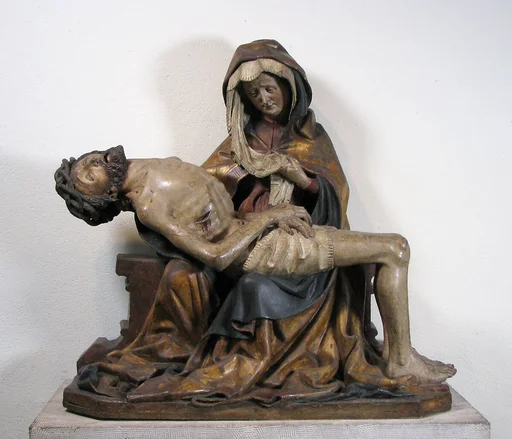
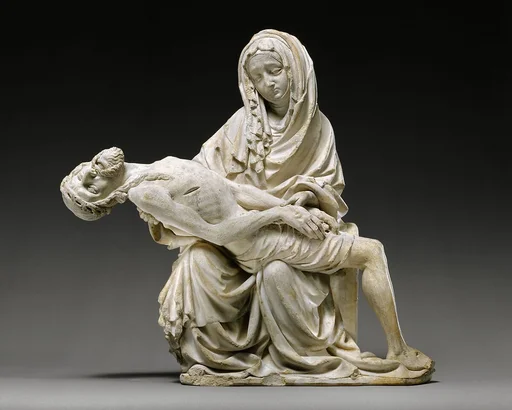
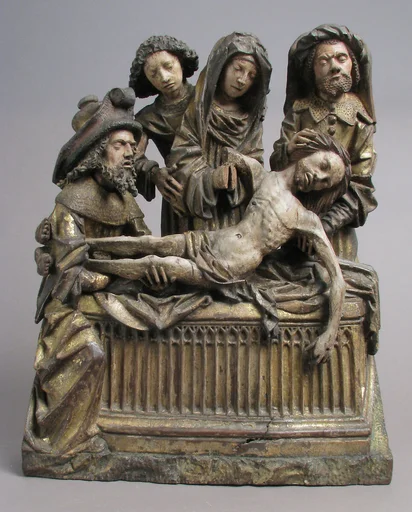
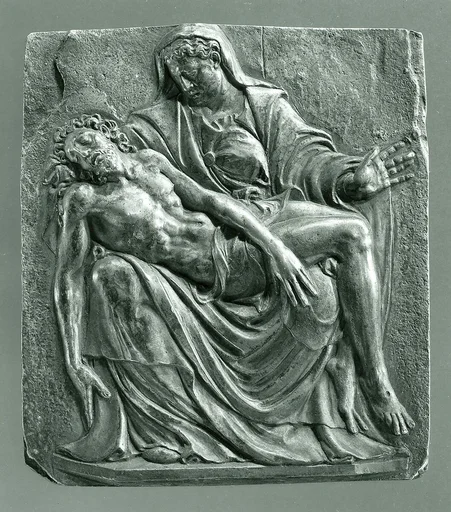
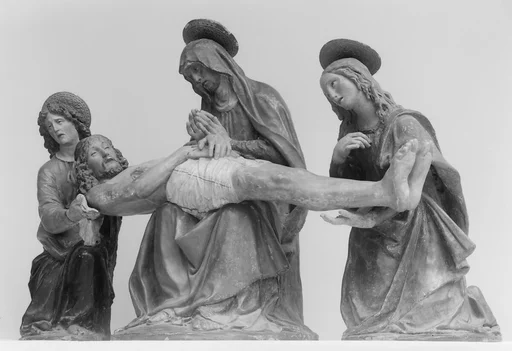
The representation of the mourning Virgin holding her son's crucified body in her lap was a popular devotional image throughout the Catholic world, echoing the even more beloved depiction of the Madonna and Child in more joyful times. Often the Virgin is simply shown in sorrowful contemplation so as to emphasize a maternal sensibility not described in the Gospels but rather derived from mystical writings disseminated among convents. In this composition, Mary's sorrowful gesture relates the theme to the more elaborate portrayal of the Lamentation at the foot of the cross. So, too, does the corpselike rigidity of Christ's torso, a pose typical of the late fifteenth century. The use of alabaster was particularly characteristic of architectural and figural sculpture in Catalonia and Aragon, but this group has not yet been conclusively linked to the work of any artist of the region.
- Artist
- Unknown
- Date
- second quarter 16th century
- Medium
- Alabaster, with traces of original polychromy
- Culture
- Spanish
- Department
- European Sculpture and Decorative Arts
- Credit line
- Harris Brisbane Dick Fund, 1933