Doorknocker
Unknown
late 15th–early 16th century · Bronze, iron pin · European Sculpture and Decorative Arts
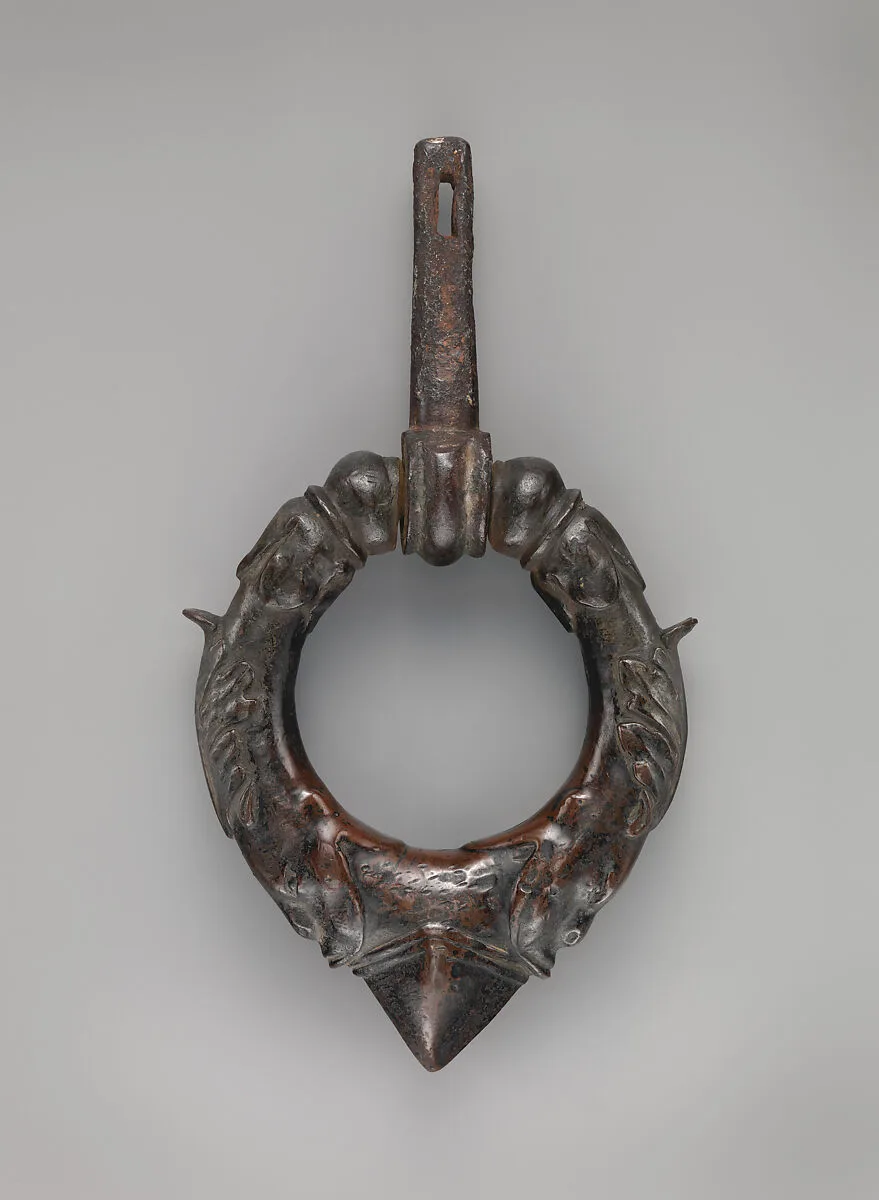
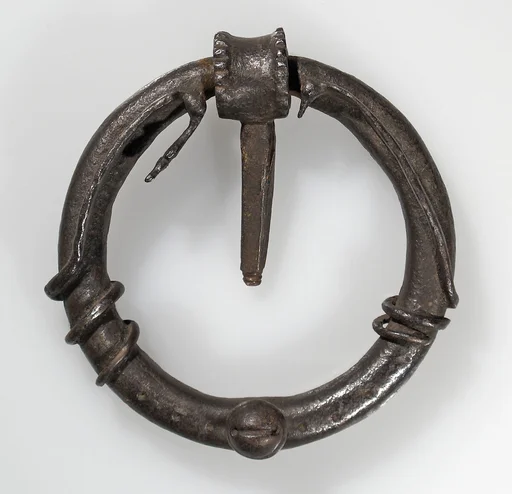
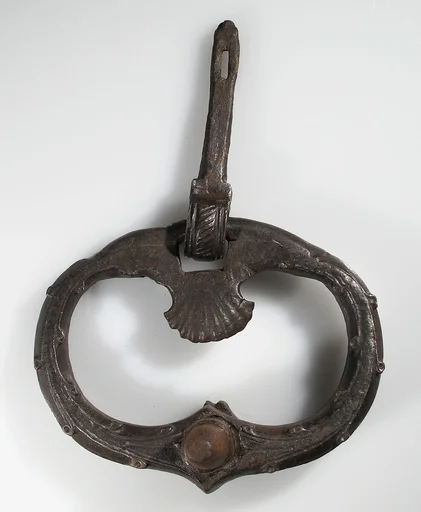
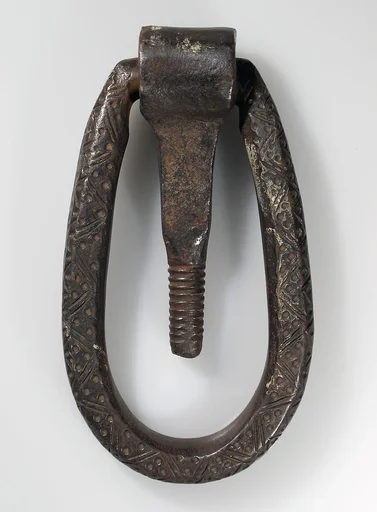
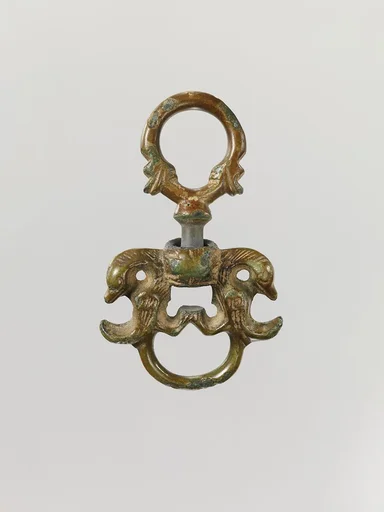
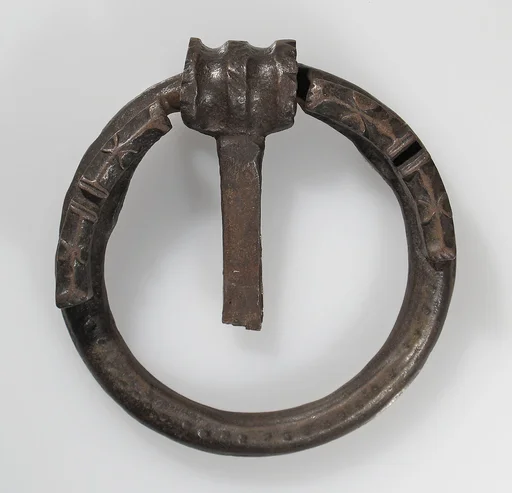
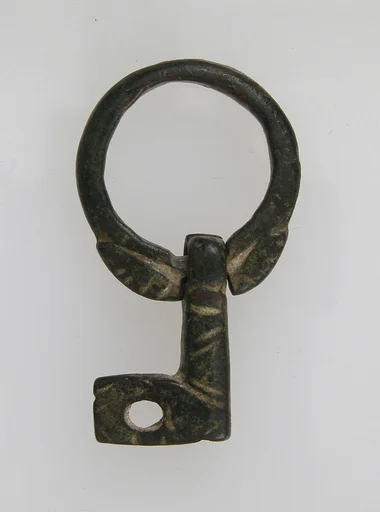
A knocker inserted through the wood of a door, when struck against a metal plate that was likewise affixed to the door, allowed visitors to announce their presence to those within. This bronze knocker was cast in the form of a ring, around which was forged the horizontal iron strap that held it in place; the narrow slot at the end of the strap helped secure it on the other side of the door with an iron wedge. The weight and thickness imply a door of considerable stoutness. The object shows plenty of age and use, evincing a rich natural patina, nicks, and a well-rubbed, slightly flattened area behind the lower back of the knocker, where it struck the now-missing plate. The ringlike composition incorporates acanthus and sea creatures somewhat resembling dolphins, the mouths of which form a bezel of sorts for the diamond in which it terminates. The most celebrated imagery to include a diamond belonged to the Medici family in Florence, but it lacked acanthus and dolphinlike sea life.[1] The ring could signify any marital alliance. The handsome forms and facture of this unstudied object do not, for that matter, appear particularly Florentine. -JDD Footnotes (For key to shortened references see bibliography in Allen, Italian Renaissance and Baroque Bronzes in The Metropolitan Museum of Art. NY: The Metropolitan Museum of Art, 2022.) 1. No such combinations appear in Langedijk 1981–87.
- Artist
- Unknown
- Date
- late 15th–early 16th century
- Medium
- Bronze, iron pin
- Culture
- Central Italian
- Department
- European Sculpture and Decorative Arts
- Credit line
- Rogers Fund, 1927