Four Seasons shawl
Unknown
mid-19th century · Wool and silk · European Sculpture and Decorative Arts
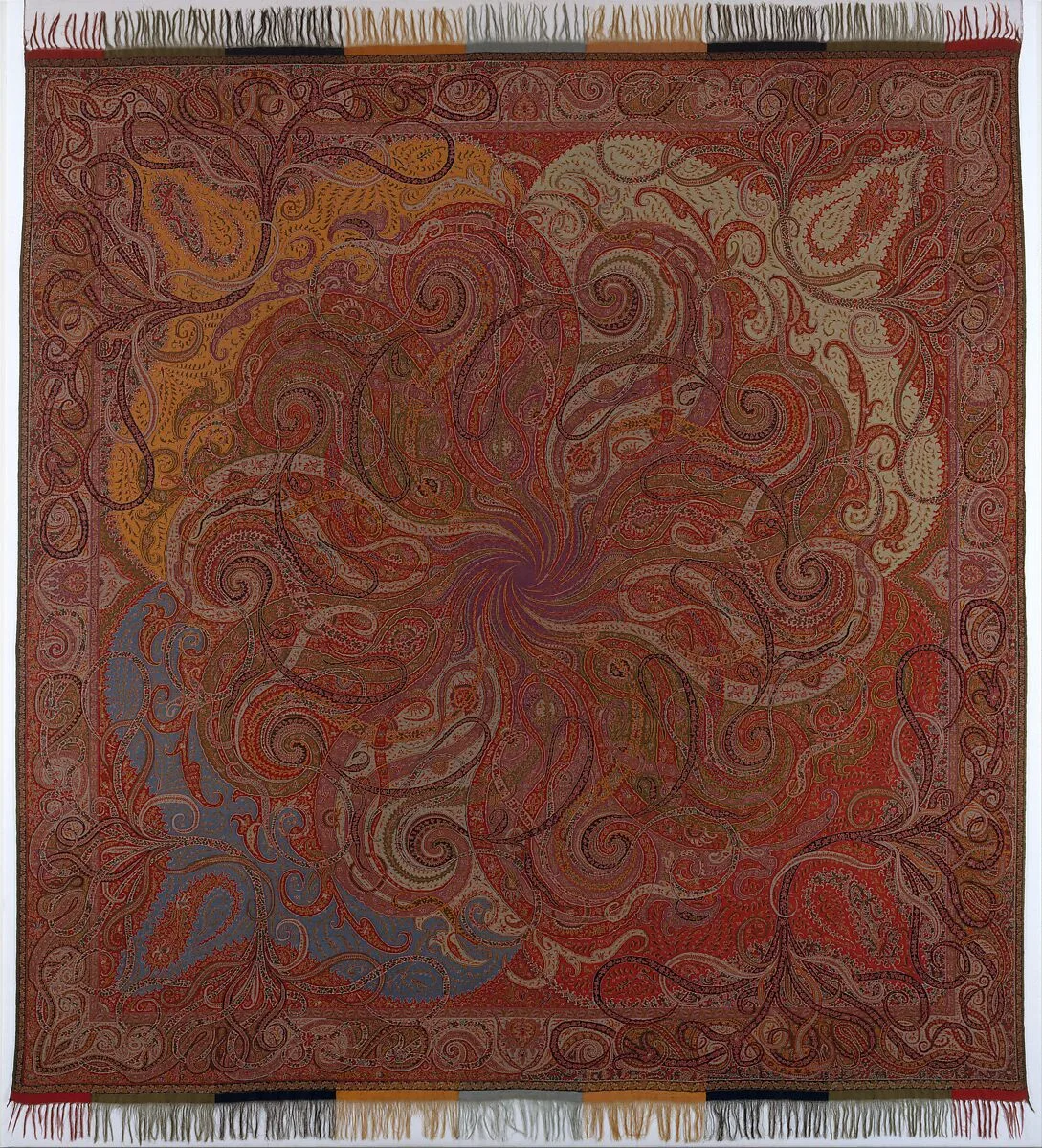
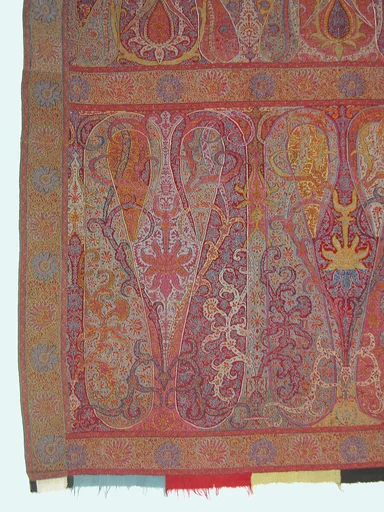
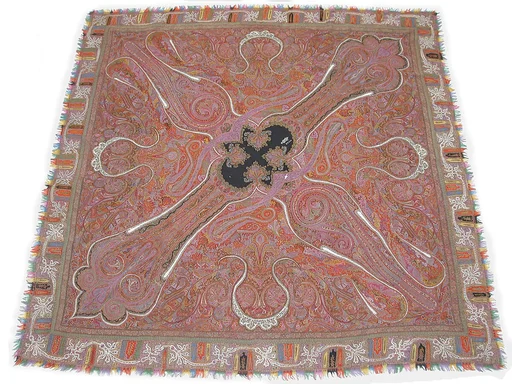
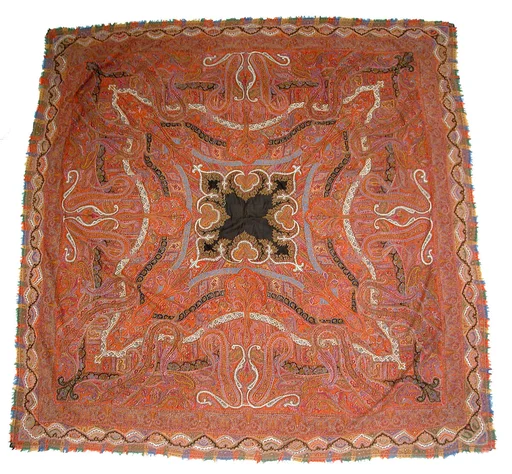
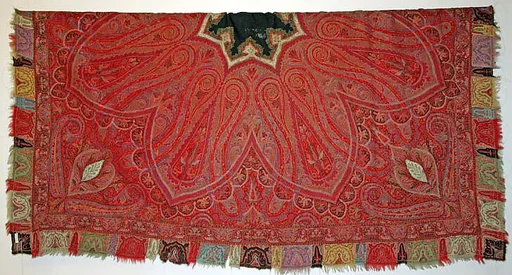
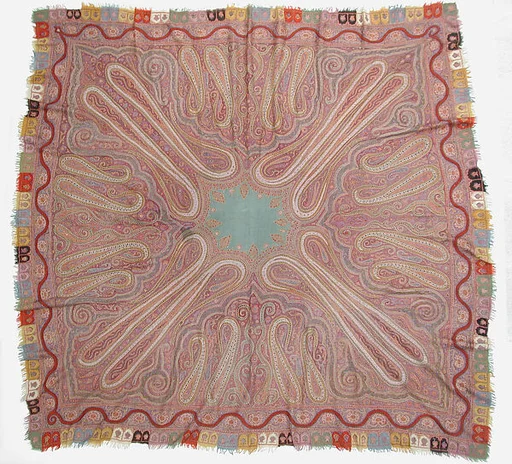
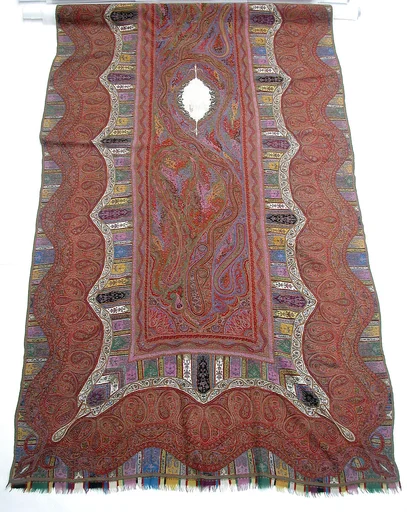
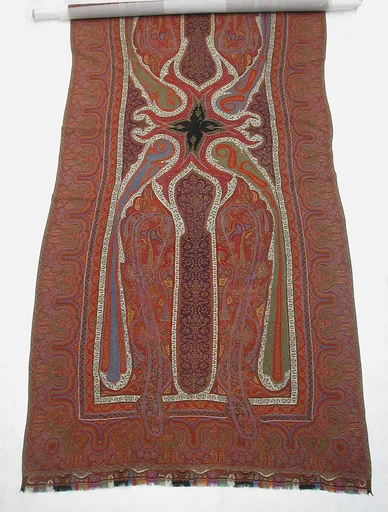
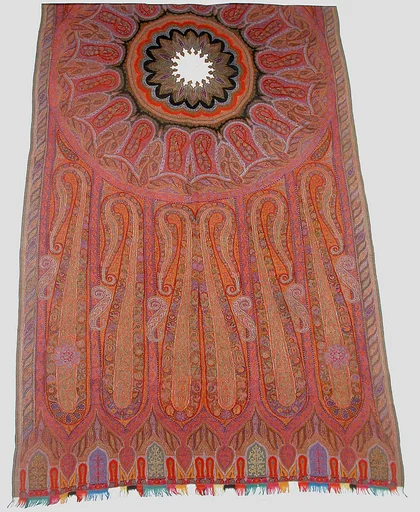
A shawl was a required fashion accessory during much of the nineteenth century. In the early 1800s long, rectangular, stolelike examples, hand-woven in India with boteh (pine cone) or paisley patterned end panels, were coveted for use with Empire-style dresses. This style was followed by the square shawl and then, with the introduction of wider skirts, by "plaids"—a term used not to describe the pattern but to connote a very large and long shawl, usually ten feet by five feet. Stylistically, this shawl demonstrates both a "four seasons" layout—in which the ground color is different in each of the quadrants—and an organization a la pivot, indicating the manner in which the vegetation swirls around a central point. The design for the shawl is probably French, but it may have been purchased by a Scottish manufacturer and jacquard-woven in Paisley. [Alice Zrebiec, 1995]
- Artist
- Unknown
- Date
- mid-19th century
- Medium
- Wool and silk
- Culture
- French or Scottish
- Department
- European Sculpture and Decorative Arts
- Credit line
- Gift of Mrs. Edwin E. Butler, in memory of her father Dudley B. Fuller, 1926