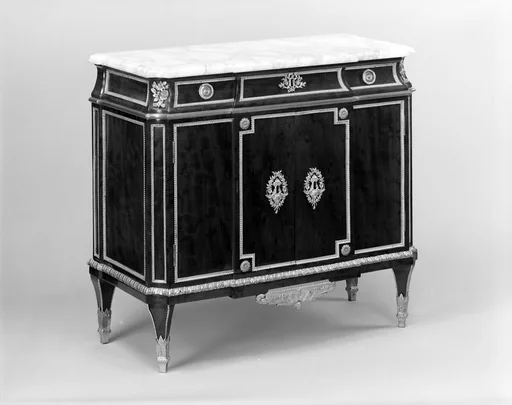
Commode (commode à vantaux)
Adam Weisweiler
ca. 1785 · Oak veneered with mahogany and thuya; gilt bronze; marble · European Sculpture and Decorative Arts
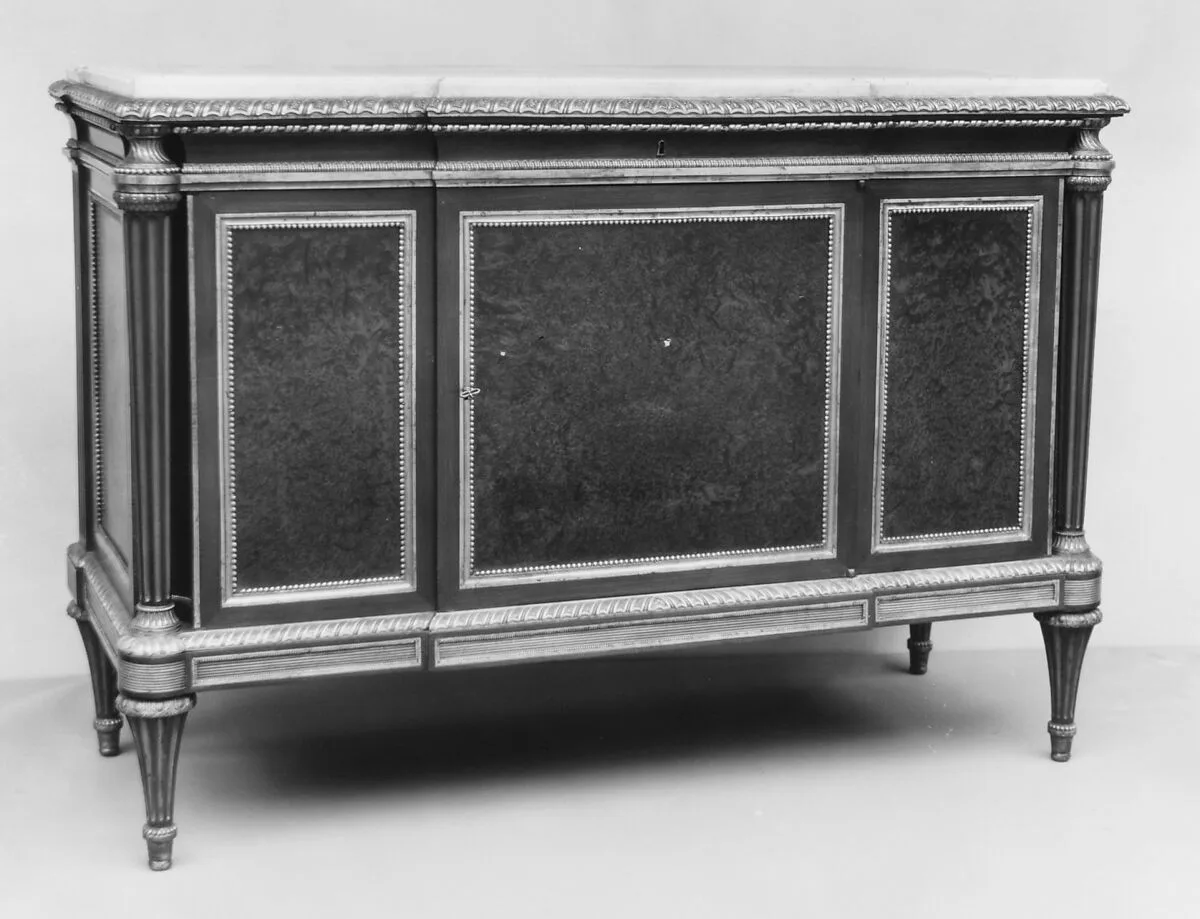
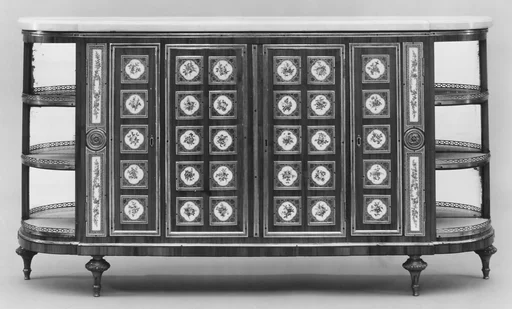
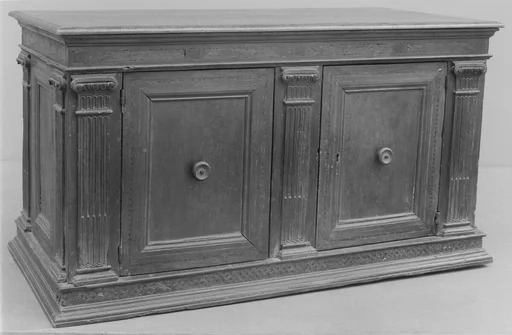
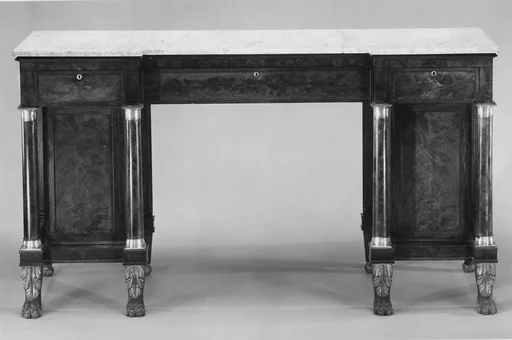
Of German origin, Adam Weisweiler became a master cabinetmaker in 1778 and set up shop in the Faubourg Saint-Antoine, Paris. Producing luxury furniture, Weisweiler worked almost exclusively for marchands-merciers, especially for Dominique Daguerre, who supplied his Neoclassical furniture to an international clientele. The talented cabinetmaker repeated this model, known as a commode a vantaux (meaning a chest with drawers enclosed by doors), numerous times but often with variations in size, decoration or materials. The use of doors allowed the cabinetmaker to choose lacquer panels or tropical veneer (its veining sometimes resembling marble) without the interruption of horizontal cuts for the drawers fronts. Gilt-bronze moldings frame the door panels (a double-hinged and bolted folding door to the right, and a single door to the left) giving them a picture-like quality. Although Weisweiler frequently selected mahogany veneer to embellish the exterior of his commodes, here he used a combination of mahogany and North African thuya wood with its distinctive burl. Typical for Weisweiler’s work are also the columns at the corners and the tapered feet adorned with vertical fluting.
- Artist
- Adam Weisweiler
- Date
- ca. 1785
- Medium
- Oak veneered with mahogany and thuya; gilt bronze; marble
- Culture
- French
- Department
- European Sculpture and Decorative Arts
- Credit line
- Fletcher Fund, 1925