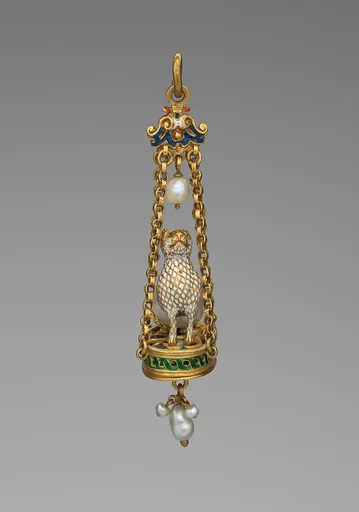
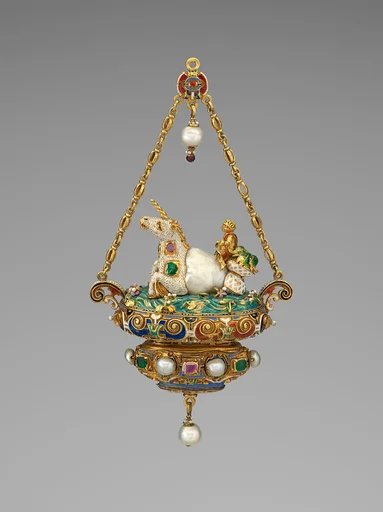
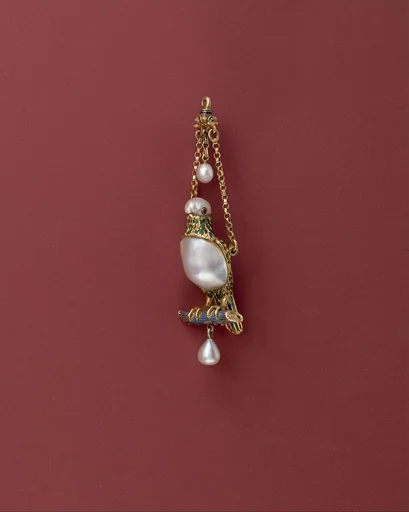
Pendant in the form of a swan
Unknown
16th century · Gold, partly enameled; pearls · European Sculpture and Decorative Arts
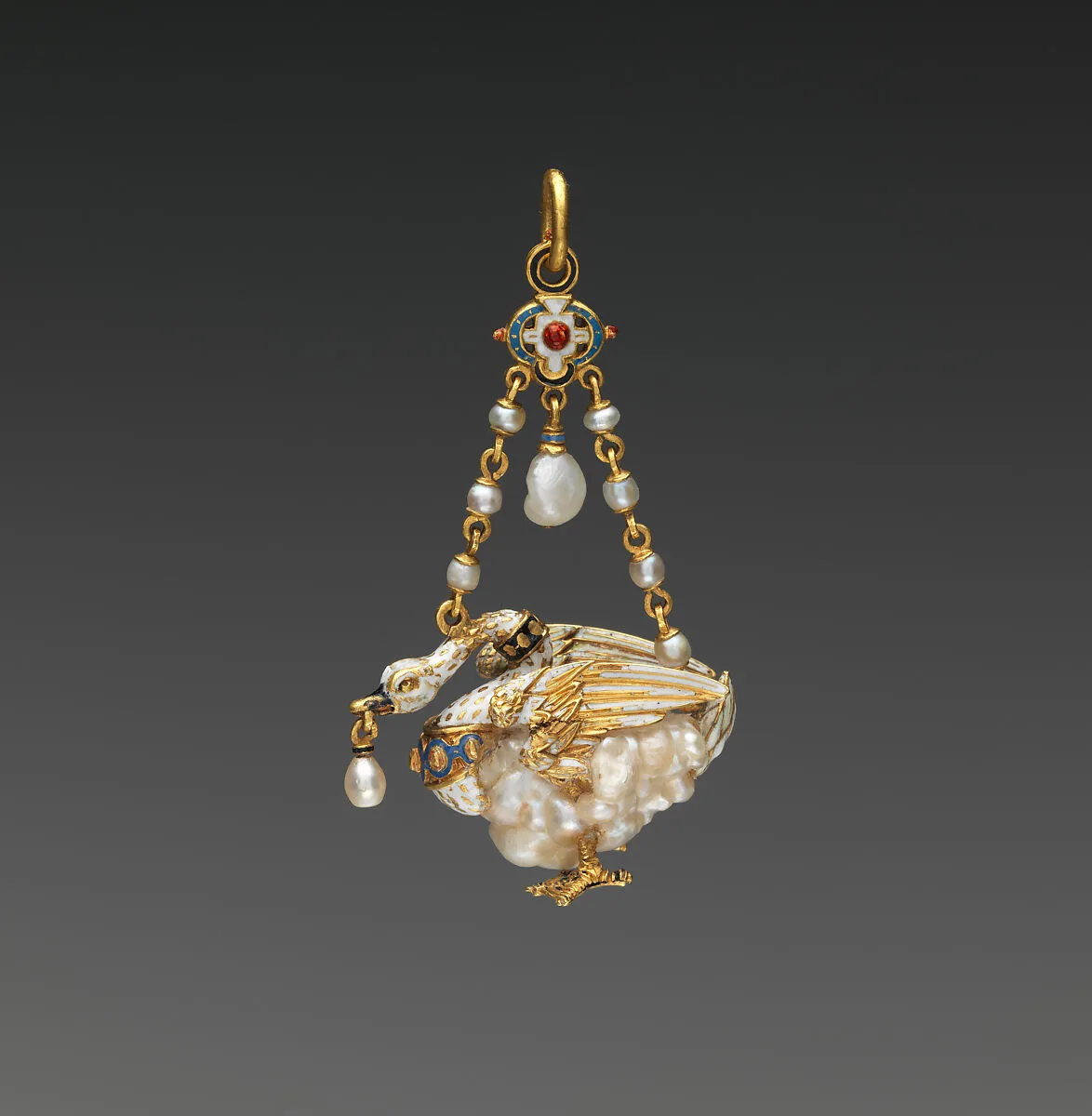
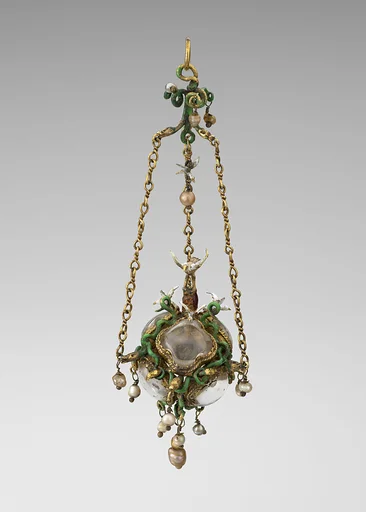
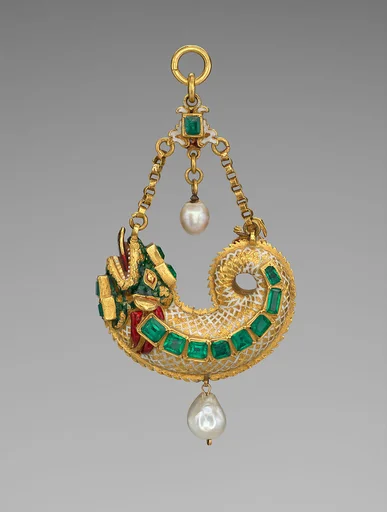
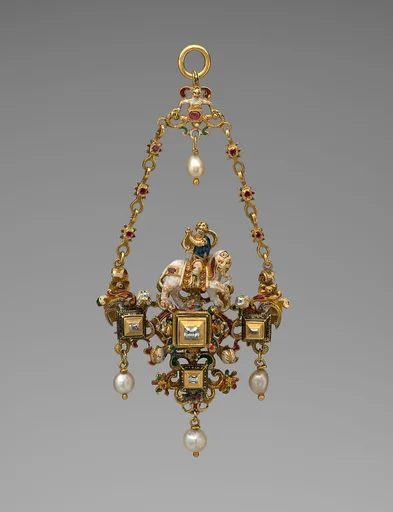
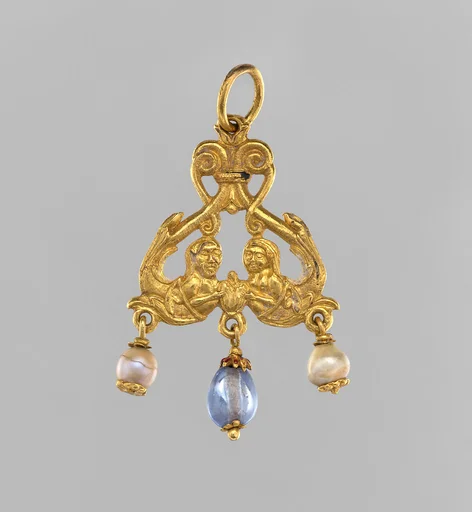
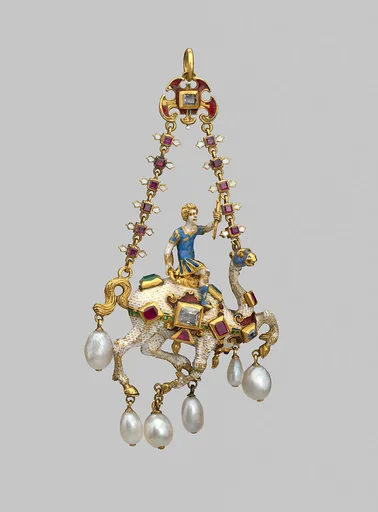
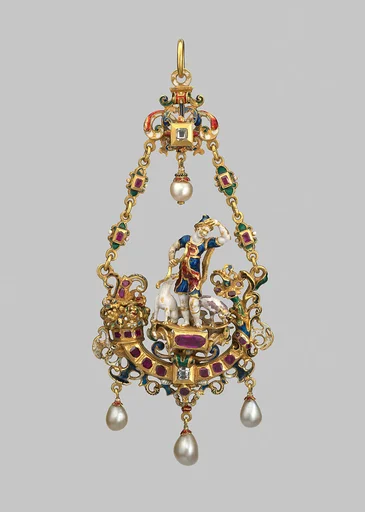
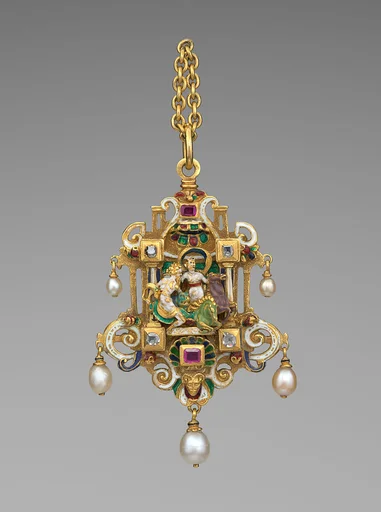
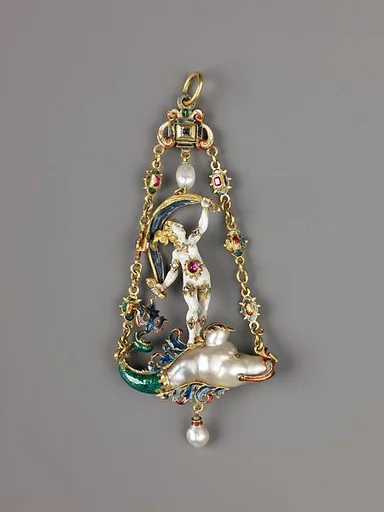
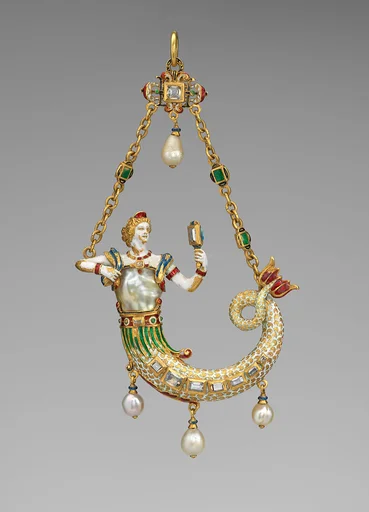
The size of this jewel and related ones (see also 17.190.892; 32.100.298; 32.100.306; and 41.100.26) is such that only the closest viewer could appreciate their full beauty and dexterous execution; they represent the finest craftsmanship for the wealthiest patrons. Each combines gold with natural treasures, such as pearls and gemstones. Bulbous baroque pearls cleverly suggest the fluffy down of a swan’s underbelly or a cloudy mass supporting the Crucifixion. Tiny figures are enameled in the round. Melding the secular and the sacred, these jewels were made to be worn: pinned to garments or hanging close to their owners’ skin. The animals might be heraldic devices; the swan, for example, could symbolize the Society of the Virgin Mary, called the Order of the Swan, which was founded in mid-fifteenth-century Brandenburg in Germany. [Elizabeth Cleland, 2017]
- Artist
- Unknown
- Date
- 16th century
- Medium
- Gold, partly enameled; pearls
- Culture
- Northern European
- Department
- European Sculpture and Decorative Arts
- Credit line
- Gift of J. Pierpont Morgan, 1917