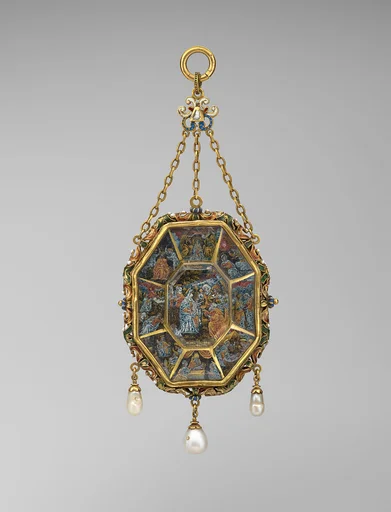
Pendant reliquary with depiction of the Annunciation
Unknown
17th century · Gold, enamel, rubies, crystal, pearl, rock crystal · European Sculpture and Decorative Arts
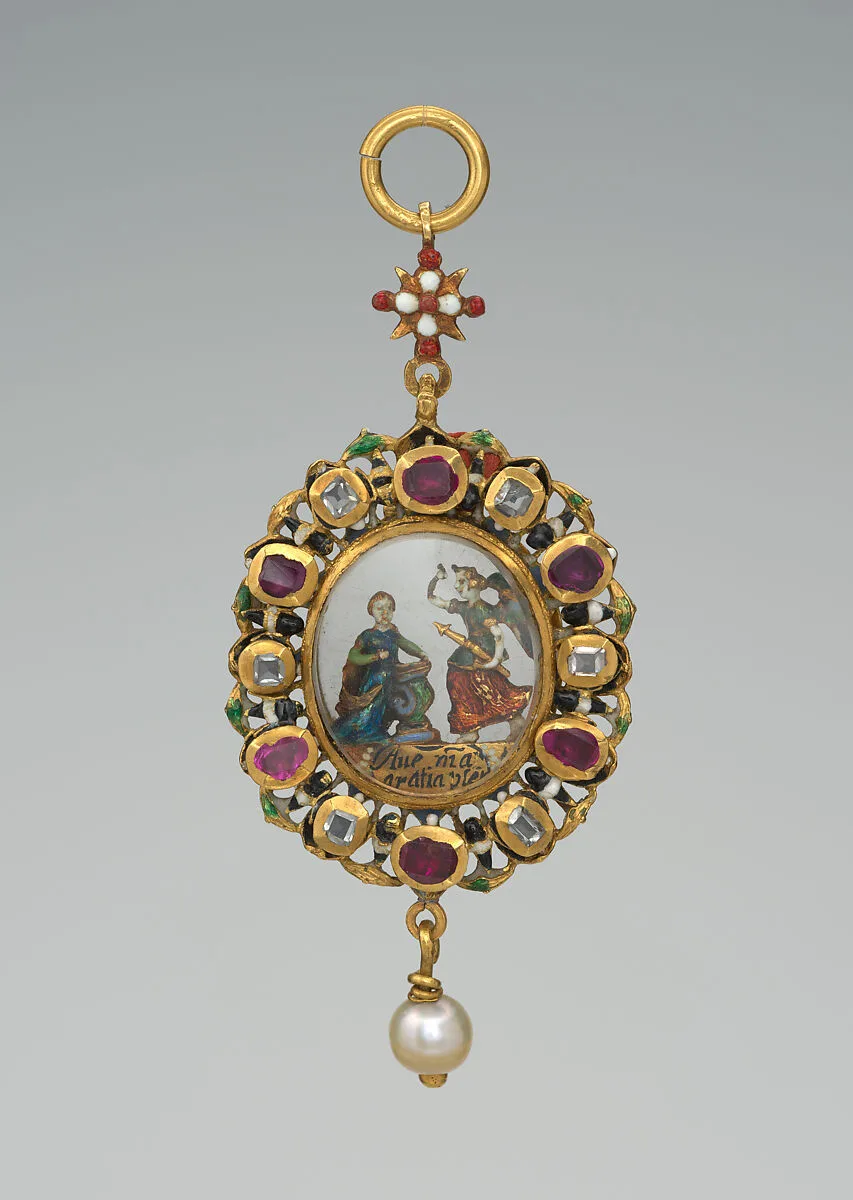
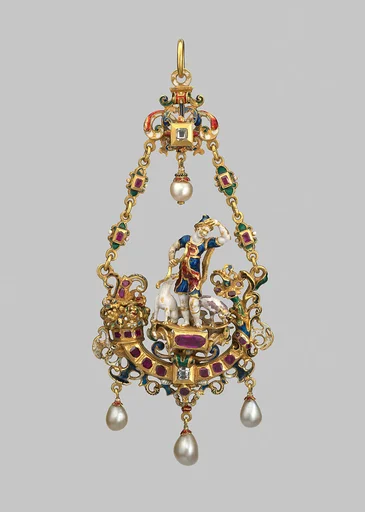
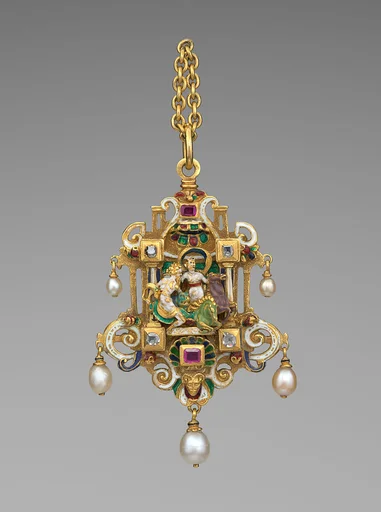
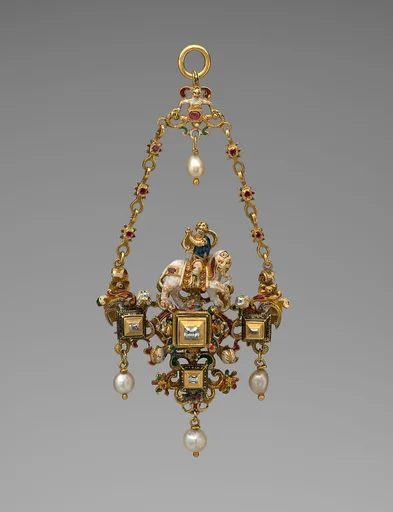
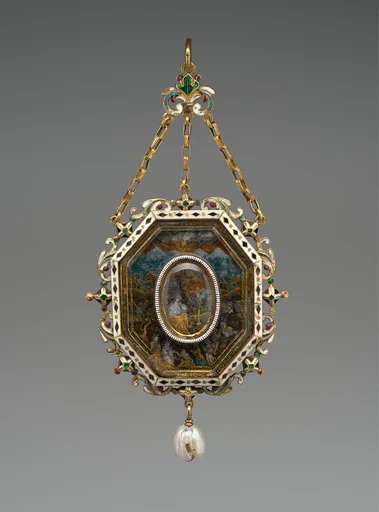
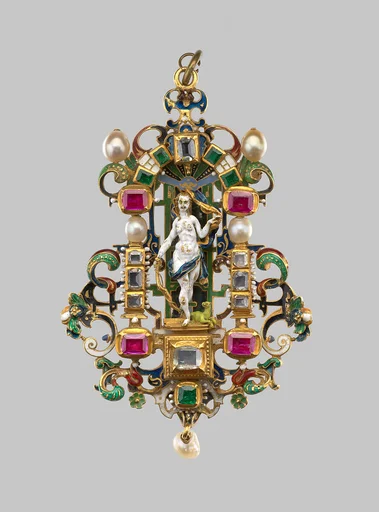
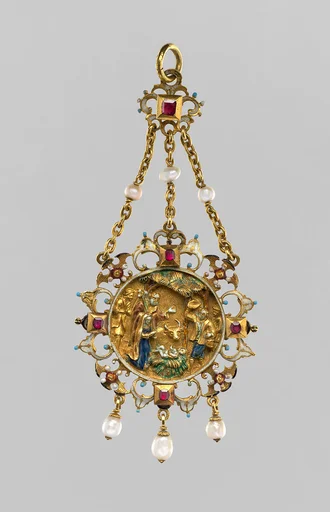
The cult of relics was an integral part of Catholic devotion from early in the Christian era. Relics of the Passion of Christ (the events leading up to the Crucifixion), as well as those associated with numerous saints and martyrs, were prized by churches and pious individuals throughout western Europe and Byzantium. Believers in the miraculous power of relics promoted a sumptuous form of artwork by commissioning resplendent cases to surround the often miniscule fragments. Sometimes the framework would echo the source of the relic (an arm, a foot, a head). In other instances, relics were preserved in containers of more traditional form. Jewels containing relics served as gestures of piety as well as displays of personal wealth. Such devotional ornaments became especially popular in early-seventeenth-century Spain, where sumptuary laws restricted most nonreligious personal adornment. Many of the most elaborate works produced by goldsmiths and jewelers were rosaries, crucifixes, and other Catholic emblems, which enabled their wearers to evade royal prohibitions. Extraordinary jewels were also donated to churches for the embellishment of revered devotional images. The tiny enameled-gold figures surrounded by gems represent the Virgin, kneeling at her prie-dieu, and the angel of the Annunciation, with his words of greeting, "AVE MARIA GRATIA PLENA" (Hail, Mary, full of grace), inscribed on the relic case below.
- Artist
- Unknown
- Date
- 17th century
- Medium
- Gold, enamel, rubies, crystal, pearl, rock crystal
- Culture
- Spanish
- Department
- European Sculpture and Decorative Arts
- Credit line
- Gift of J. Pierpont Morgan, 1917