Cassone
Unknown
mid-15th century · Walnut: gilded and painted · European Sculpture and Decorative Arts
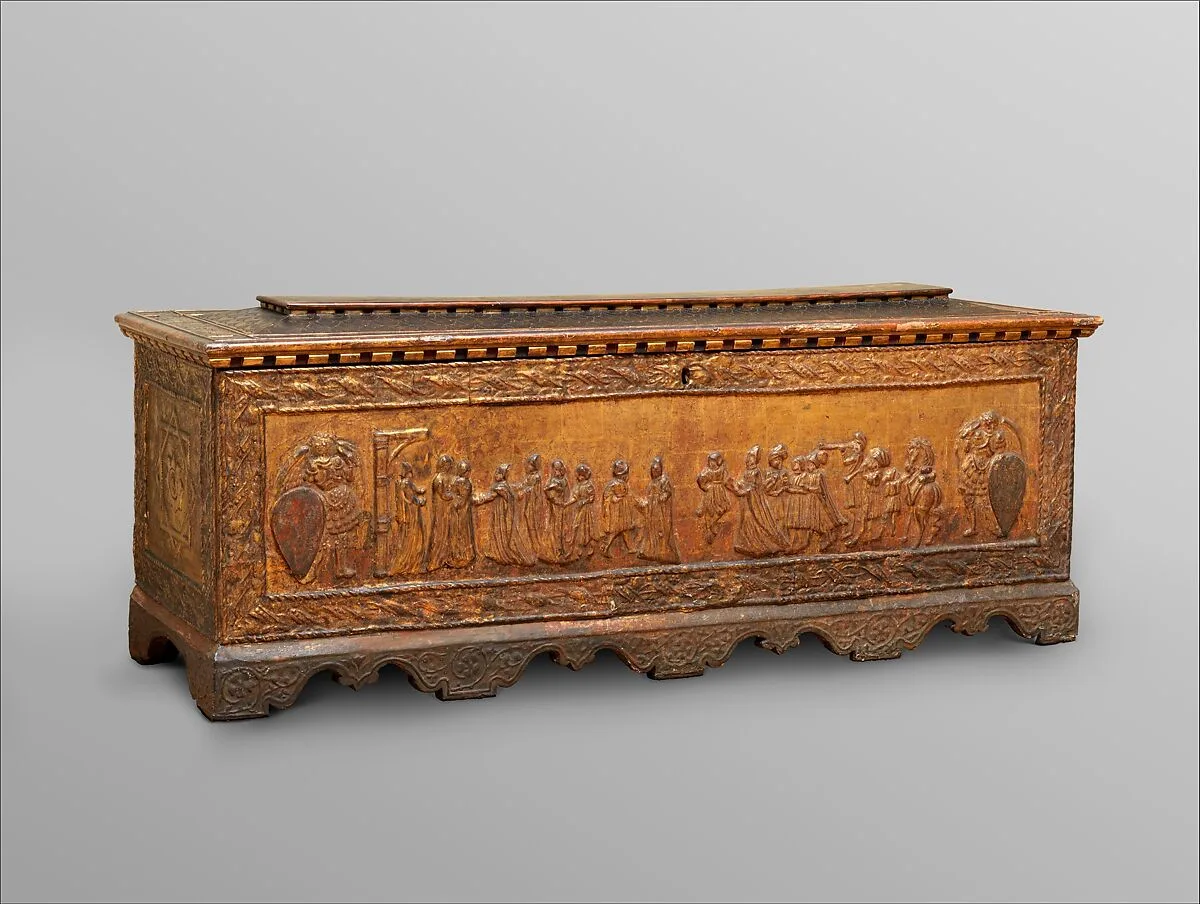
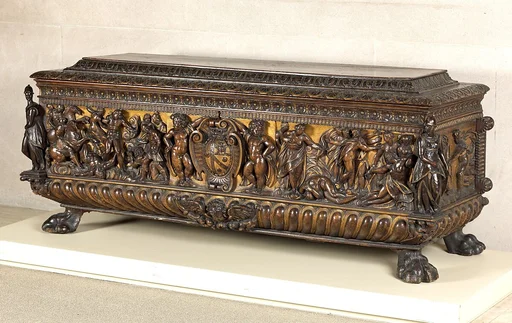
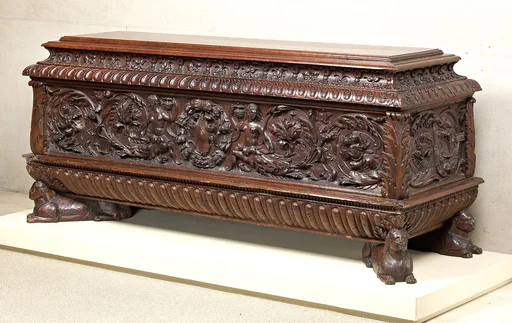
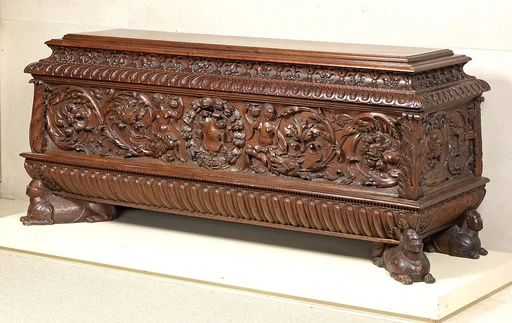
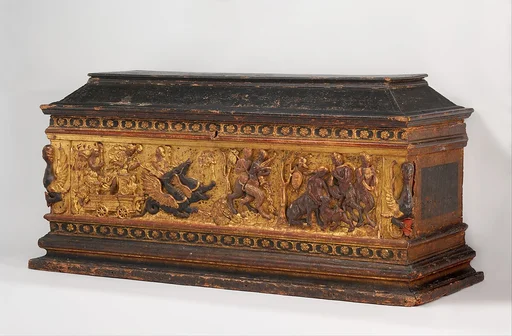
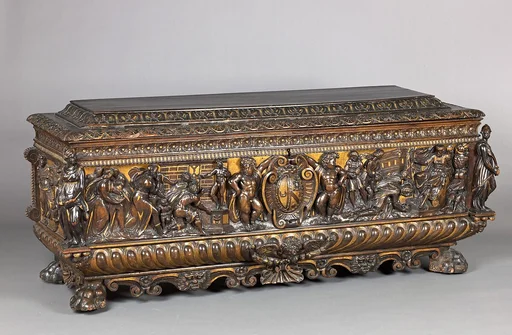
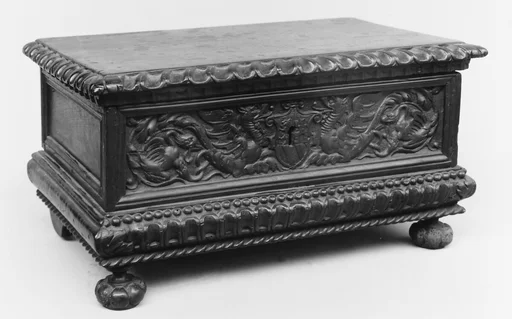
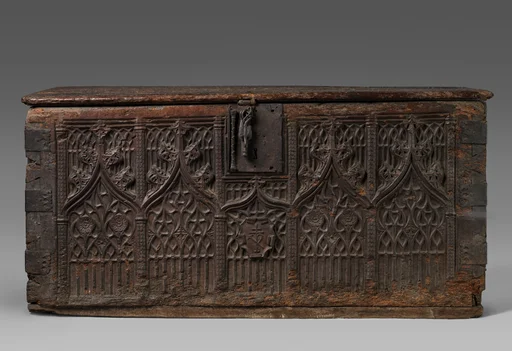
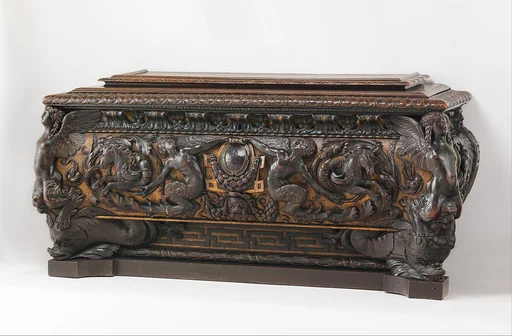
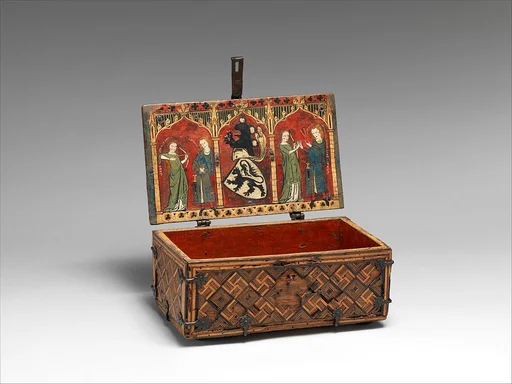
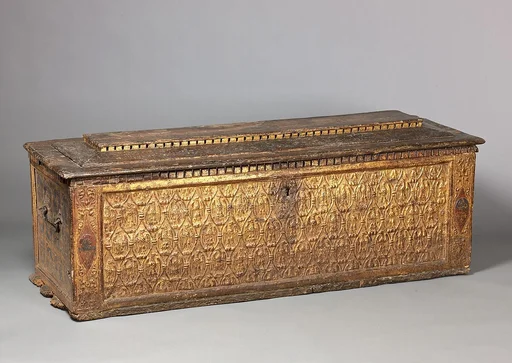
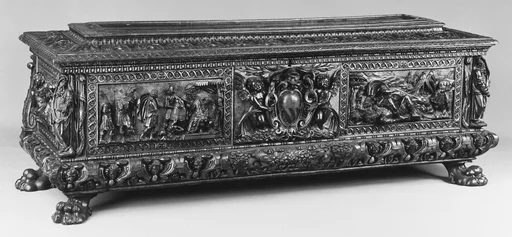
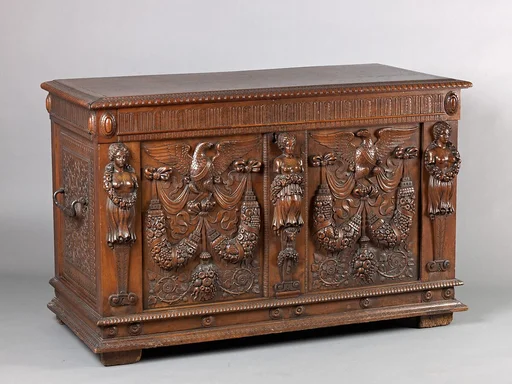
Cassone is a term given to costly decorated chests made in Italy from the fourteenth to the sixteenth centuries. Next to the marriage bed, cassoni were cherished in wealthy Renaissance households, for they held clothing, precious fabrics, and other valuables. Often commissioned by the groom, a cassone was prominently carried in the nuptial procession, laden with the dowry of his bride. The central scene apparently shows a different moment of such a wedding parade and is flanked by angels holding shields formerly painted with the couple’s coat of arms thus referencing the families united. The top was later replaced. The companion cassone is in the Isabella Stewart Gardner Museum. Italian Renaissance workshops produced cassone decorated with front panels displaying episodes from classical or biblical history and mythology, evidently felicitous narratives for the newly married. Other cassone designs featured ornamental and figural carvings and applied stucco reliefs as in this example.
- Artist
- Unknown
- Date
- mid-15th century
- Medium
- Walnut: gilded and painted
- Culture
- Italian, Florence
- Department
- European Sculpture and Decorative Arts
- Credit line
- Gift of Mrs. Emma B. Andrews, 1915