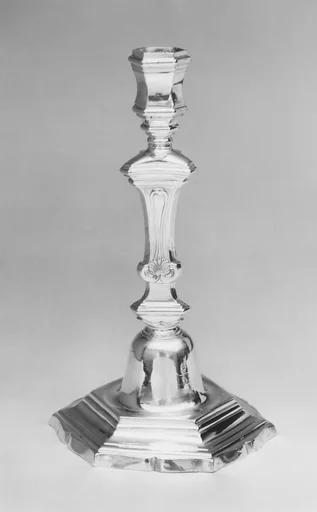
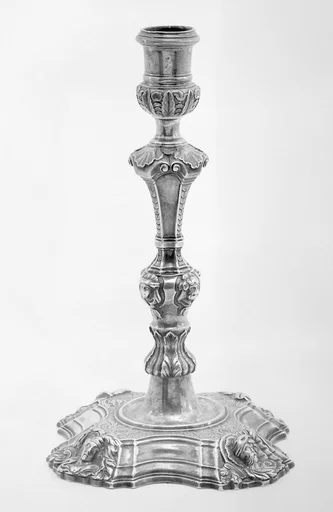
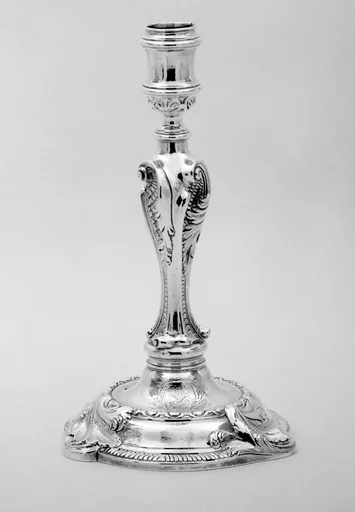
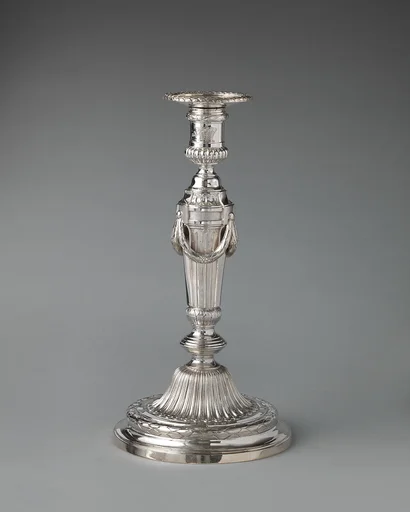
Candlestick
Jean-François Balzac
1756–57 · Silver · European Sculpture and Decorative Arts
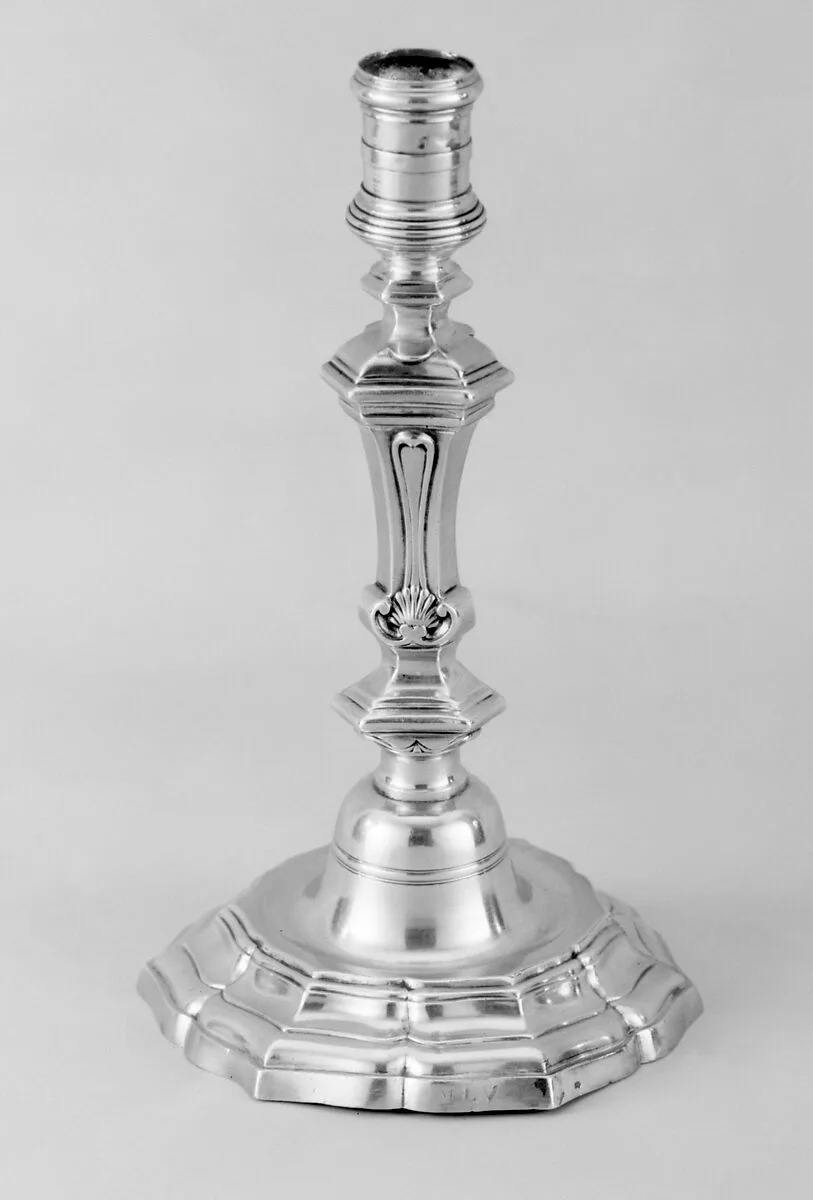
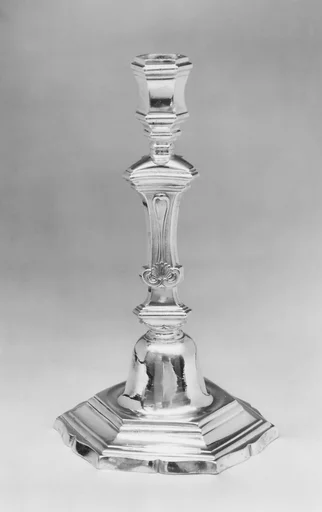
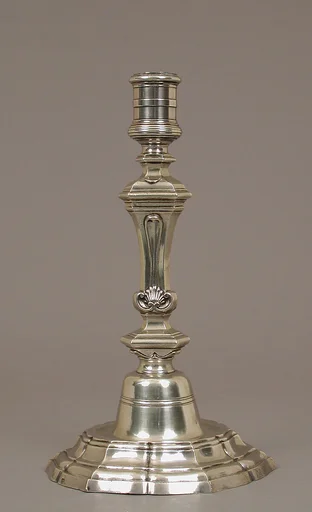
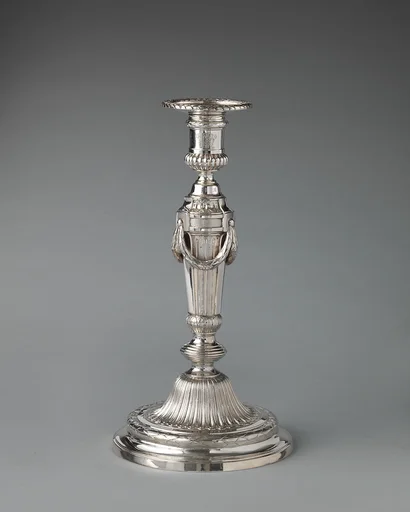
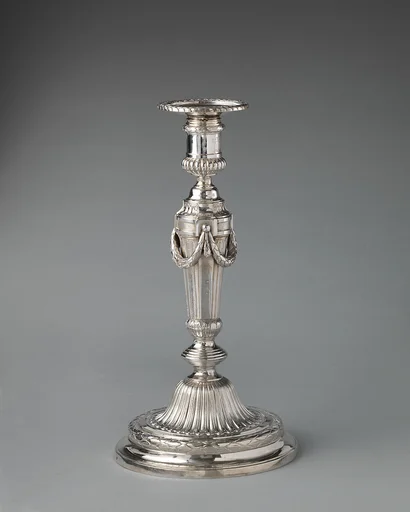
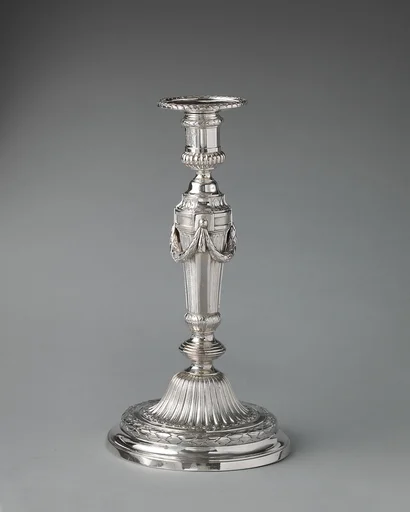
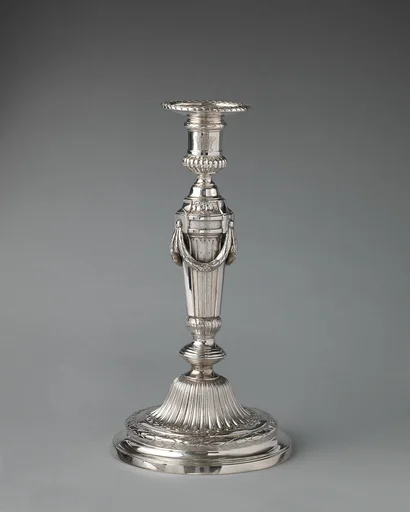
In the era before gas lighting and electricity, candles played a principal role in illuminating the interior of a house. The number of candles lit was an indication of the wealth and status of the owner: beeswax candles burned clean and smelt pleasant and were quite expensive compared to those made of tallow. In late seventeenth-century France, a change in dining habits had a significant effect on the production of silver candlesticks. Entertainment was increasingly orientated towards the evening; the use of domestic space changed and as a result, elegant lighting became an important part of the decoration of interiors. One of this pair of candlesticks (13.135.2a) was made in Paris by Jean-François Balzac in 1756–57. The other (13.135.2b) appears to have been made later, circa 1780, possibly to match the one created by Balzac. With their distinctive angled baluster stem decorated with an applied shell, their model appears to have been a fashionable one since a number of related candlesticks are known.
- Artist
- Jean-François Balzac
- Date
- 1756–57
- Medium
- Silver
- Culture
- French, Paris
- Department
- European Sculpture and Decorative Arts
- Credit line
- Rogers Fund, 1913