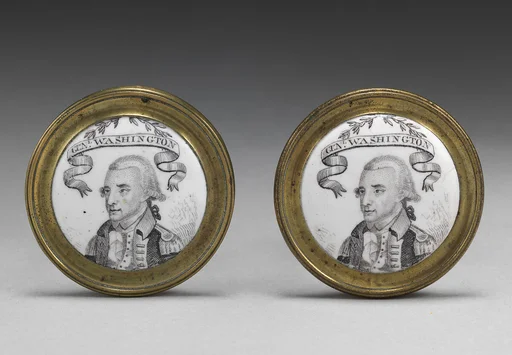
Pair of mirror knobs
Unknown
ca. 1783 · Enamel on copper, brass · European Sculpture and Decorative Arts
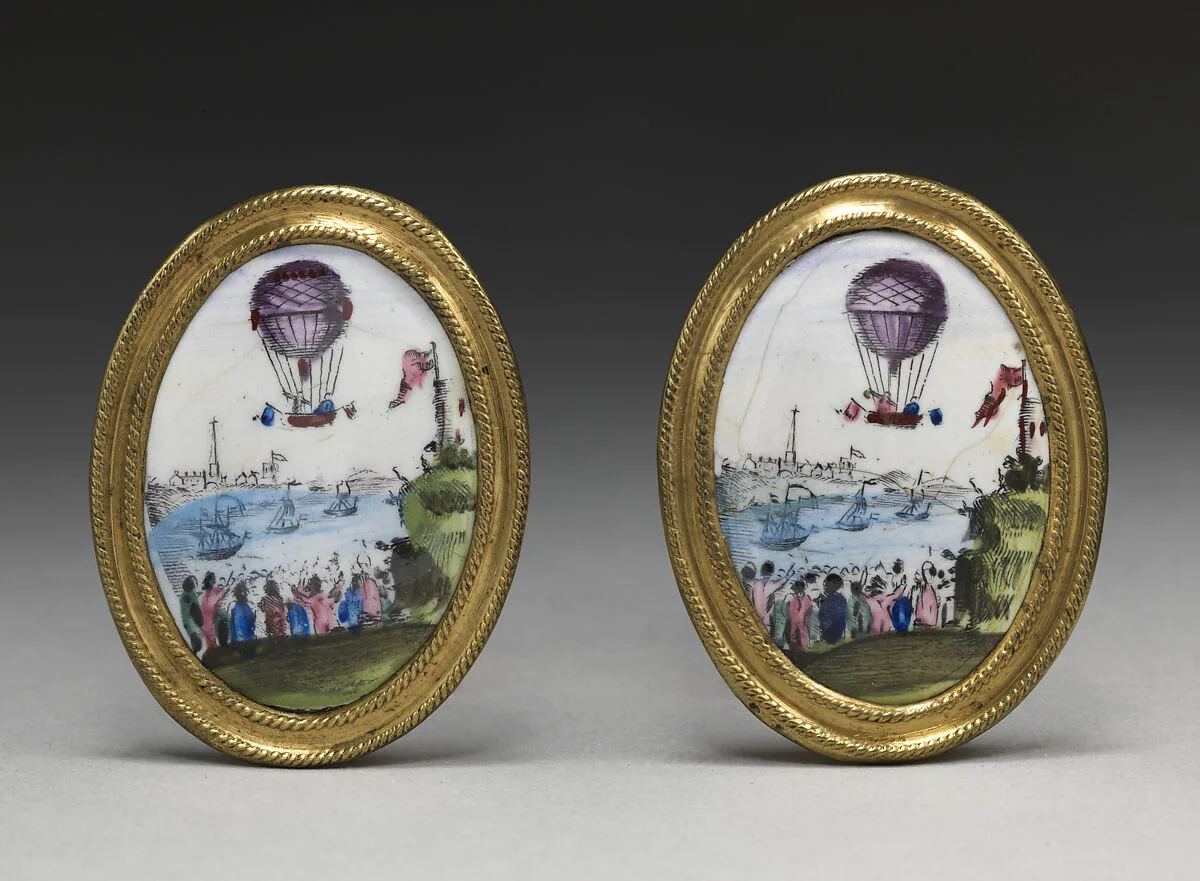
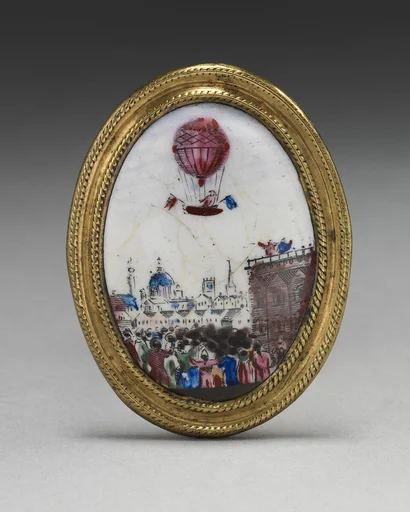
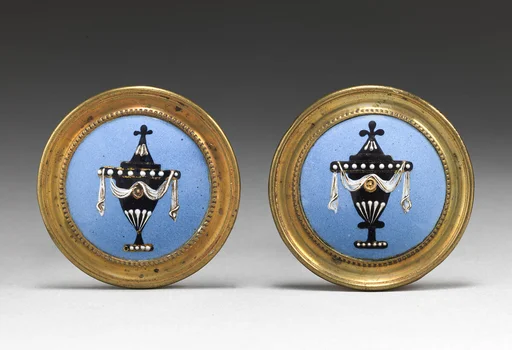
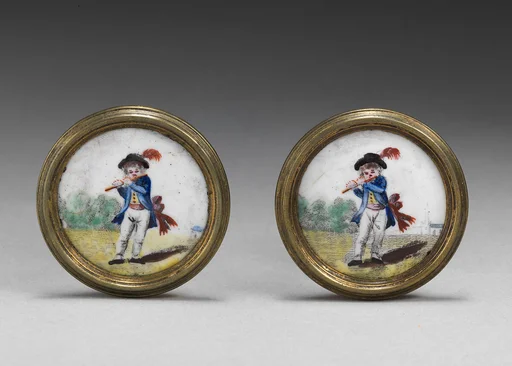
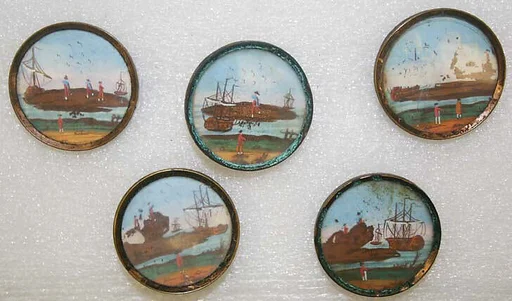
The gondola of the hydrogen balloon depicted on these knobs carries two aeronauts. It may well illustrate the first successful flight over the English Channel. On January 7, 1785, Jean-Pierre Blanchard and Dr. John Jeffries crossed from Dover to Calais by air. To make the balloon lighter and keep it afloat, the two men were forced to dump their ballast, throw away their cork life jackets, and even Dr. Jeffries’ pants! Machines newly invented in the late eighteenth century allowed metalware manufacturers to stamp designs onto brass (an ideal material because of its malleability) to form the exterior of such furniture fittings. Extant pattern sheets suggest that these decorative knobs may have been used as cloak pins, chimney piece knobs, or commode handles. Decorated with enamel disks, these knobs are among the enameled goods often called "Battersea enamels" in common parlance (referring to the manufactory at York House, Battersea, operating only between 1753 and 1756). However, we rarely known exactly where individual pieces were made. The main centers of enamel production were in London, South Staffordshire (particularly in Bilston and Wednesbury), and Birmingham. By the middle of the eighteenth century, technological innovations had made it possible to roll copper, instead of the far costlier gold, into very thin sheets. Powdered glass mixed with minerals (to determine the opacity and color of the enamel) would then be applied onto the copper sheets and fired at high temperatures. A design—whether a famous portrait, generic pastoral scene, or floral motif— could be painted on by hand or copied from an engraving through the newly invented process of transfer printing. Many enameled objects combined both methods of decoration and would be refired after the application of each new layer or color.
- Artist
- Unknown
- Date
- ca. 1783
- Medium
- Enamel on copper, brass
- Culture
- French or British
- Department
- European Sculpture and Decorative Arts
- Credit line
- Gift of Mrs. Russell Sage, 1909