Armchair
René Cresson|Beauvais
1735–40 · Carved walnut, Beauvais tapestry upholstery · European Sculpture and Decorative Arts
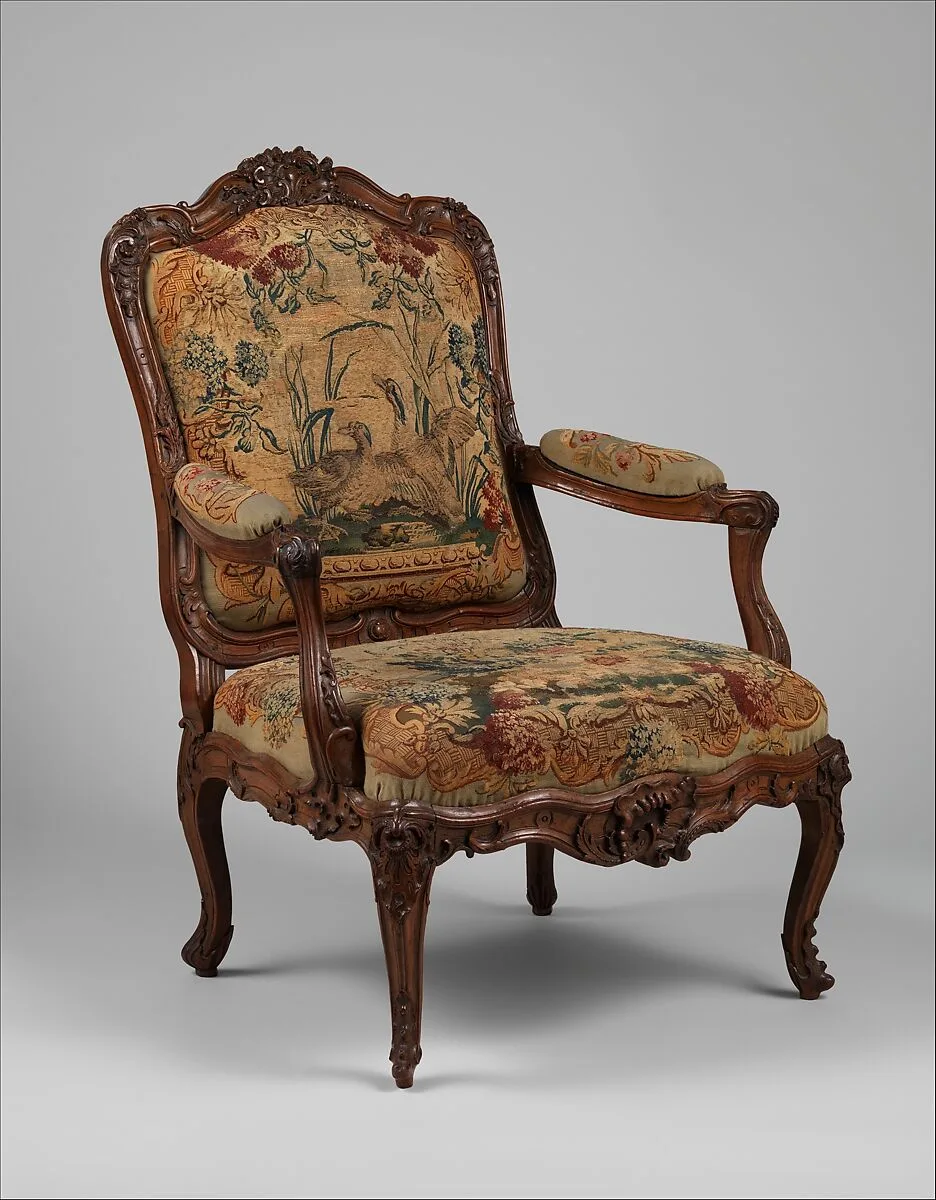
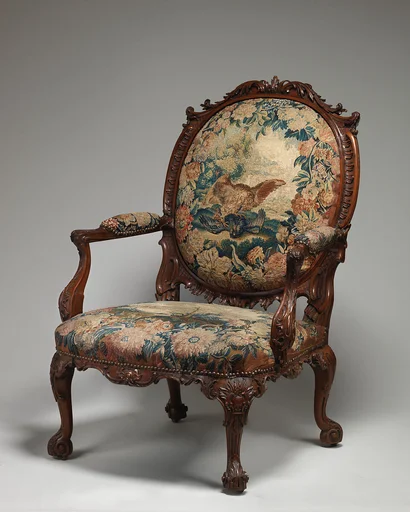
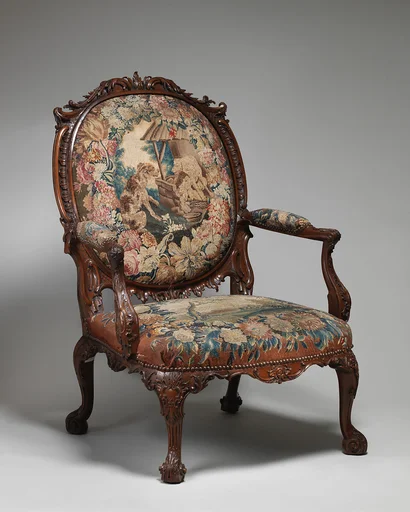
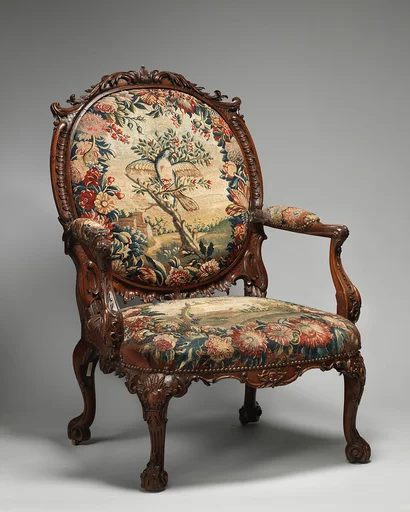
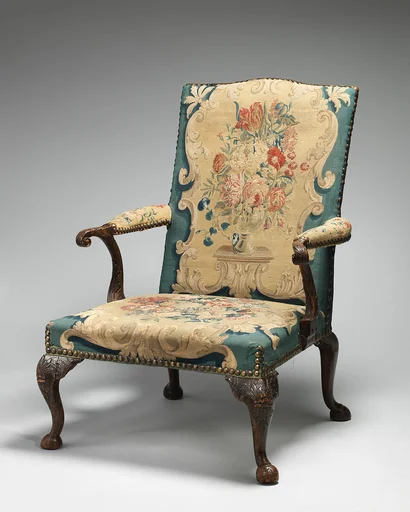
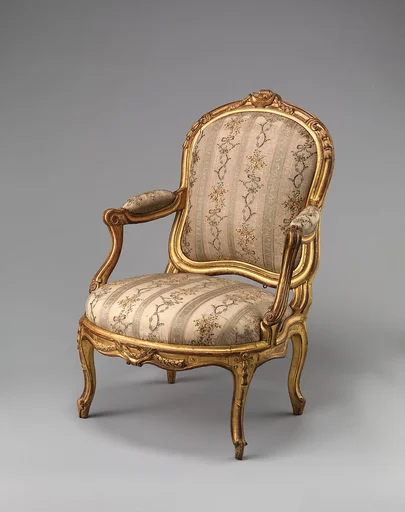
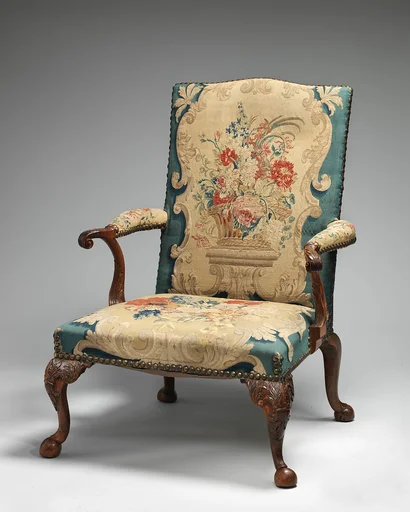
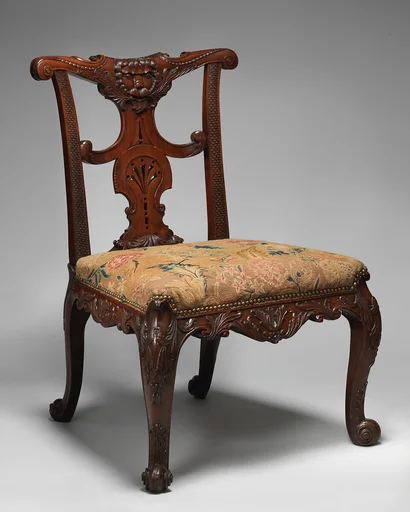
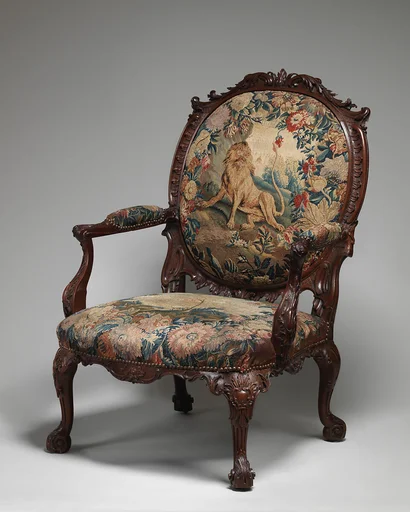
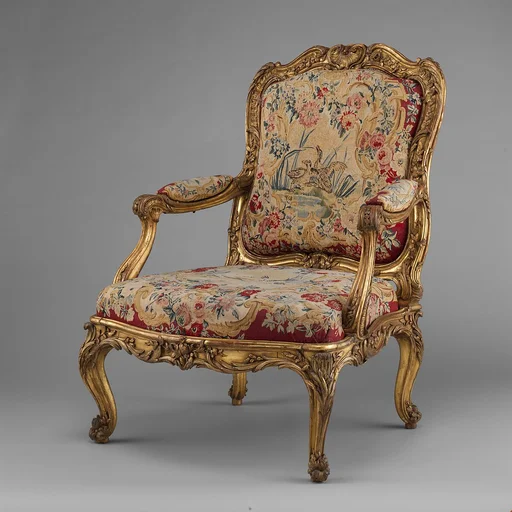
This chair is known in French as a fauteuil à la Reine et à chassis. The first part of this name refers to the fact that it is an armchair with a flat back (as opposed to a concave back). The second part refers to the upholstery which is not nailed into the frame but attached to the removable seat, back, and arm pads. This practice was introduced early during the eighteenth century and allowed for an easy change of seat covers according to the seasons or to reflect new fashions. Although this armchair is not signed, based on the exuberant rocaille decoration of the walnut frame, it is attributed to the menuisier or joiner René Cresson, also known as Cresson l’ainé (the elder) who became a master in 1738. He was a member of a successful family of eighteenth-century chair makers by that name. The wool and silk upholstery panels were woven at the Beauvais Manufactory. This workshop not only specialized in sets of decorative tapestry hangings woven after designs by Jean I Berain, Jean-Baptiste Oudry, François Boucher, among other artists, but also produced matching covers for seat furniture which came increasingly into fashion during the eighteenth century. The ducks on the chair’s back are found in drawings attributed to the artist Oudry or his workshop.
- Artist
- René Cresson|Beauvais
- Date
- 1735–40
- Medium
- Carved walnut, Beauvais tapestry upholstery
- Culture
- French
- Department
- European Sculpture and Decorative Arts
- Credit line
- Gift of J. Pierpont Morgan, 1906