Salt box
Unknown
late 16th century · Pewter · European Sculpture and Decorative Arts
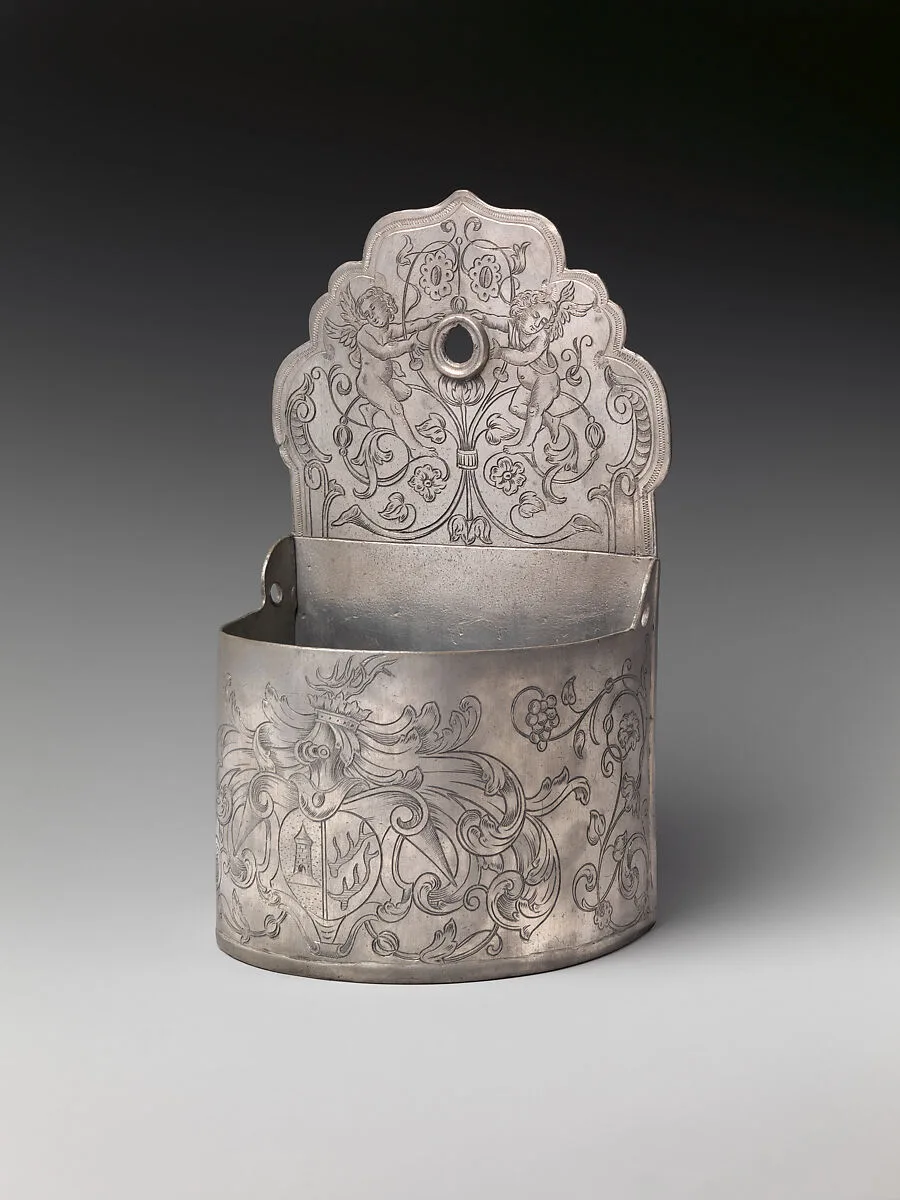
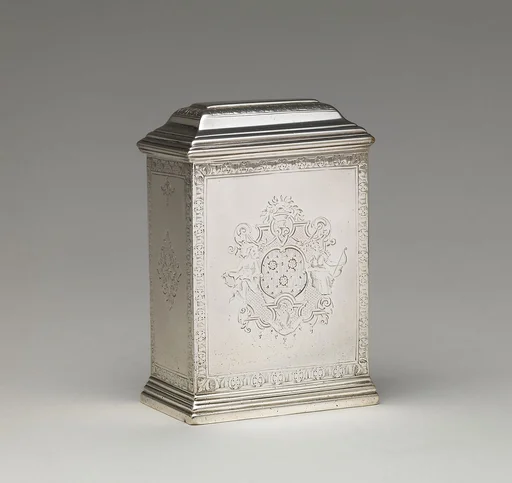
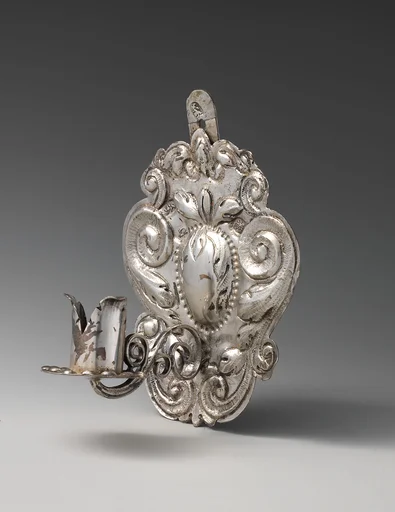
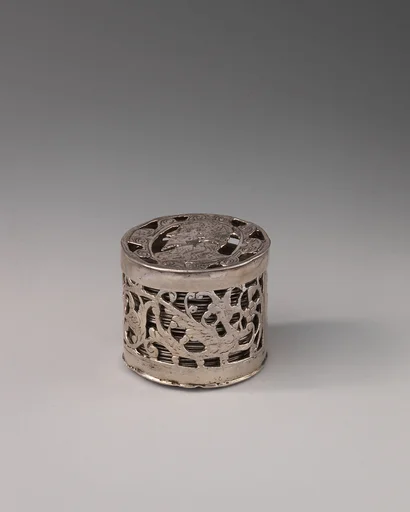
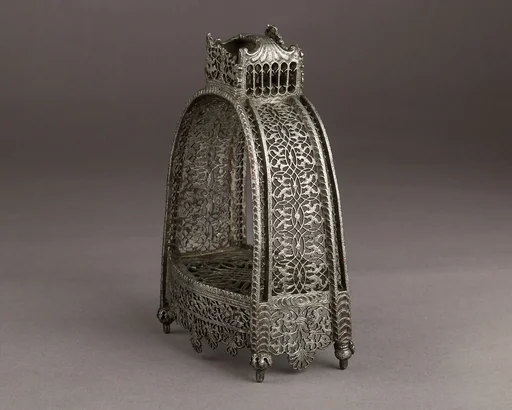
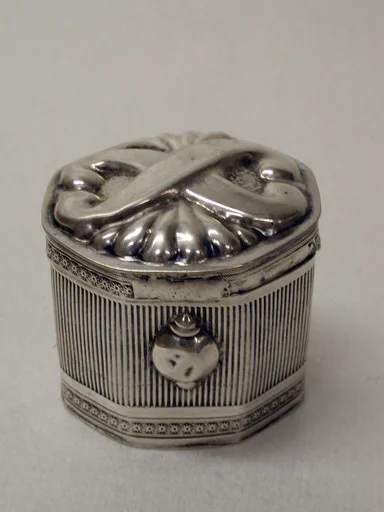
Pewter was the cheaper alternative to silver, which remained unattainable to most people during the sixteenth century. In contrast, by the 1530s, all except the poorest members of society owned at least a couple of pewter household wares. Composed mainly of tin, usually with small amounts of lead or copper (in ratios regulated by local guilds), pewter was soft, malleable, and easily ornamented with engraved decoration, as here. A vessel like this one—which would originally have included a lid—was made from molds, which were apparently regularly lent between pewterers and brass casters in Augsburg and Nuremberg. [Elizabeth Cleland, 2017]
- Artist
- Unknown
- Date
- late 16th century
- Medium
- Pewter
- Culture
- German
- Department
- European Sculpture and Decorative Arts
- Credit line
- Rogers Fund, 1906