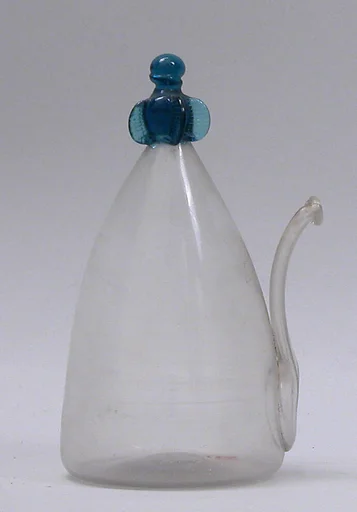
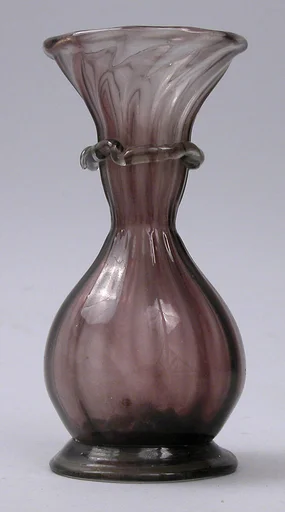
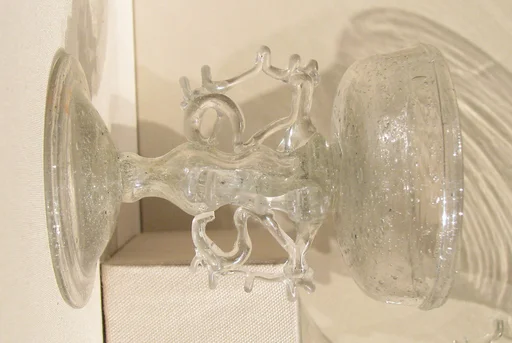
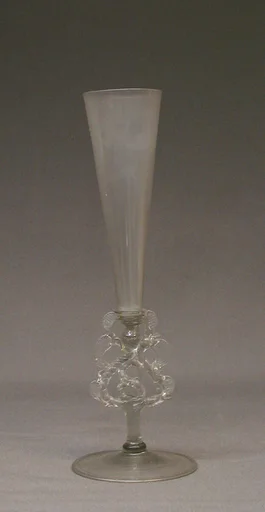
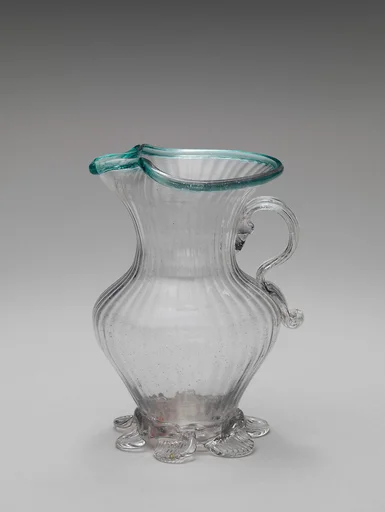
Jug
Unknown
17th century · Glass · European Sculpture and Decorative Arts
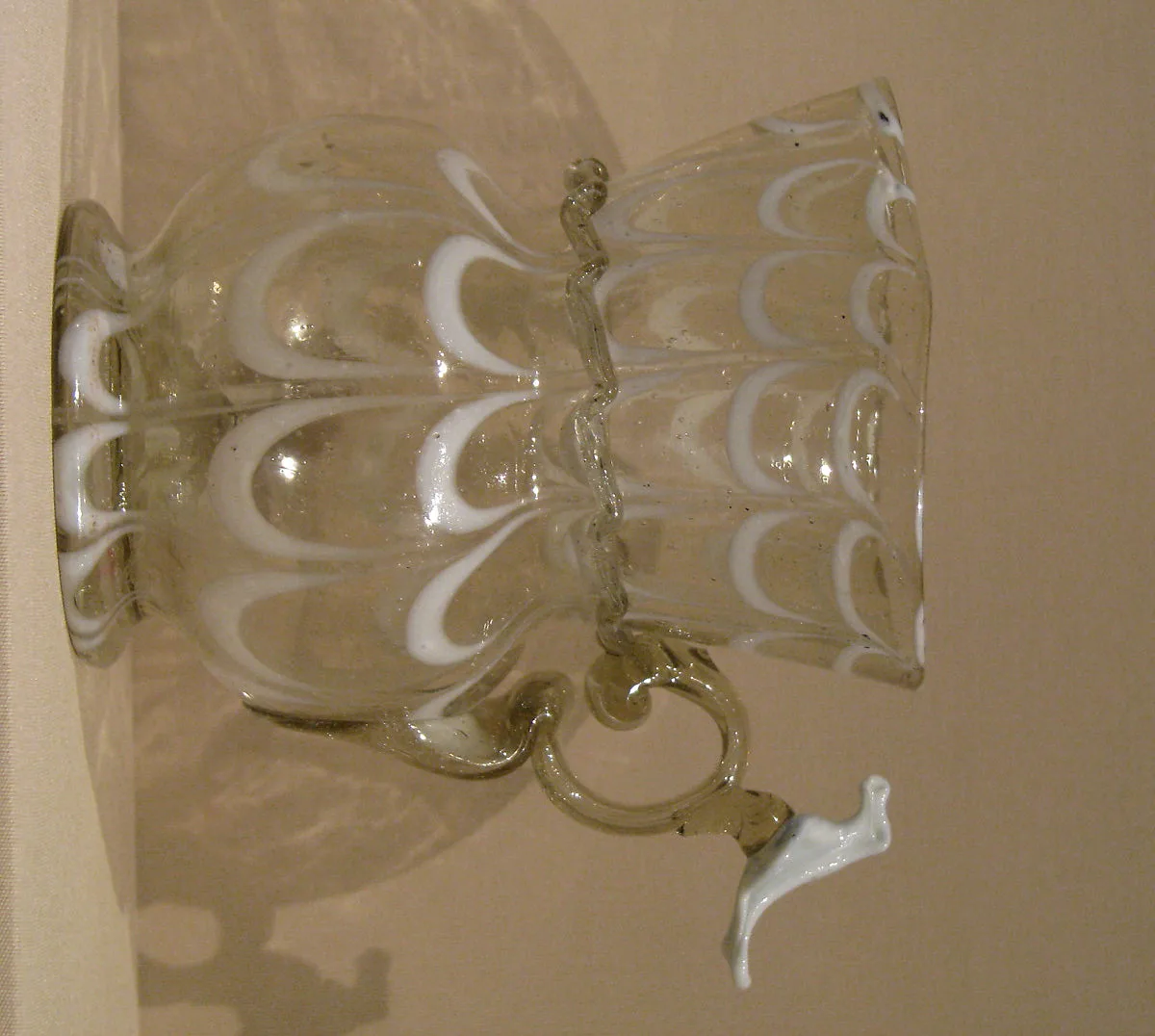
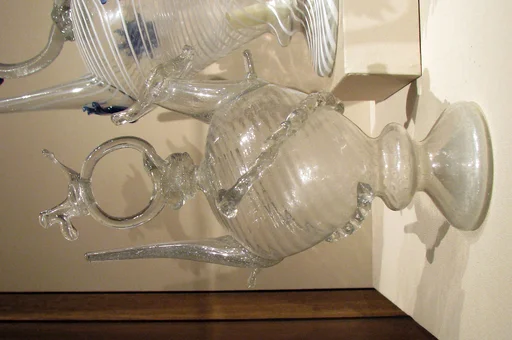
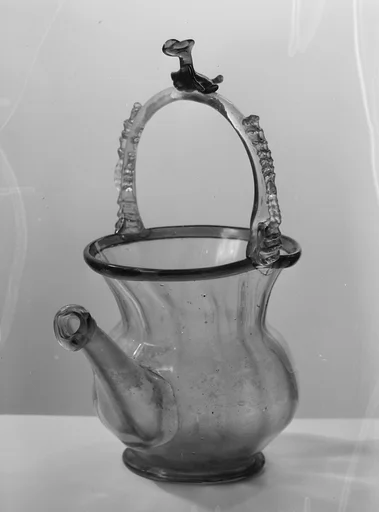
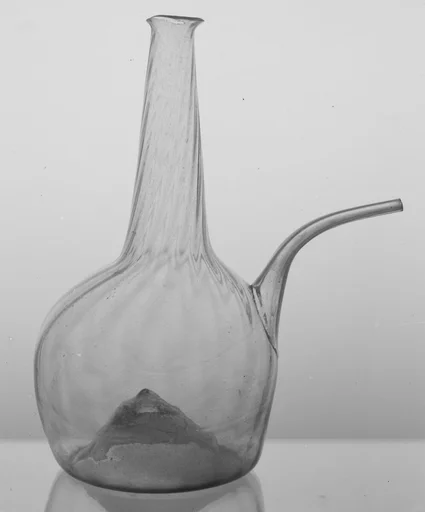
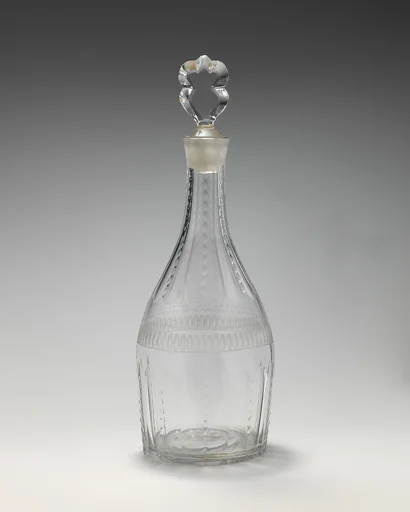
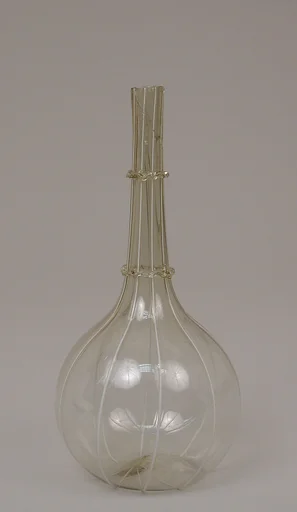
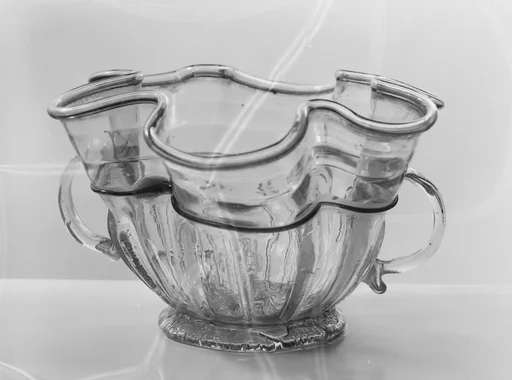
The technique of glassblowing was practically forgotten after the retreat of the Romans, who had introduced it, but was resumed in the caliphate of Córdoba in Andalusia. Andalusian glass is characterized by a folksy quality and is always tinted tans to the presence of metal oxides, such as copper and iron, in the raw material. The abundant relief ornament takes the form of coxcomb crests, shells, berrylike prunts, pinched, denticulated bands, and ring handles. In the mid-sixteenth century, Venetian glassmakers brought the secrets of the refined Murano technique to Catalonia, where they founded several factories. Their most significant innovations were the production of a clear typed of glass and the use of manganese to aid in the discharge of impurities, but they introduced other Murano techniques as well, which account for the Venetian air displayed by many traditional Catalan vessels, with their delicate white striping, ribs, and gold prunts.
- Artist
- Unknown
- Date
- 17th century
- Medium
- Glass
- Culture
- Spanish, Catalonia
- Department
- European Sculpture and Decorative Arts
- Credit line
- Gift of Henry G. Marquand, 1883