Towel border
Unknown
1780–1820 · Linen, silk · European Sculpture and Decorative Arts
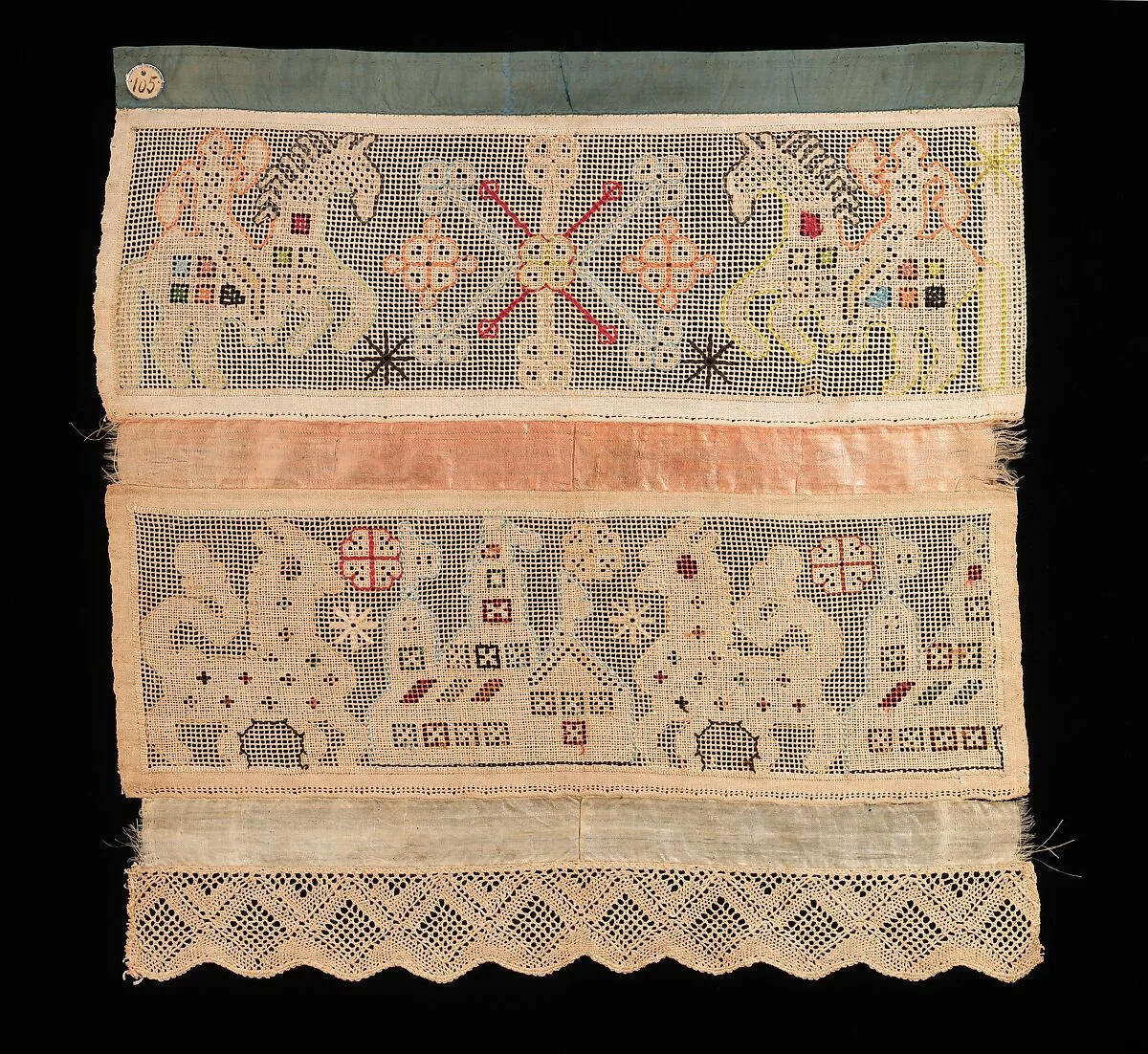
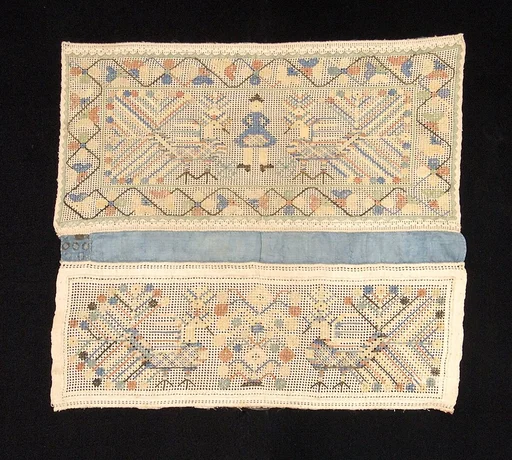
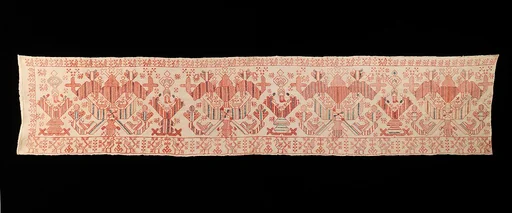
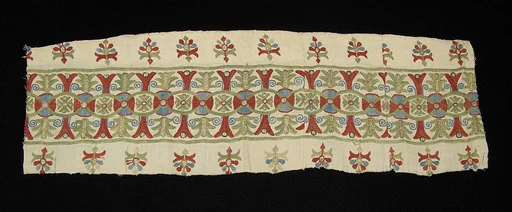
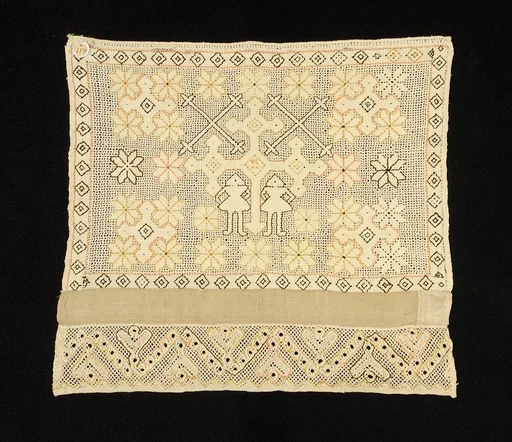
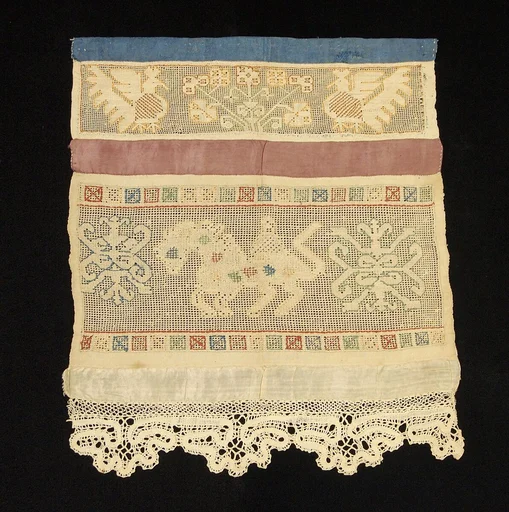
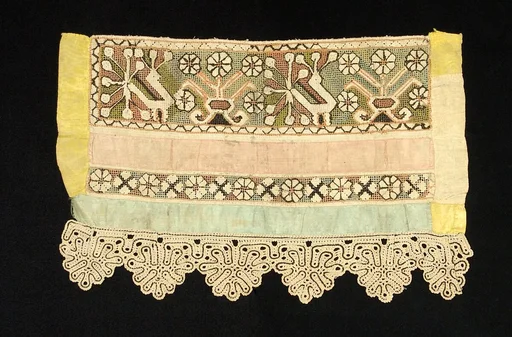
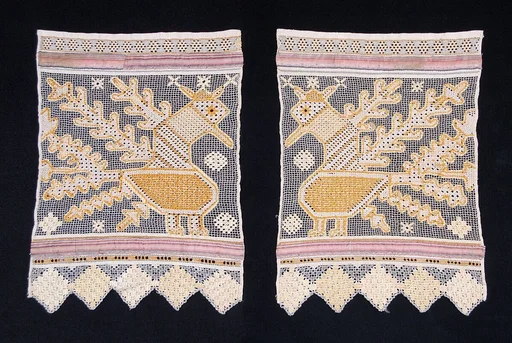
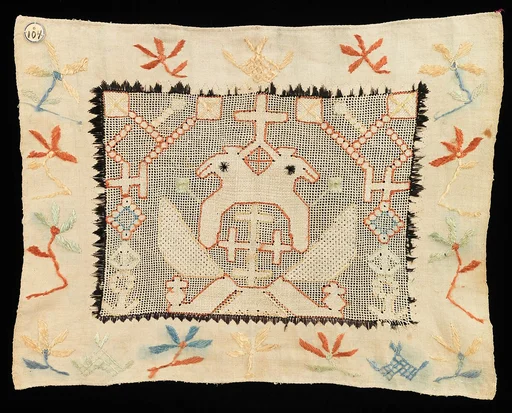
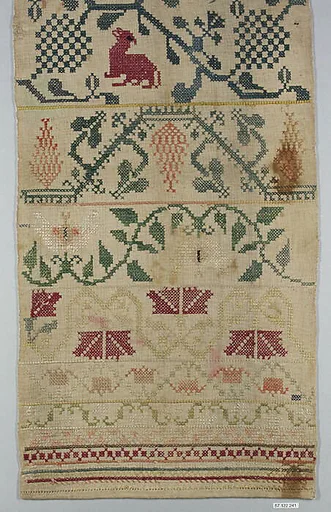
This object is from the collection of Natalia de Shabelsky (1841-1905), a Russian noblewoman compelled to preserve what she perceived as the vanishing folk art traditions of her native country. Traveling extensively throughout Great Russia, she collected many fine examples of textile art of the wealthy peasant class. From the 1870s until moving to France in 1902, Shabelsky amassed a large collection of intricately embroidered hand-woven household textiles and opulent festival garments with rich decoration and elaborate motifs. The Brooklyn Museum holdings include many fine examples including the majority of the garments. Portions of Shabelsky's collection are also housed at the Museum of Fine Arts, Boston, the Cleveland Art Museum, and the Russian Museum of Ethnography in St. Petersburg. The composition of the upper band suggests that the central form is a stylized representation of the goddess flanked by two minor goddesses on horseback. The goddess as tree of life symbol is often expressive of agricultural fertility. As Russia moved from hunting to an agrarian society, the horse became glorified through connection with the goddess. Though the design lacks other signifiers such as the presence of birds, it was likely an individual interpretation of the motif.
- Artist
- Unknown
- Date
- 1780–1820
- Medium
- Linen, silk
- Culture
- Russian
- Department
- European Sculpture and Decorative Arts
- Credit line
- Brooklyn Museum Costume Collection at The Metropolitan Museum of Art, Gift of the Brooklyn Museum, 2009; Gift of Mrs. Edward S. Harkness in memory of her mother, Elizabeth Greenman Stillman, 1931