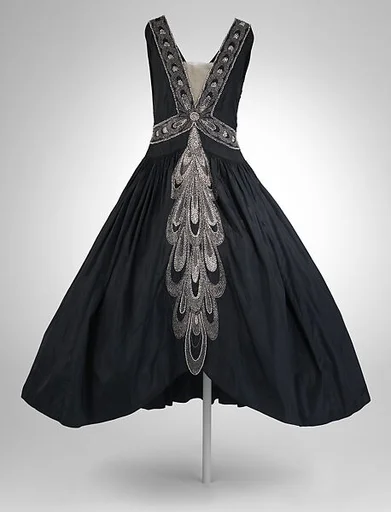
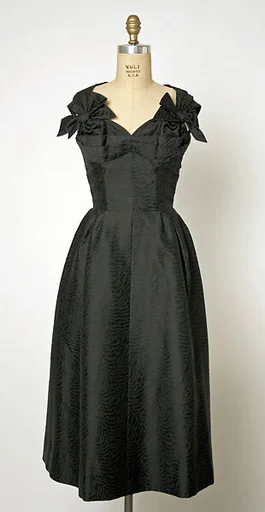
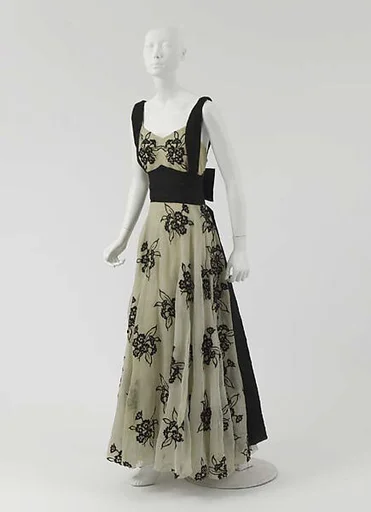
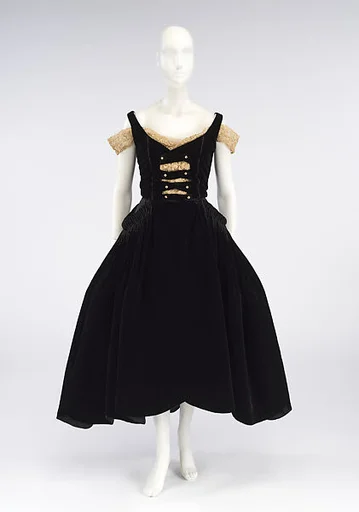
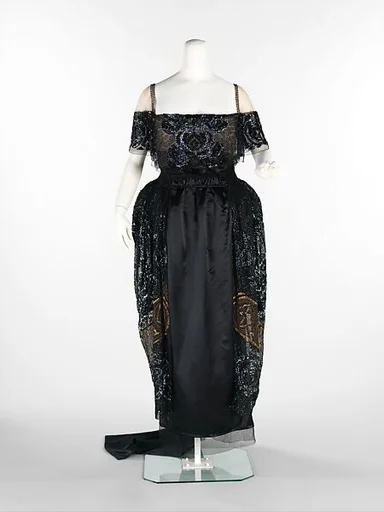
Robe de Style
Jeanne Lanvin|House of Lanvin
fall/winter 1926 · silk, rhinestones, pearls · Costume Institute
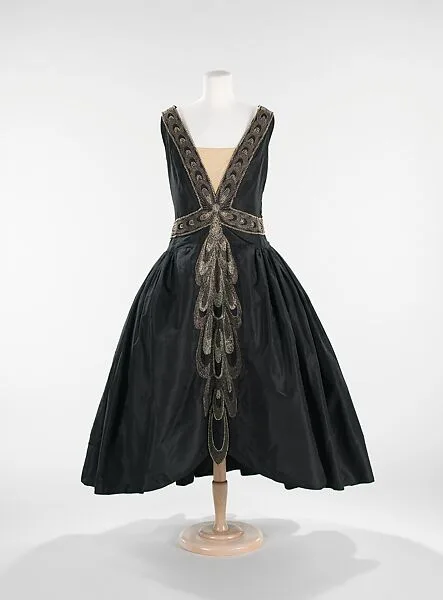
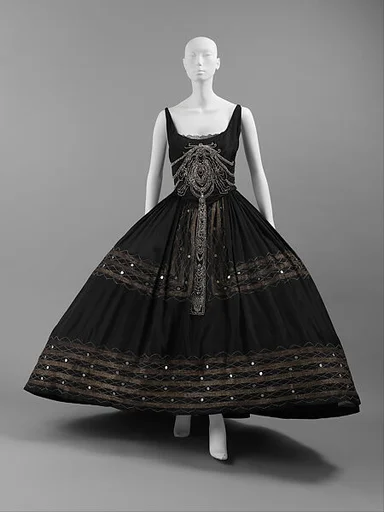
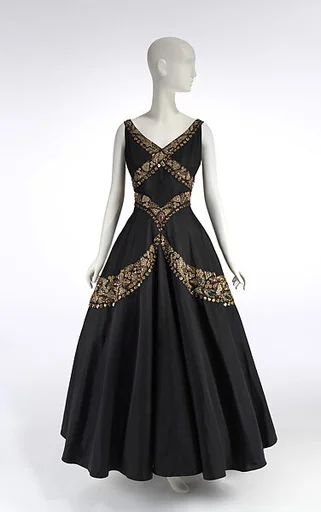
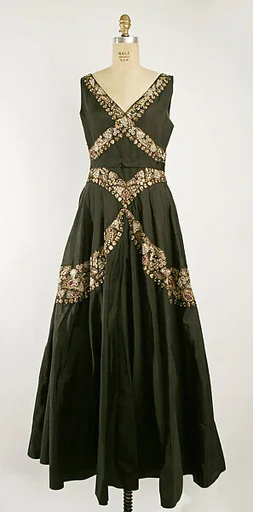
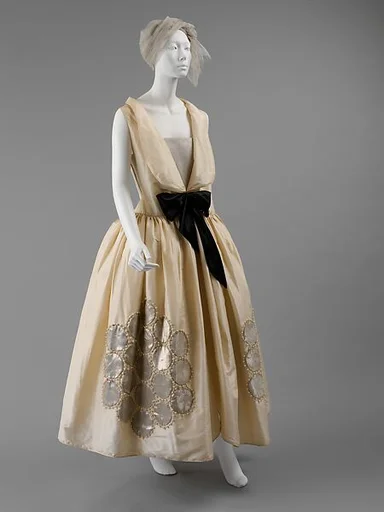
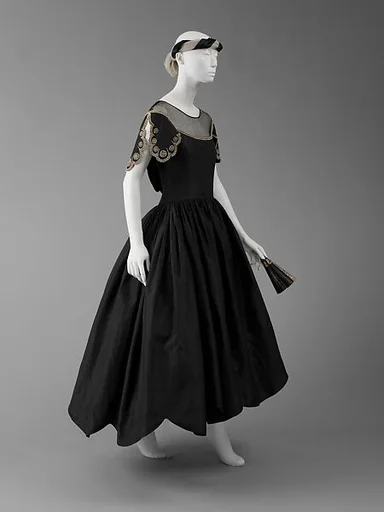
Jeanne Lanvin was apprenticed to a milliner and a dressmaker before opening her own millinery shop in 1889. She expanded into dressmaking when her clients began asking for the ensembles in which she adorned her daughter, Marguerite di Pietro (1897-1958). Her style embodied the femininity of youth in a most modern way with meticulous and relatively sparse surface embellishments and robe de style silhouettes, which could be worn by women of all ages. Lanvin's aptitude can be seen through her house's 1920s expansion into fur, lingerie, men's wear, household goods and perfume. She even had the forethought to open her own dye factory which produced the inimitable 'Lanvin blue.' The longevity of the House of Lanvin can be credited to her attentive management and design standards from its inception. The robe de style, which is often associated with Lanvin, is characterized by its dropped waist and wide skirts designed to resemble court dresses of the 18th century. The style safely hid the figure, which made it comfortable for clients of any age and shape. This particular robe de style's uncomplicated bold decoration and sculptural silhouette is unmistakably iconic of the 1920s haute couture style of Lanvin.
- Artist
- Jeanne Lanvin|House of Lanvin
- Date
- fall/winter 1926
- Medium
- silk, rhinestones, pearls
- Culture
- French
- Department
- Costume Institute
- Credit line
- Brooklyn Museum Costume Collection at The Metropolitan Museum of Art, Gift of the Brooklyn Museum, 2009; Gift of Ogden Goelet, Peter Goelet, and Madison Clews, 1962