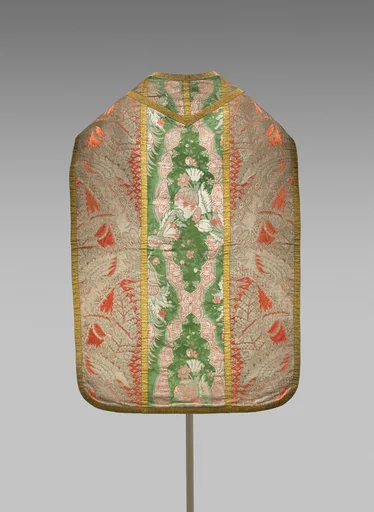
Chasuble
Unknown
second quarter 18th century · Silk · European Sculpture and Decorative Arts
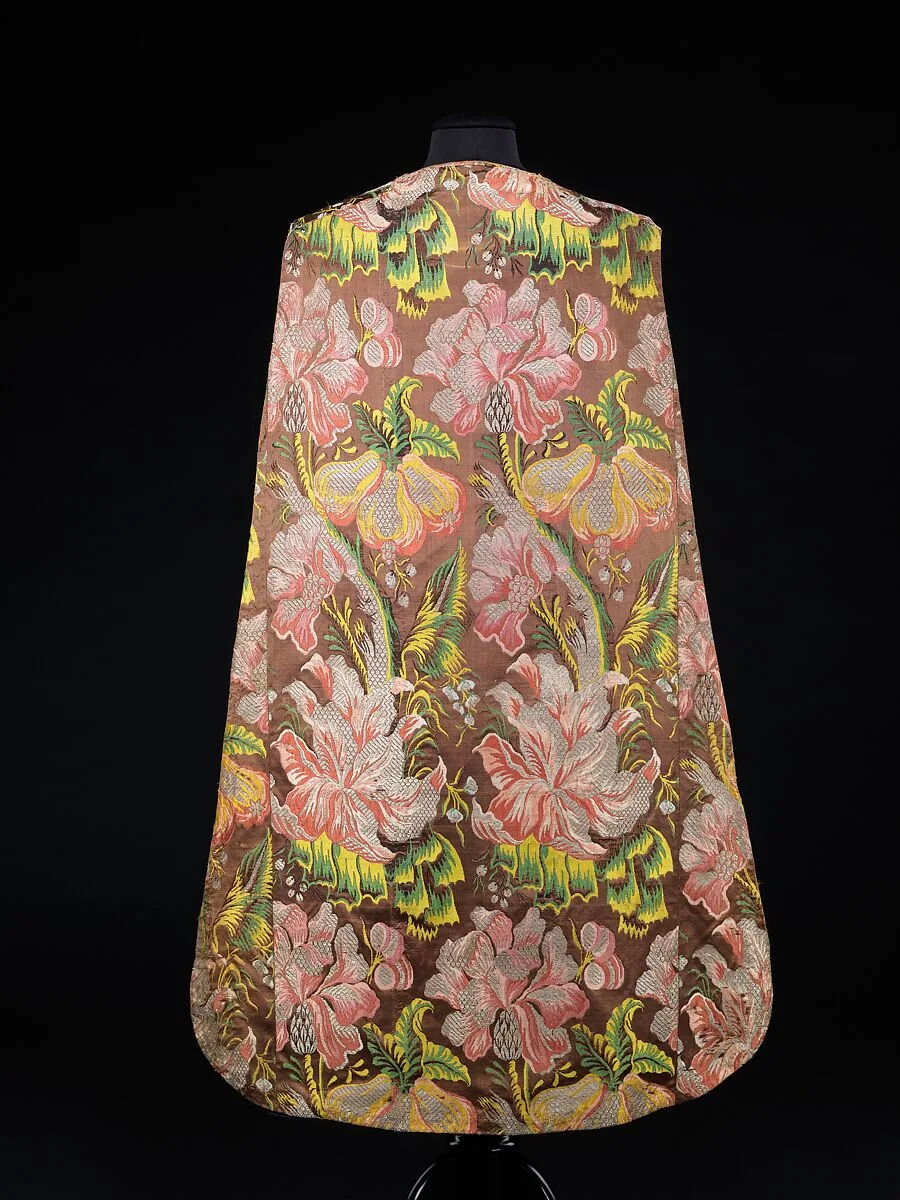
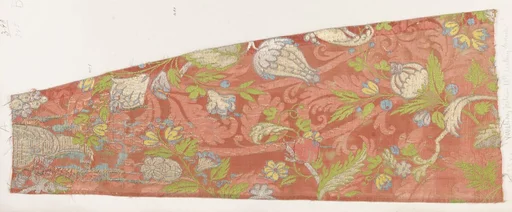
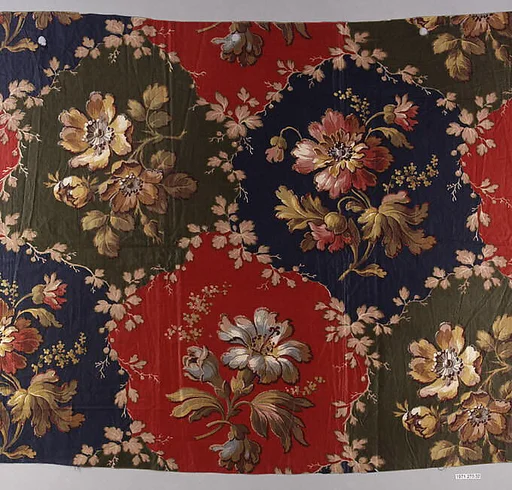
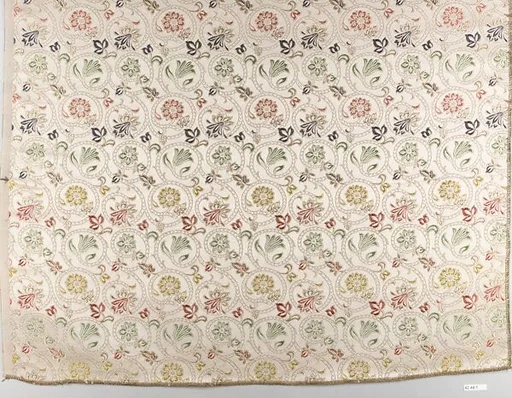
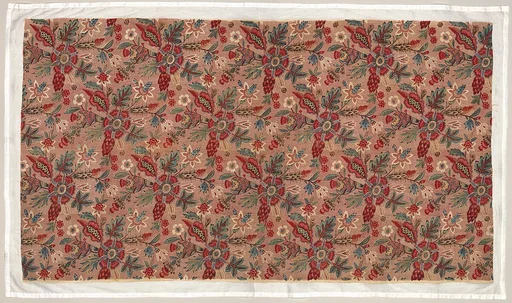
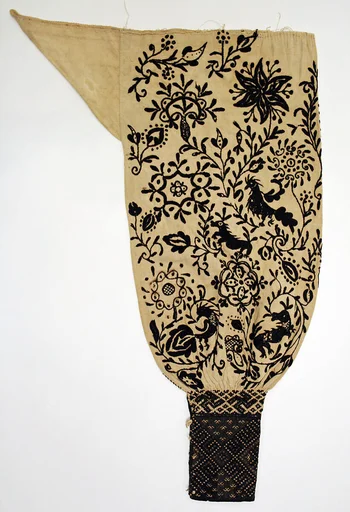
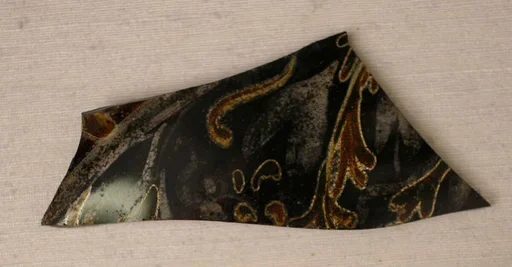
Showcasing the bright, acidic colors of synthetic dyes, the boldly patterned, machine-woven brocaded damask textile of this object was probably originally intended as upholstery fabric, with a bulky, thick weave and multiple colored supplementary wefts intended to stand the wear and tear of furniture coverings. Around the beginning of the twentieth century, this textile was repurposed to create this garment, which imitates a chasuble (worn by the Catholic priest over his clothing when officiating at church services) but was almost certainly made not for liturgical wear but to appeal to the tastes of the art market.
- Artist
- Unknown
- Date
- second quarter 18th century
- Medium
- Silk
- Culture
- European
- Department
- European Sculpture and Decorative Arts
- Credit line
- Brooklyn Museum Costume Collection at The Metropolitan Museum of Art, Gift of the Brooklyn Museum, 2009; Gift of Francis F. Randolph, J. Ogden Bulkley, and David T. Bulkley, 1944