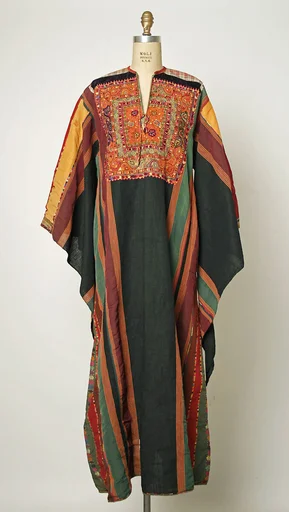
Wedding dress
Unknown
1940s–50s · Silk · Islamic Art
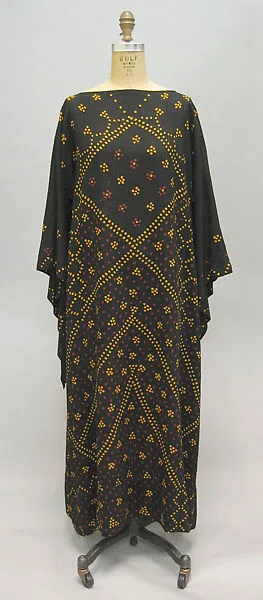
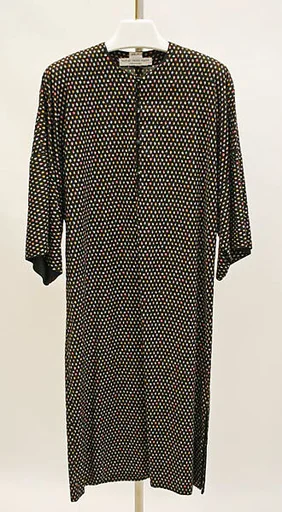
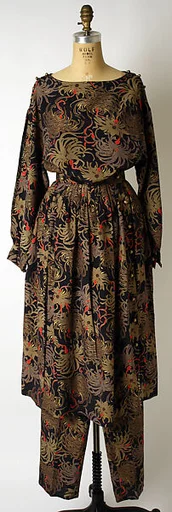
Highly skilled dyers in the cities of Hama, Homs, and Damascus, who were typically women, created traditional plangi dresses for bridal trousseaus and festive occasions. The dresses are named for their dotted pattern, which is produced using a resist-dye technique like tie-dye (palangi means "from leopard" in Persian and Ottoman Turkish). The plangi patterns on this dress were made by dyeing the fabric three times, beginning with yellow (the lightest color). Next, small sections of the fabric were tied tightly with cotton thread to create the desired pattern. After the dress was dyed two more times (first red, then black), the cotton ties were removed to reveal small lozenges of color. The dress’s uneven, stubby texture indicates that the yarns used were most likely made from high-quality raw silk waste rather than finely spun silk threads.
- Artist
- Unknown
- Date
- 1940s–50s
- Medium
- Silk
- Department
- Islamic Art
- Credit line
- Gift of Dr. Marilyn Jenkins-Madina, in memory of her mother, Margaret Pyle Jenkins, 2008