Panniers
Unknown
1760–70 · silk, cane, metal · Costume Institute
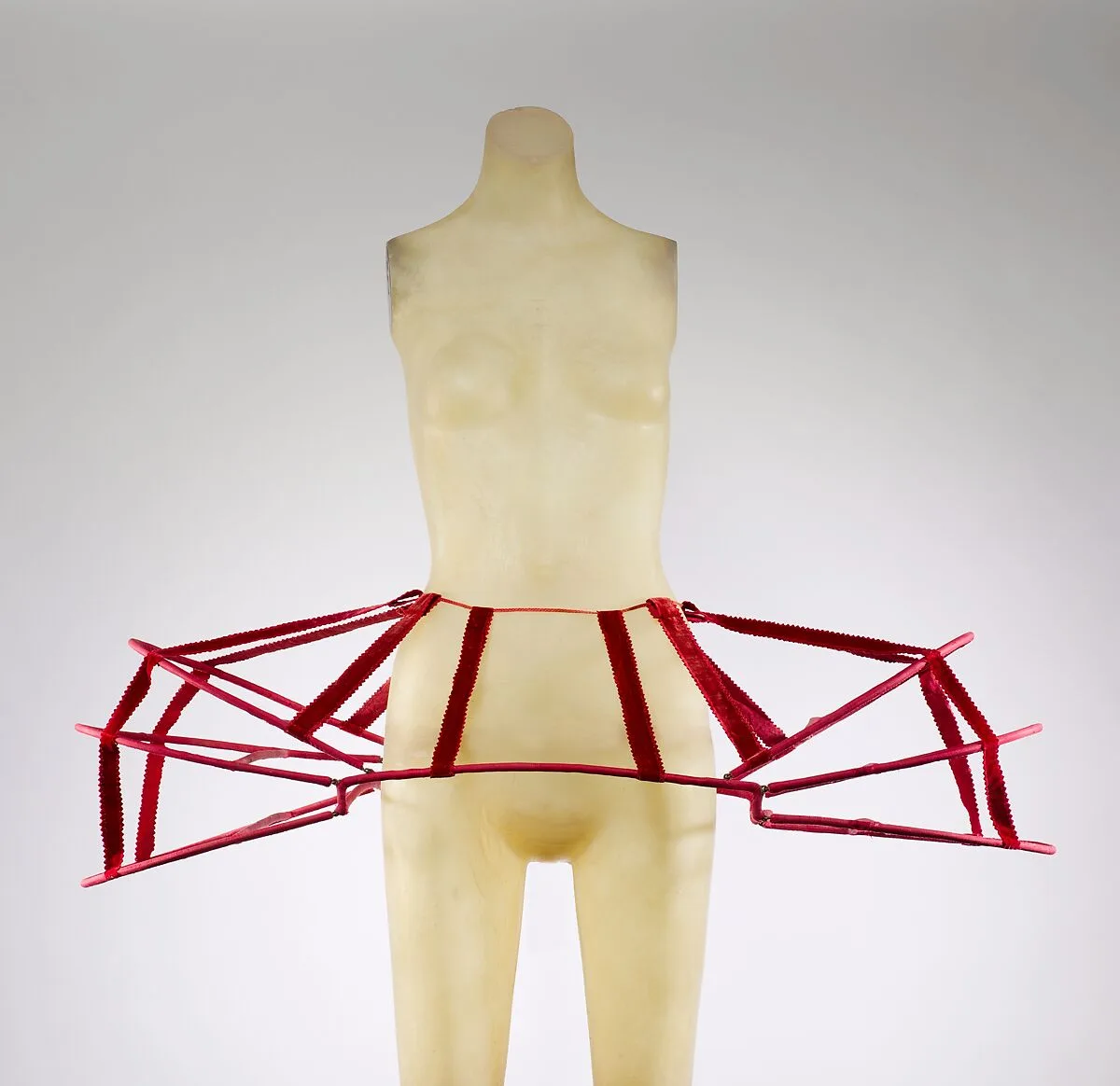
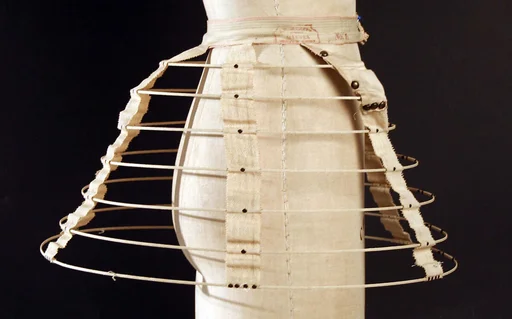
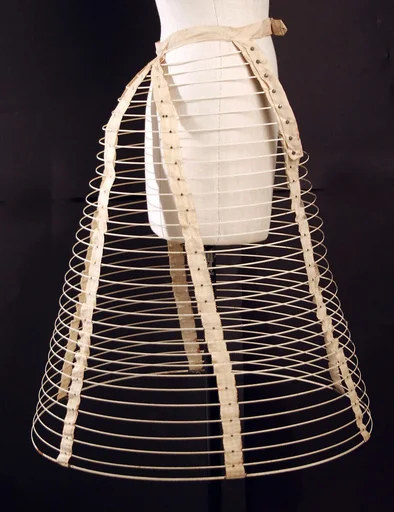
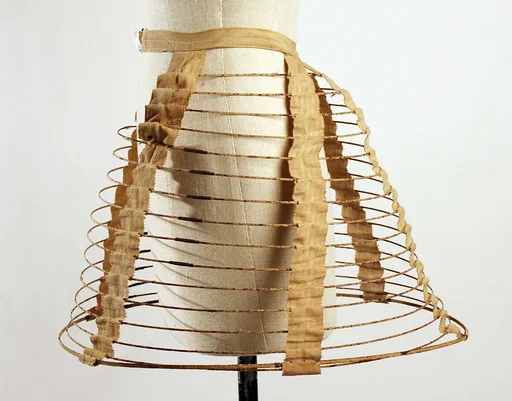
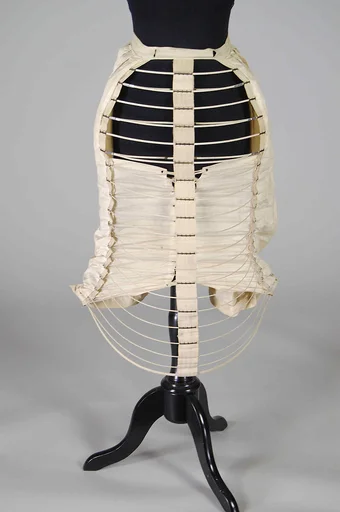
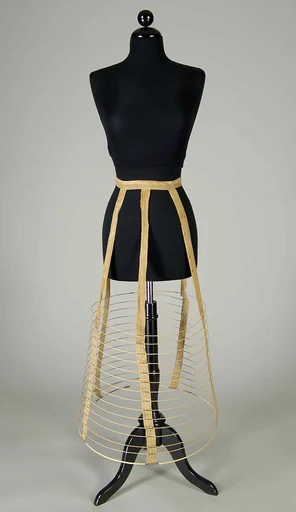
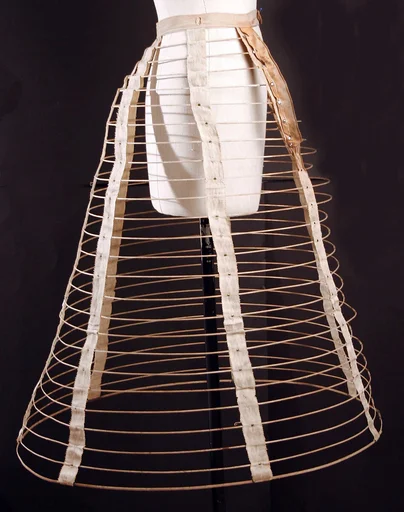
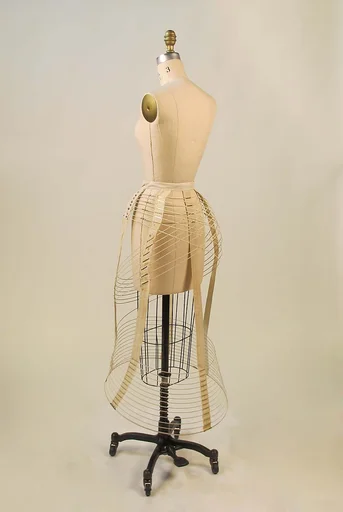
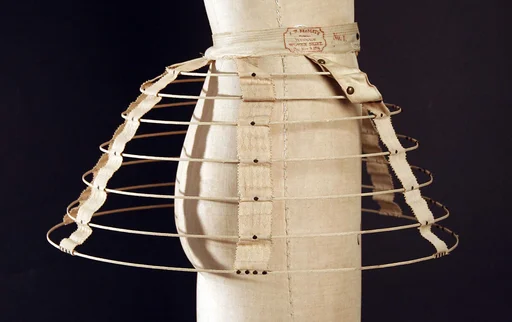
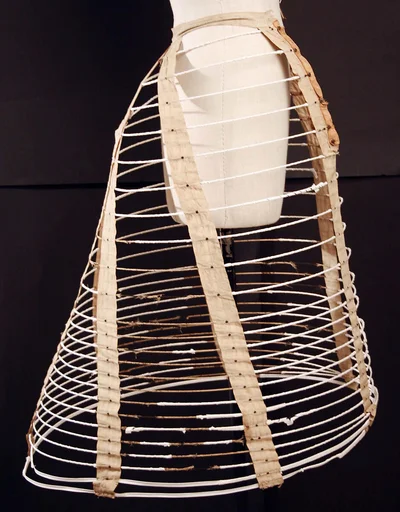
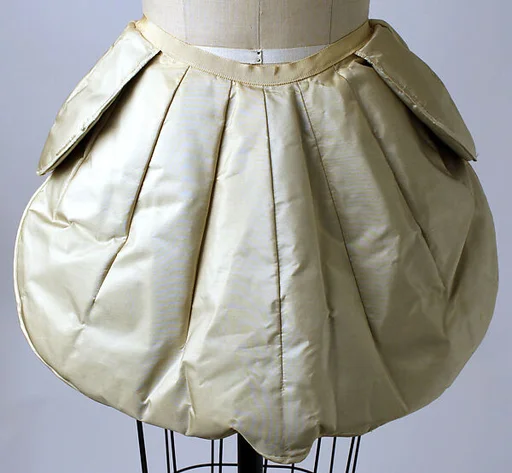
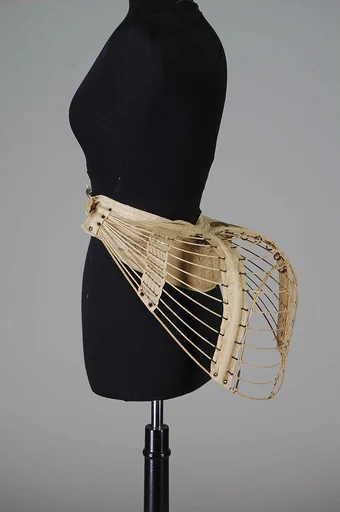
Panniers, hooped petticoats fashionable in Europe for much of the eighteenth century, provided support for the era’s voluminous gowns. They also tested a woman’s “natural” grace. The ability to carry oneself elegantly and with the impression of ease despite such cumbersome undergarments was a learned skill and a marker of high social status. This pannier, a rare surviving example, has been fitted with hinges that allow the hoops to be lifted, facilitating movement in tight spaces. From their introduction, panniers were a subject of ridicule. They were attacked, mainly by men, on a number of grounds: as unnatural in their distortion of the figure; as socially destabilizing when adopted by bourgeois women; and as an invitation for women to behave promiscuously, since their volume could obscure pregnancy. The charges had little effect on the pannier’s popularity.
- Artist
- Unknown
- Date
- 1760–70
- Medium
- silk, cane, metal
- Culture
- French
- Department
- Costume Institute
- Credit line
- Purchase, Friends of the Costume Institute Gifts, 2008