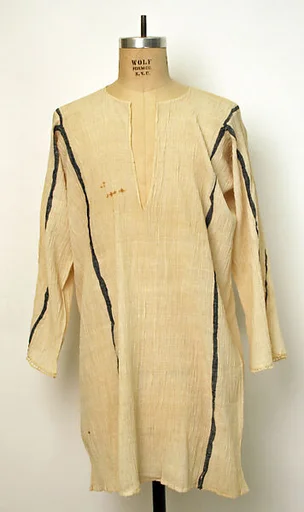
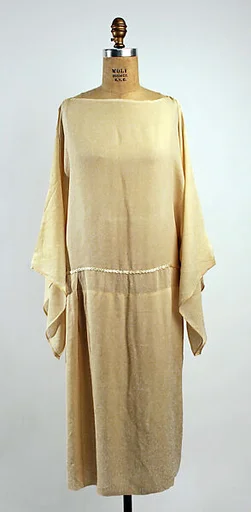
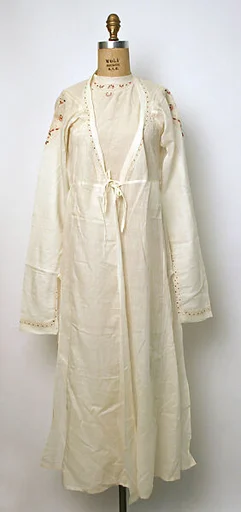
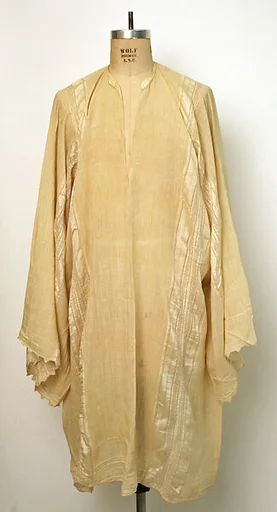
Coat
Unknown
late 19th–early 20th century · Silk; quilted · Islamic Art
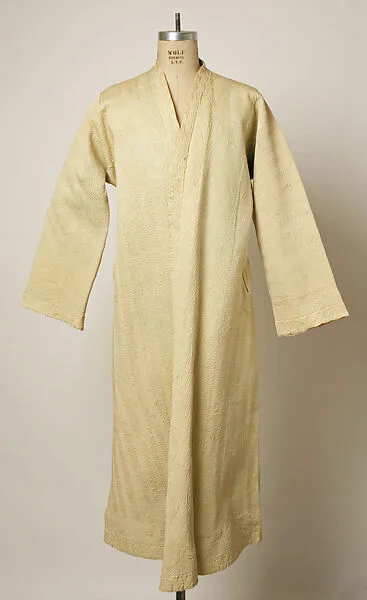
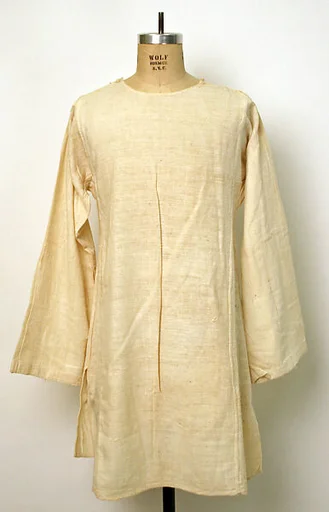
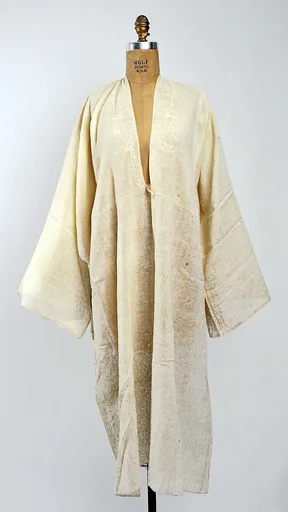
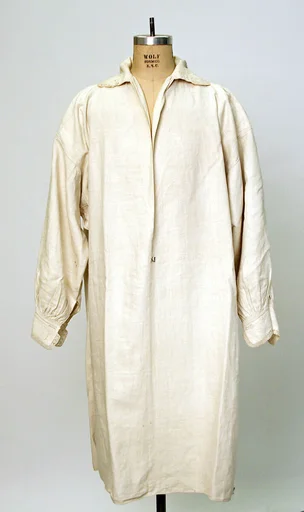
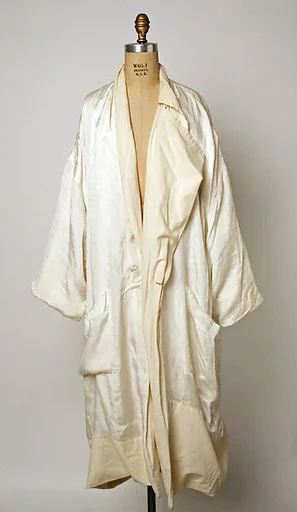
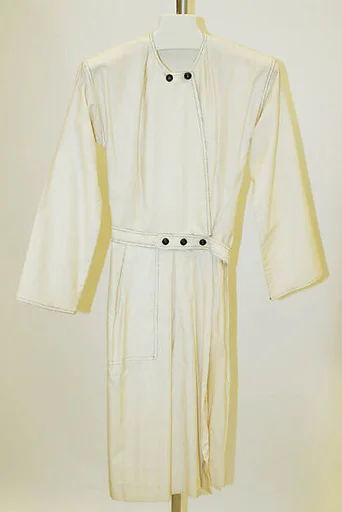
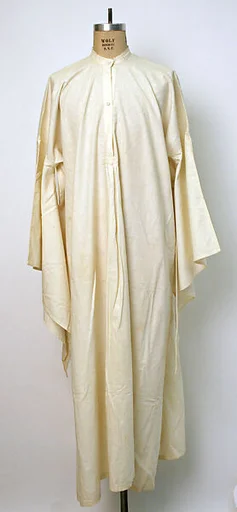
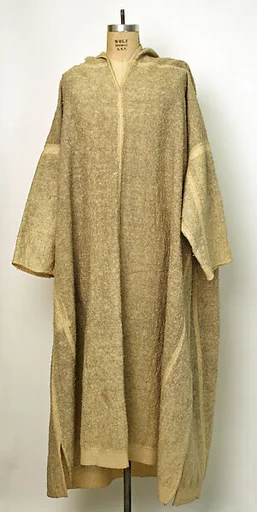
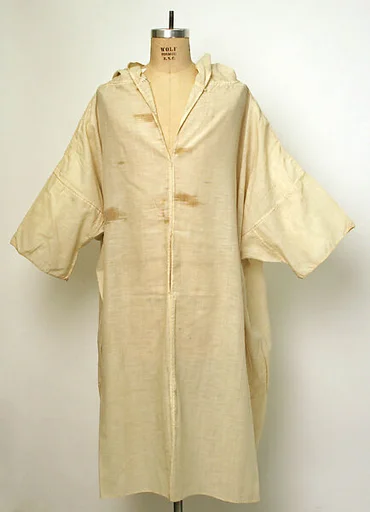
This type of garment is characteristic of the dresses and textiles from Syria which is known for its luxurious silks that were produced in the large urban workshops of Aleppo and Damascus in the nineteenth and early twentieth centuries. Coats like this example are made of fine satin silk and quilted in vertical bands of stylized floral bands or geometric stripes, often with borders of zigzag or other simple repeat designs. Open to the front, these garments have long sleeves and often have pockets on the sides. An inner lining in simple undyed cotton protects the outer fabric and provides additional padding. Although white to yellow quilted coats seem to be more popular, blue, and red examples are known as well. Such coats were intended for Syrian women and girls from wealthy families living in urban centers. Typically worn after bathing, such luxurious coats were among the preferred garments in the bridal trousseau. Research also suggests that similar quilted coats were preferred by the Sufi Shaykhs in Anatolia and worn as a hırka coat over layers of clothing. Sources confirm that these coats that were worn in Anatolia are referred to as hırka coats "from Syria". The Syrian denomination of the Sufi coats speaks to Syria’s fame of fine clothing and silk manufacture.
- Artist
- Unknown
- Date
- late 19th–early 20th century
- Medium
- Silk; quilted
- Department
- Islamic Art
- Credit line
- Gift of Julia Acheson Thompson, 1976