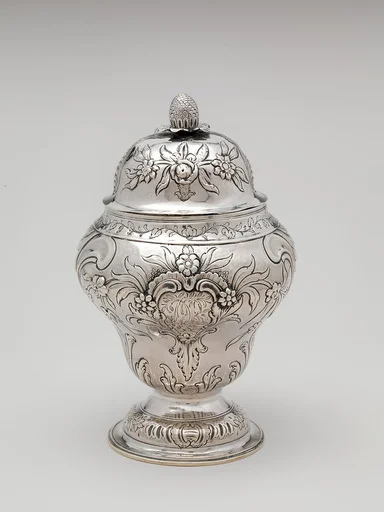
Sugar Bowl and Cover
John Bayly
ca. 1765 · Silver · The American Wing
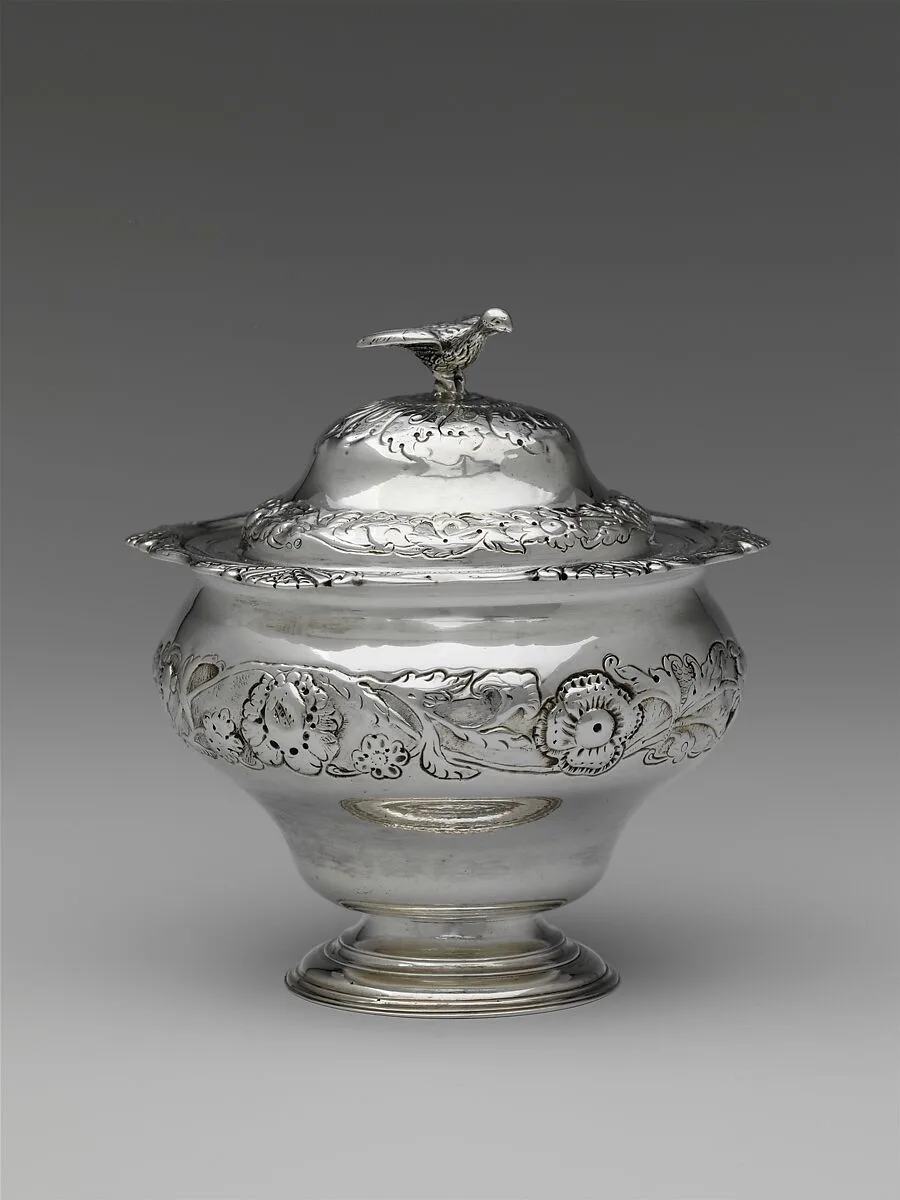
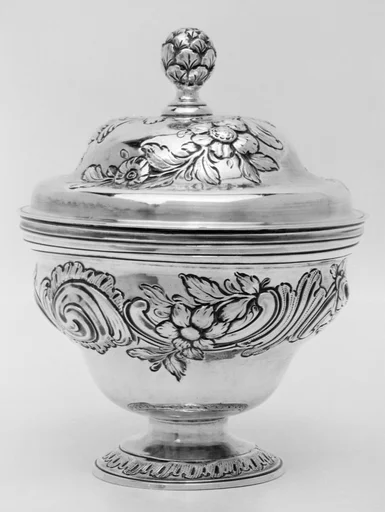
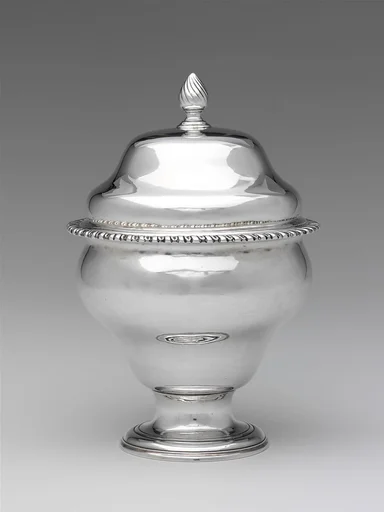
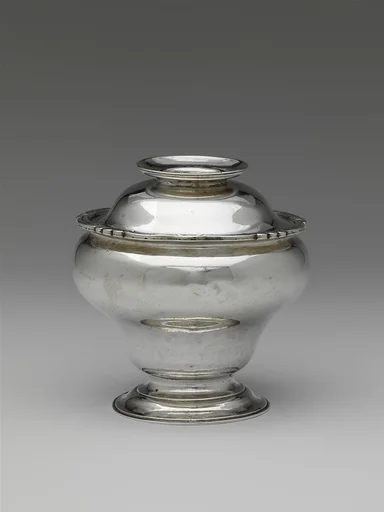
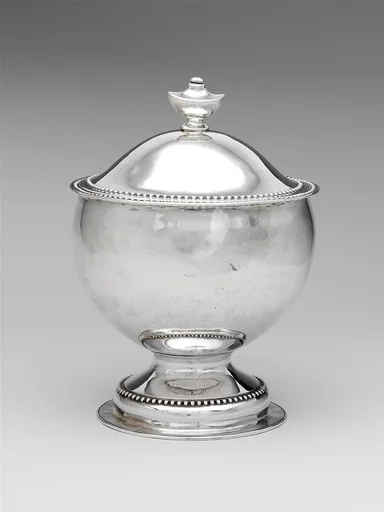
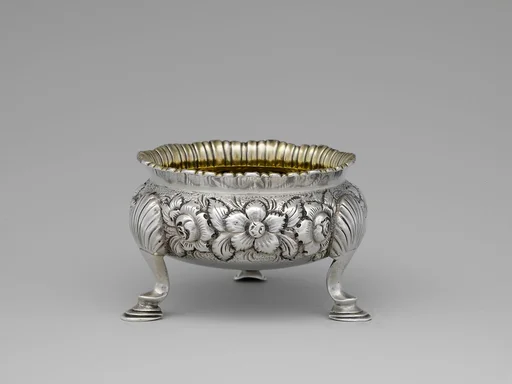
As sugar became more readily available in the eighteenth century, sugar bowls, usually with covers, became an essential part of tea equipage. Horizontal bands of naturalistic flowers and foliage chased in high relief transform this classic doublebellied sugar bowl into a fully developed expression of the rococo style. Rather than encasing the entire body and cover in an overall decorative scheme, however, the designer created compact bands of exuberant ornament that offset the smooth plain surfaces of the curvilinear forms. Relatively rare in American silver, cast finials in the form of birds, as seen here, date mainly from the mideighteenth century and possibly derive from English prototypes. When first acquired by the Metropolitan Museum in 1939 this sugar bowl was attributed to the New York silversmith Jacob Boelen II (1733–1786). More recent research, however, has determined that the mark IB in a rounded rectangle is that of the Philadelphia silversmith John Bayly
- Artist
- John Bayly
- Date
- ca. 1765
- Medium
- Silver
- Culture
- American
- Department
- The American Wing
- Credit line
- Rogers Fund, 1939