Ensemble
Unknown
ca. 1870s–early 20th century · Velvet, silk, metal wrapped thread; embroidered · Islamic Art
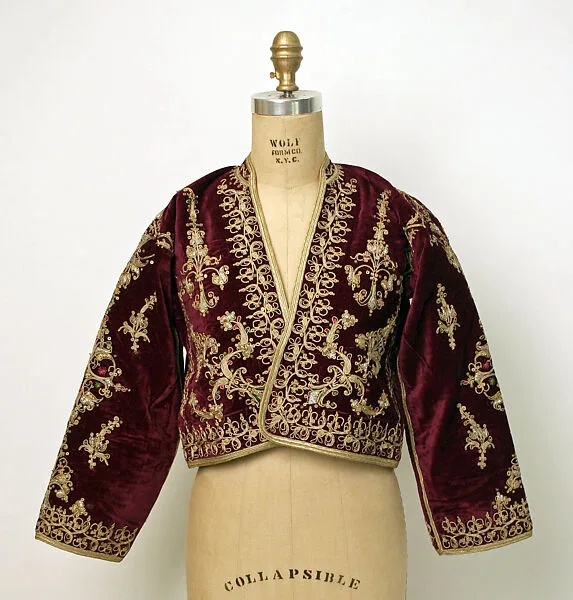
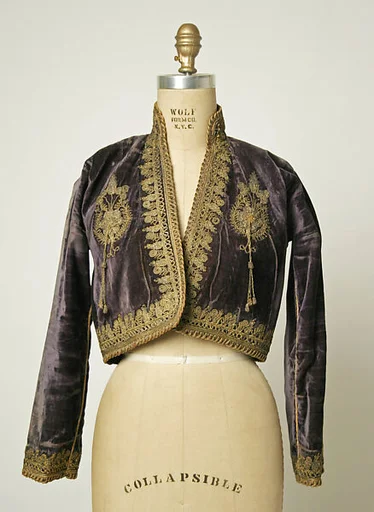
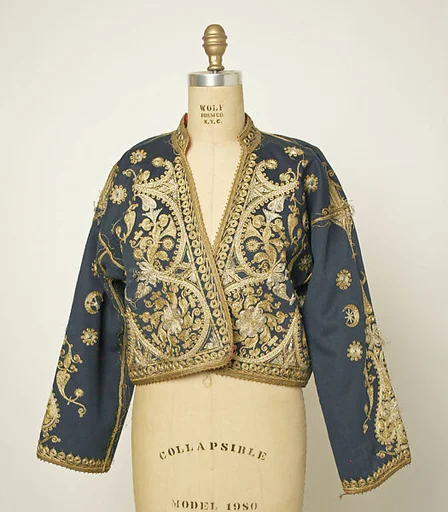
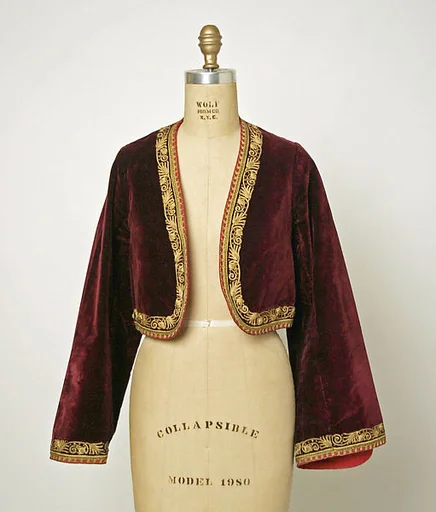
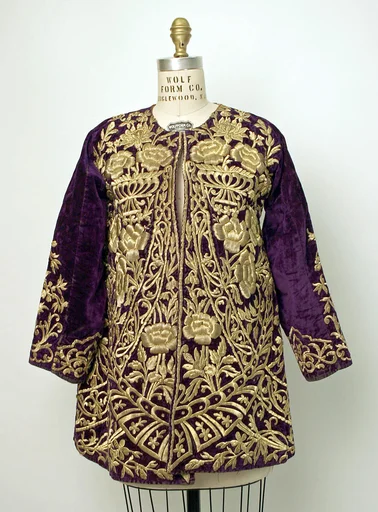
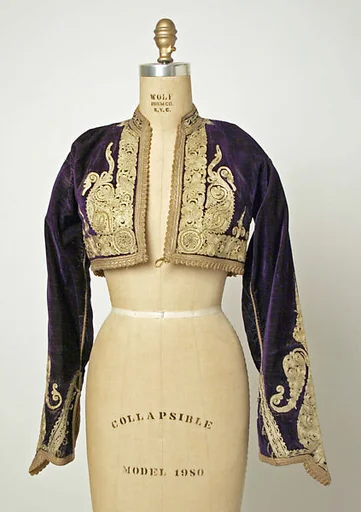
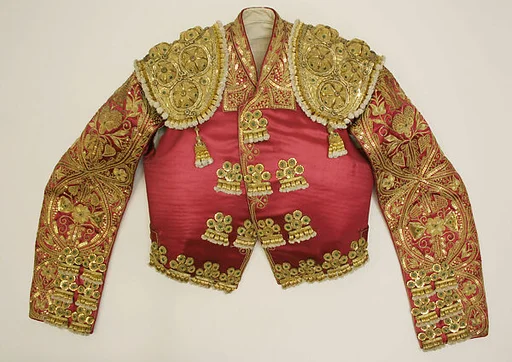
Intended to be worn on special occasions, this matching cepken or short jacket and şalvar (baggy trousers) are made of a wine-colored velvet, decorated with extensive embroidery. The jacket has long, full sleeves and a short, stand-up collar. The very full baggy şalvar is gathered at the waist and has decorated openings at the ankle. The embroidery, carried out in metal-wrapped thread, with colored silk accents and sequins, consists of intricate designs of varying sizes carefully scattered across the fabric of the two garments. The bright colors of the embroidery thread suggest a date in the 1860s or later, when synthetic dyes began to be widely used in textile production. On the jacket, the shoulder seams, front opening, collar, sleeve ends and hem are all edged with intricately looped and twisted garlands. The overall impact of the decoration recalls the dival embroidery of bindallı garments (worn for weddings and other special occasions), but the execution is carried out in a less expensive and labor-intensive technique. The two pieces would have been worn together with a gömlek, or undershirt, tucked into the şalvar and a decorative belt. Ensembles with matching cepken and şalvar are particularly associated with the Balkan region of the Ottoman Empire and with Anatolian areas with large number of Balkan immigrants, such as Kütahya and Eskişehir.
- Artist
- Unknown
- Date
- ca. 1870s–early 20th century
- Medium
- Velvet, silk, metal wrapped thread; embroidered
- Department
- Islamic Art
- Credit line
- Purchase, Irene Lewisohn Bequest, 1963