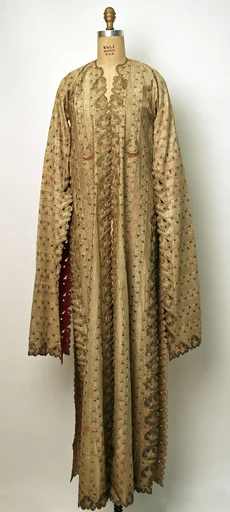
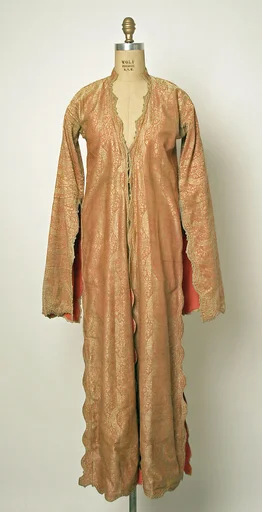
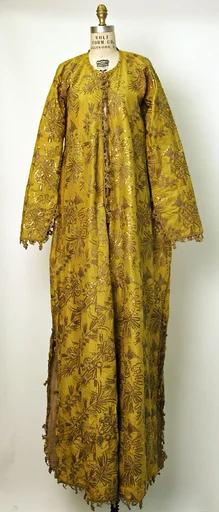
Uçetek Entari
Unknown
19th century · Silk and metal wrapped thread; embroidered · Islamic Art
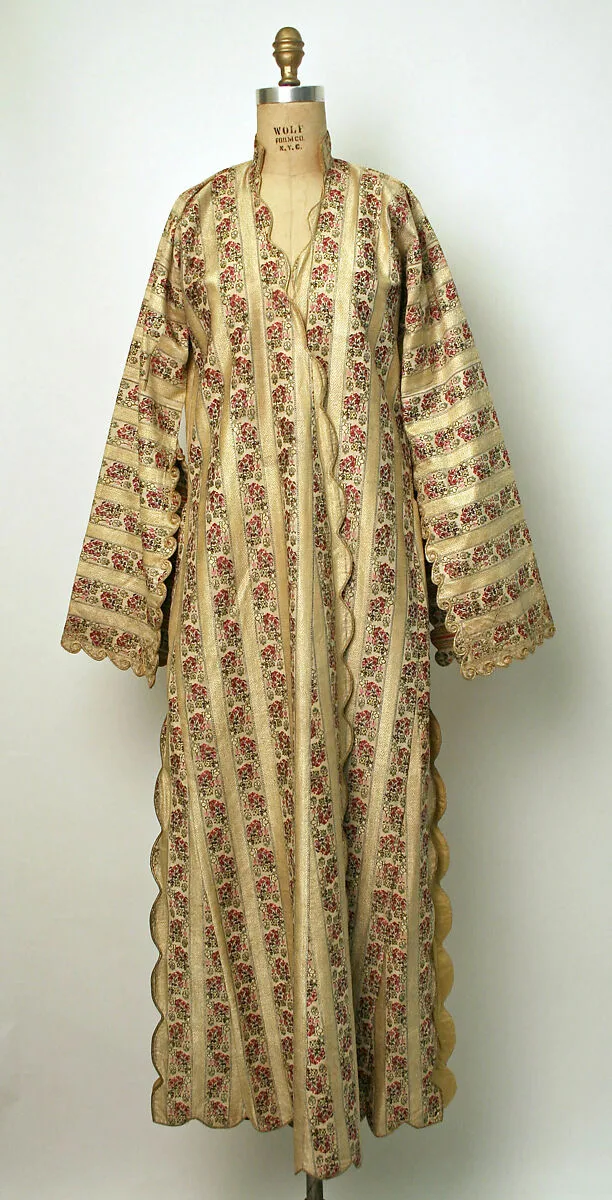
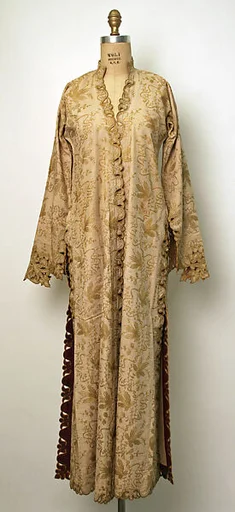
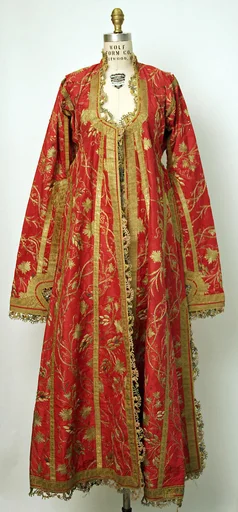
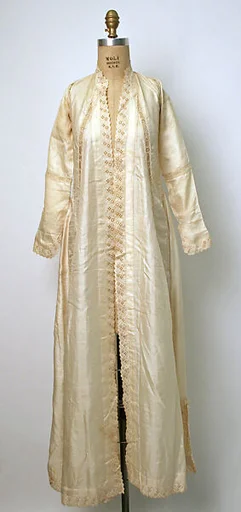
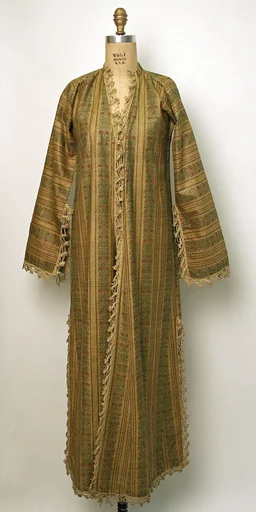
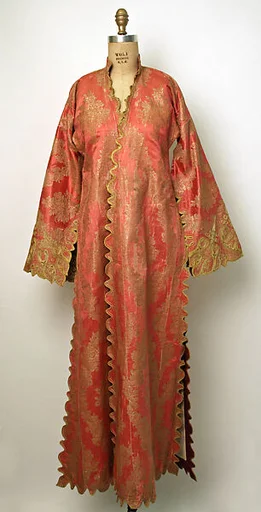
The entari, or robe, was the main element of women’s dress in the Ottoman Empire, worn together with a chemise, or gömlek, and baggy trousers, or şalvar. Constructed along traditional lines, this Ottoman woman’s entari is made of an elaborately woven silk known as savai, a silk brocade with alternating vertical bands of floral motifs composed of extra weft silk thread and a herringbone design often executed in gold metal-wrapped thread. This particular pattern of broad stripes of flowers alternating with a stripe of lighter silk in a herringbone design, separated by a narrow line of tiny blue and white rectangles, is associated with silk workshops in the Istanbul neighborhood of Üsküdar. The entari has a small stand-up collar, long straight sleeves open until the elbow, and triangular pieces added to both sides of the front for fullness. The skirt is open to the hips and there is a pocket in the side seam just above the side slit on each side. The sleeves are lined with a rather coarsely woven, colorful striped fabric as far as the elbows, and the pockets have a narrow facing of a green and pink striped silk. At some point, the entire garment was relined with a gold-colored fabric and modern snaps were added at the bodice. All of the edges of the entari have been finished in a neat, scalloped design and narrow gold-wrapped braid, a restrained ornamentation which allows the highly decorative fabric to take center stage in this elegant robe.
- Artist
- Unknown
- Date
- 19th century
- Medium
- Silk and metal wrapped thread; embroidered
- Department
- Islamic Art
- Credit line
- Gift of Charles Collingwood, 1979