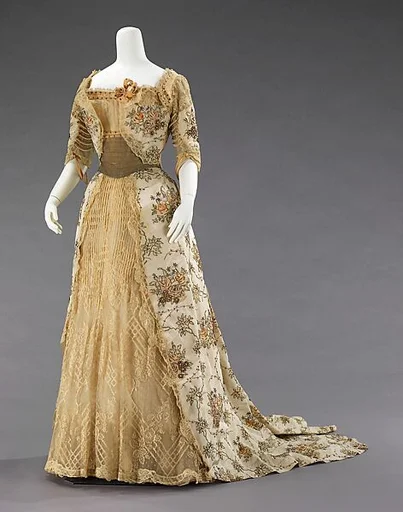
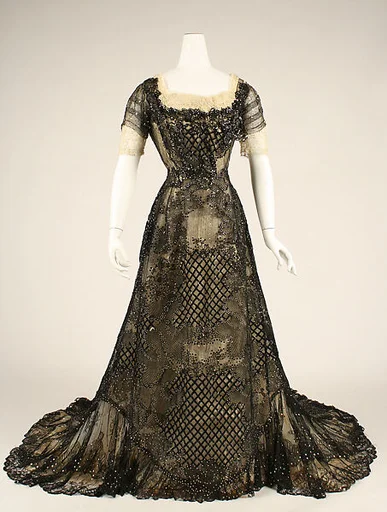
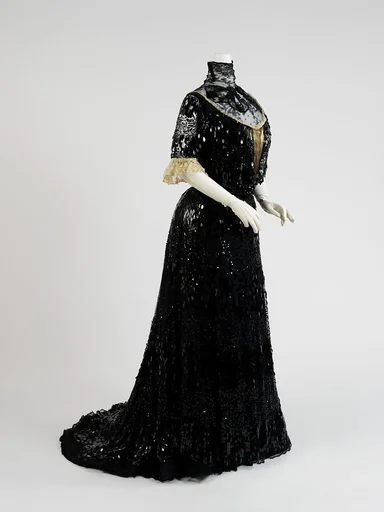
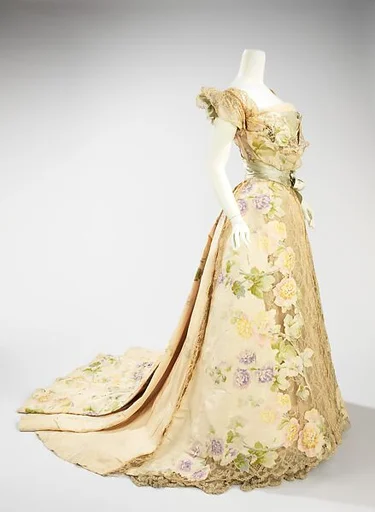
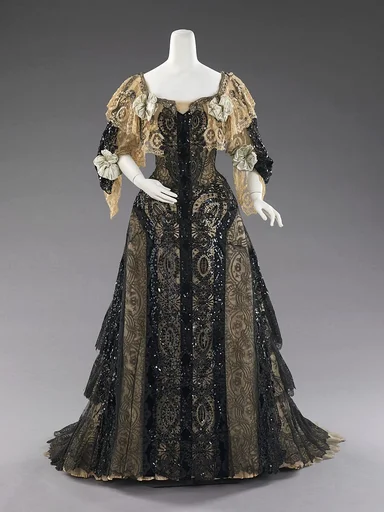
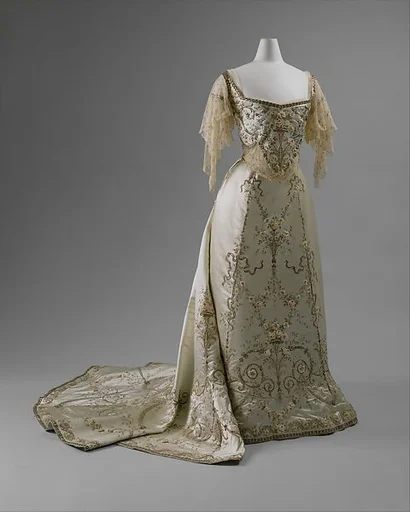
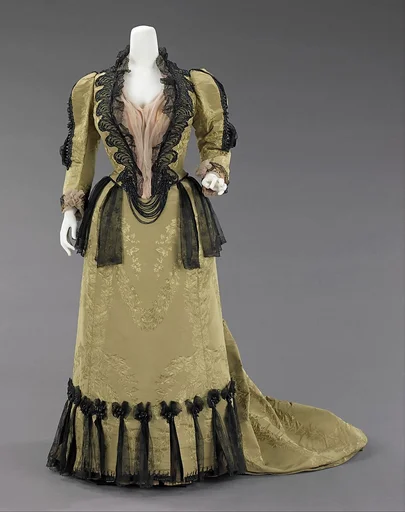
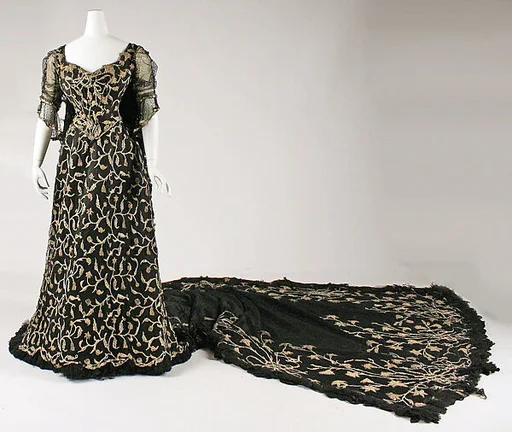
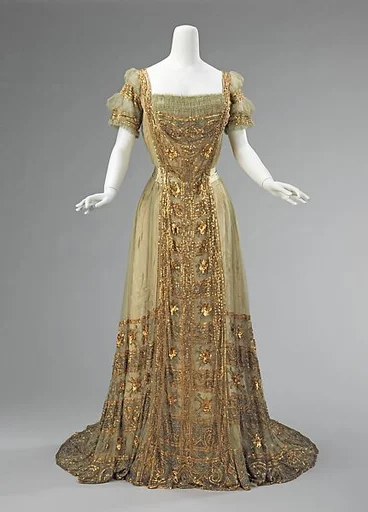
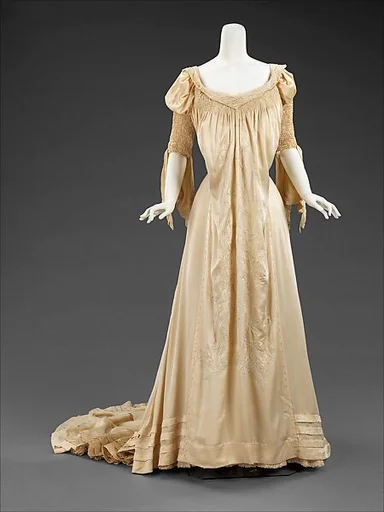
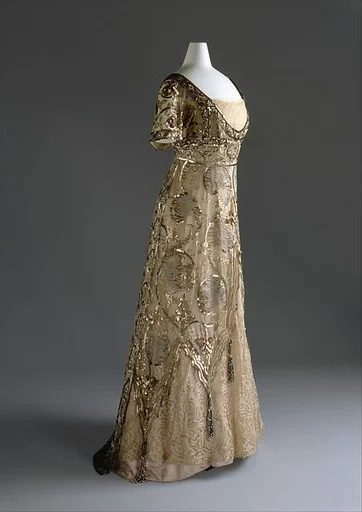
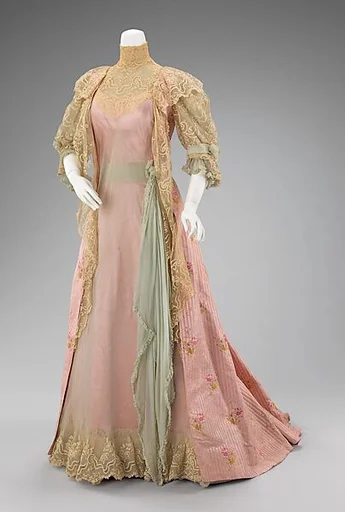
Evening dress
Henriette Favre
1902 · silk, sequins · Costume Institute
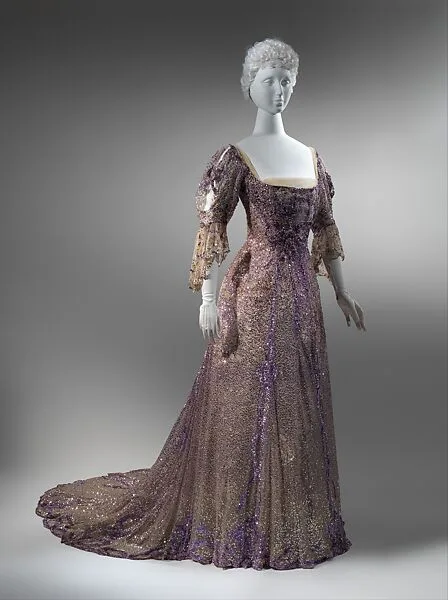
Introduced around 1900, the S-curve silhouette was the result of ongoing controversy about the health effects of corsets. The "health" corset which was the base of this silhouette was designed to take pressure off the waist by shifting the force of the corset down onto the abdomen through the use of a straight center-front busk. The result of the innovation was to throw the chest forward and the derriere backwards into an almost birdlike configuration. Adding to this impression was the "monobosom" wherein support for the breasts corralled them into a low-slung single mass of flesh that was covered in day wear, but on display at night. Further emphasizing the S-curve, fabric in the front of the dress fell straight to the ground but was gathered over the back of the dress, adding greater mass over the pushed-out buttocks.
- Artist
- Henriette Favre
- Date
- 1902
- Medium
- silk, sequins
- Culture
- French
- Department
- Costume Institute
- Credit line
- Gift of Miss Irene Lewisohn, 1937