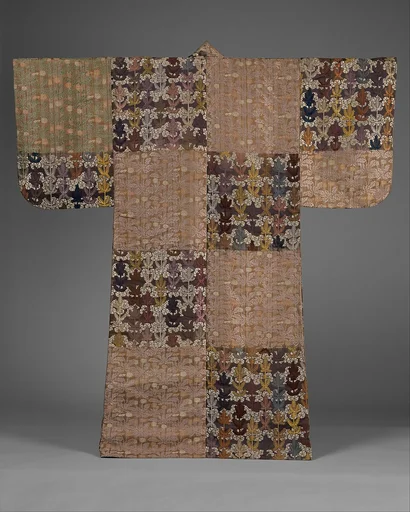
白綸子地網文字散模様小袖|Robe (Kosode) with Fishing Net and Characters
Unknown
probably ca. 1660s · Silk and metallic thread embroidery, tied resist dyeing on satin damask · Asian Art
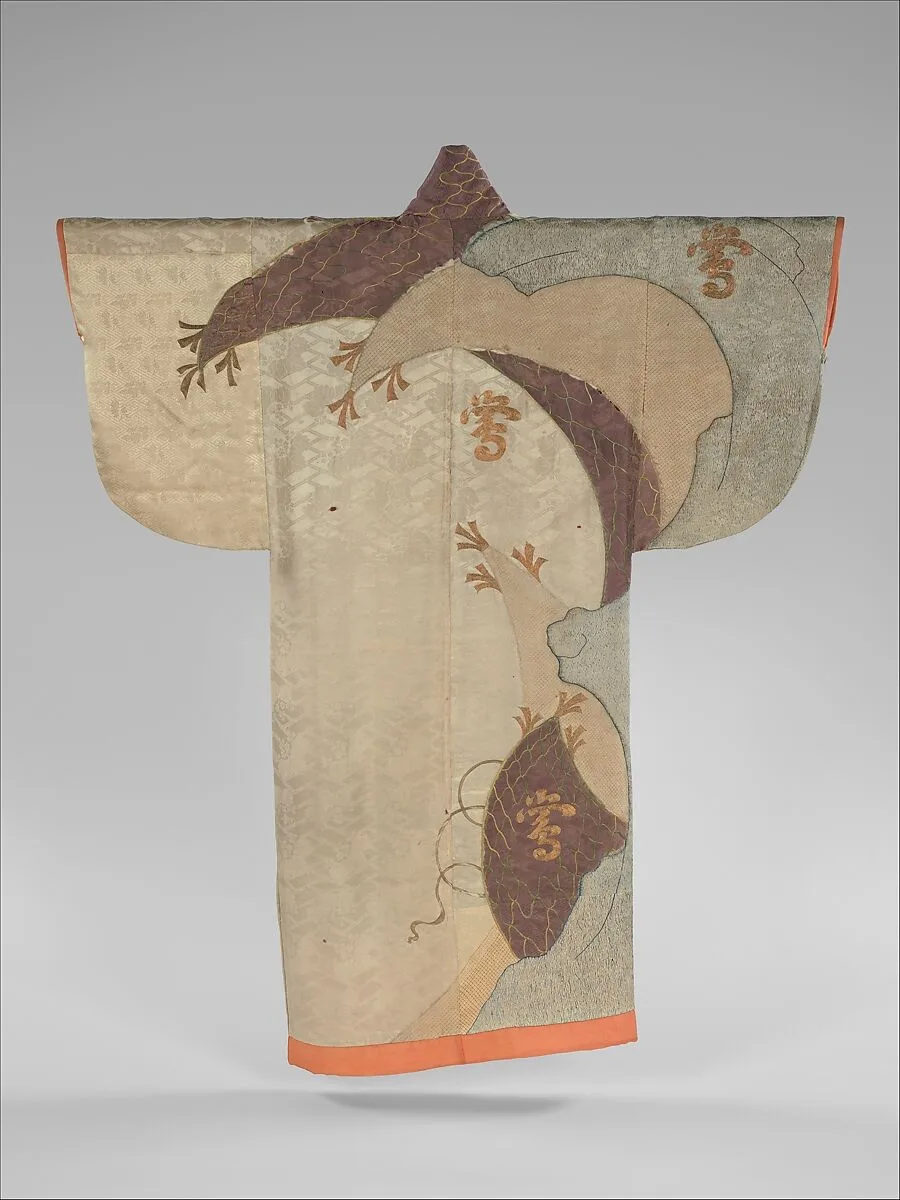
An asymmetrical pattern of drying fishing nets and a repeating Japanese character for “warbler” (uguisu 鶯) in highly cursive script adorns the back of this kosode (garment with small sleeve openings). Such asymmetrical designs became fashionable during the Kanbun period (1661–73), when the back of the kosode was the focal point of the composition. Illustrated pattern books (hinagata-bon) of the period show many similar designs, sweeping in a dramatic curve from the lower right hem to the upper left shoulder. In this example, the looming fishing nets seem to playfully echo the curve of the giant waves. The design is executed in blue, orange, and purple using a different type of stitched or tied resist dyeing (shibori) for each color. The details are embroidered in silk and gold thread. The foundation is an off-white silk damask woven with a repeating pattern of paulownia flowers on a geometric background of diagonal rectangles.
- Artist
- Unknown
- Date
- probably ca. 1660s
- Medium
- Silk and metallic thread embroidery, tied resist dyeing on satin damask
- Culture
- Japan
- Department
- Asian Art
- Credit line
- Purchase, Harris Brisbane Dick Fund, Mary and James G. Wallach Foundation and Parnassus Foundation/Jane and Raphael Bernstein Gifts, and funds from various donors, 2011