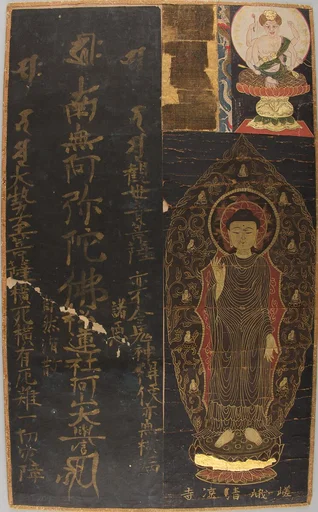
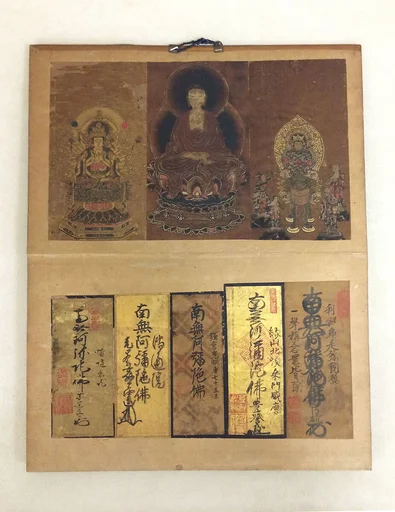
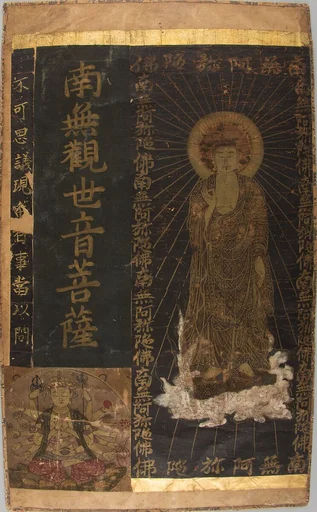
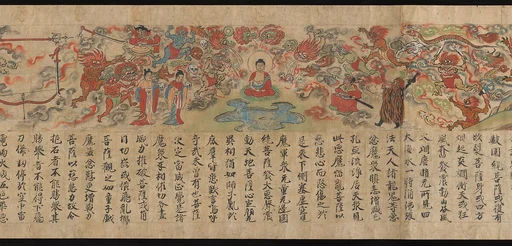
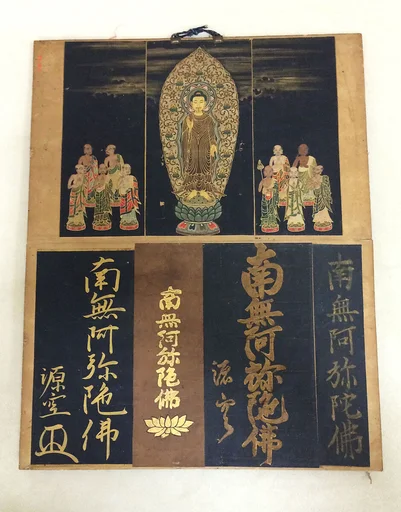
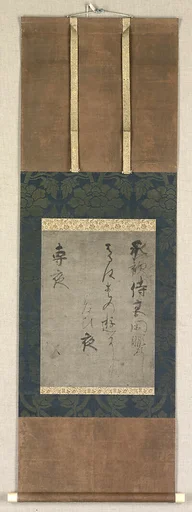
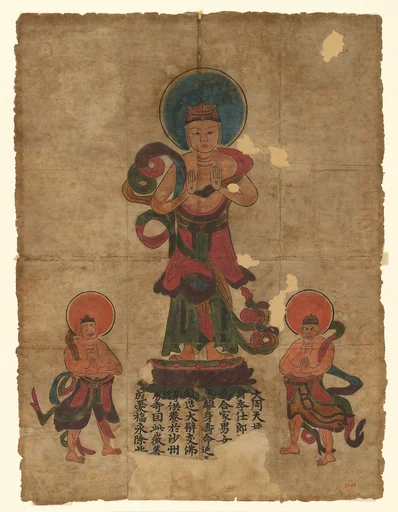
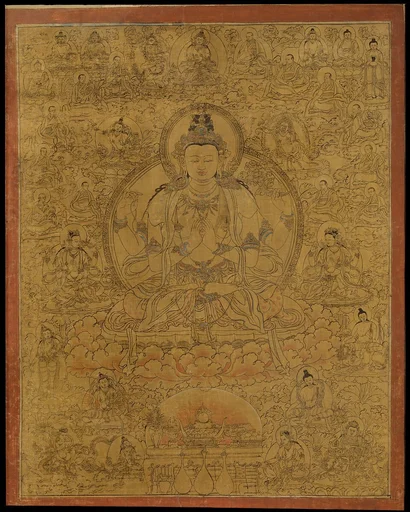
納経帳|Pilgrim’s Visiting Album
Unknown
18th century · One from a set of four albums; calligraphy on gilt paper and paper, paintings in ink, color, and gold on paper, mounted on paper, covers of silk embroidery with colored and metallic thread · Asian Art
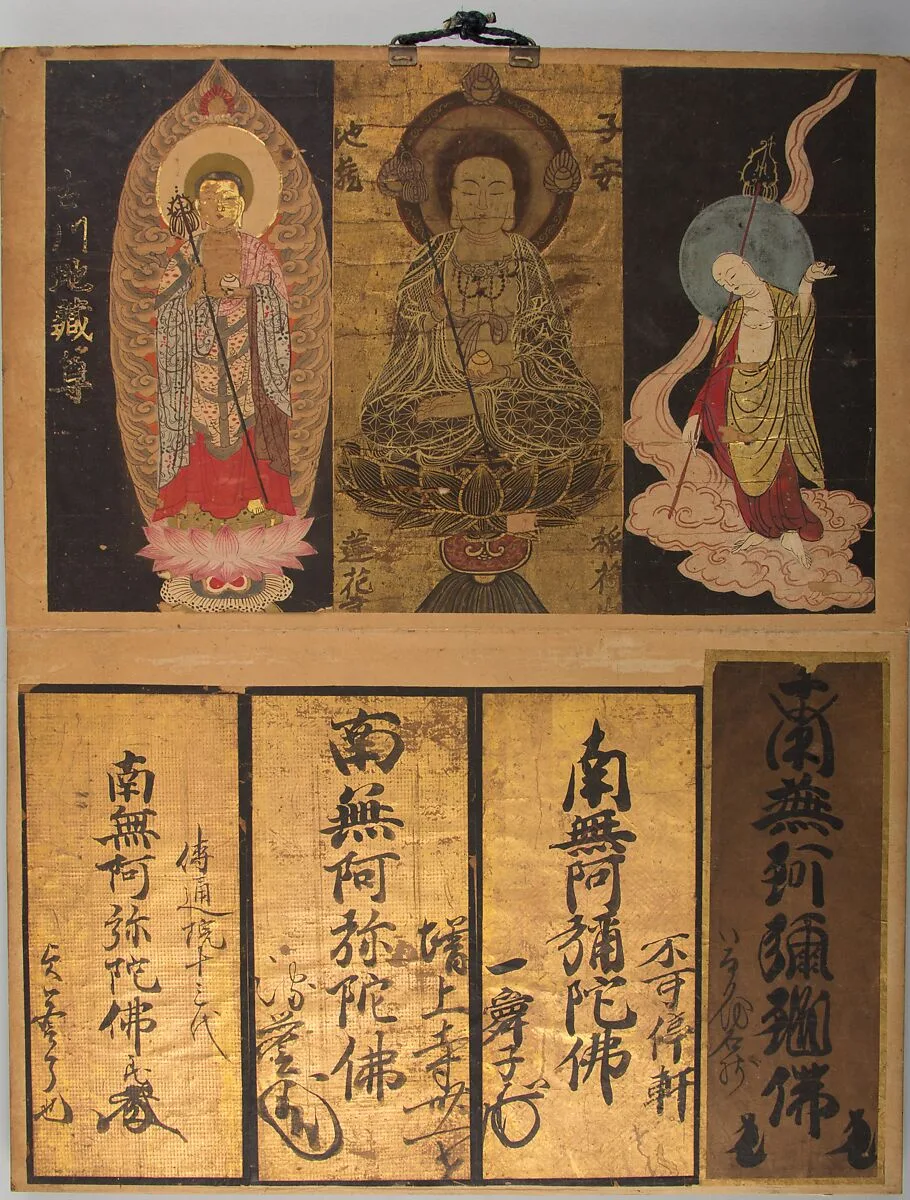
An adherent of the Pure Land School of Buddhism compiled the content of these albums—slips of paper brushed with the name of the Buddha Amida (Sanskrit: Amitābha)—on temple visits. The signed and sealed slips indicate that most of the calligraphers were abbots of Pure Land temples in the greater Edo (Tokyo) area. The albums also have paintings of Amida, as well as Shandao, an influential Tang dynasty (618–907) monk; Hōnen, the founder of the Pure Land School in Japan; and a youthful Shinran, the founder of the True Pure Land School. A portrait of the monk Yūten Kenyo (1637–1718), who served as the thirty-sixth abbot of the Edo temple Zōjōji, appears on the right-hand side of a page of one album. Yūten was born in the south of what is now Fukushima Prefecture, and entered Zōjōji as a novice at the age of twelve. He struggled in the academic environment there and left, but later, a dream encounter with the deity Fudō Myōo (Sanskrit: Achala Vidyārāja) is said to have led to a personal transformation, following which he became famous for his ability to ensure birth in the Pure Land for those afflicted by tormented human spirits (onryō). One from a set (94.18.2–.5)
- Artist
- Unknown
- Date
- 18th century
- Medium
- One from a set of four albums; calligraphy on gilt paper and paper, paintings in ink, color, and gold on paper, mounted on paper, covers of silk embroidery with colored and metallic thread
- Culture
- Japan
- Department
- Asian Art
- Credit line
- Gift of Mary L. Cassilly, 1894