Untitled
Unknown
18th century · Cotton (painted resist and mordant, dyed) · Asian Art
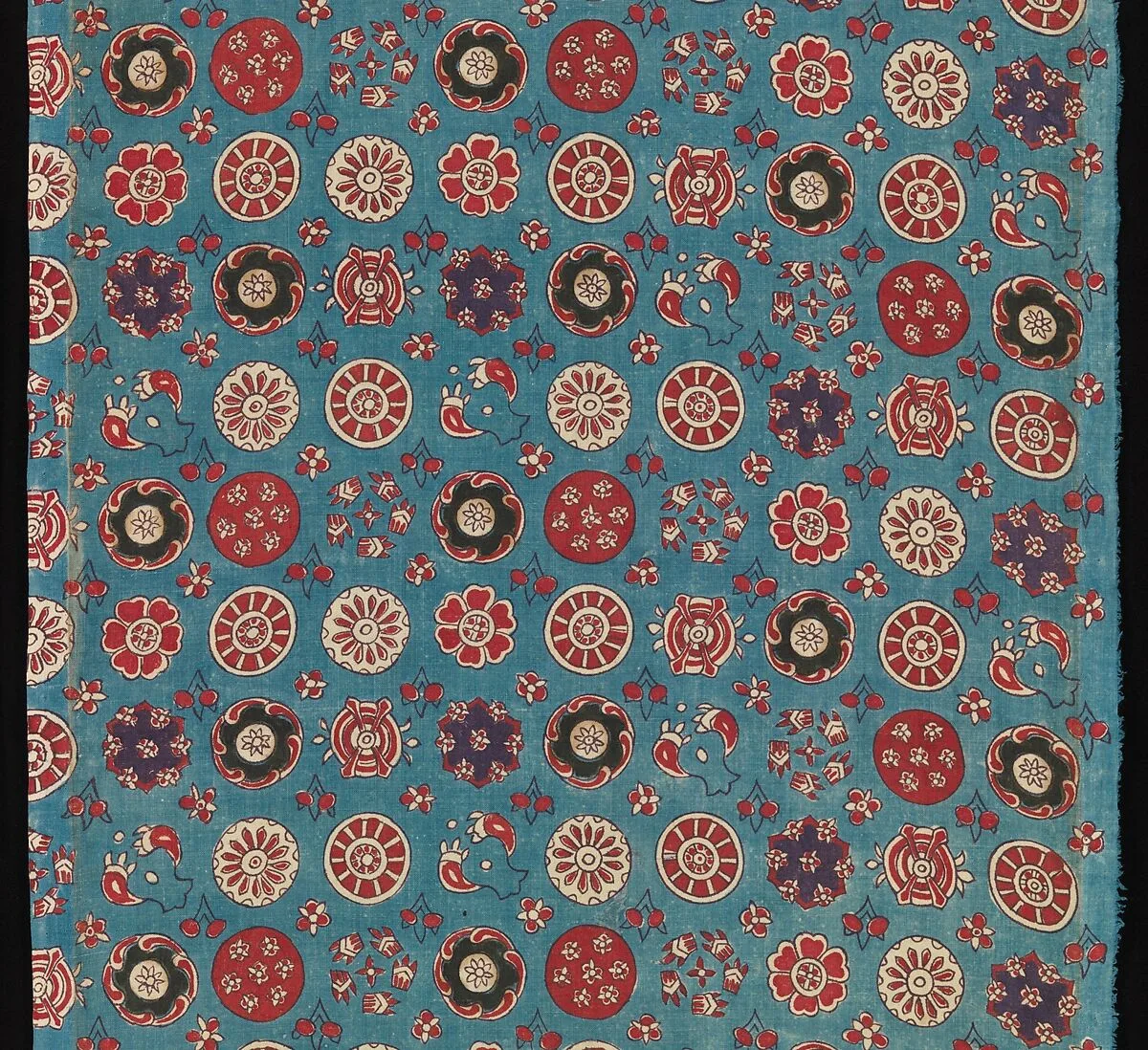
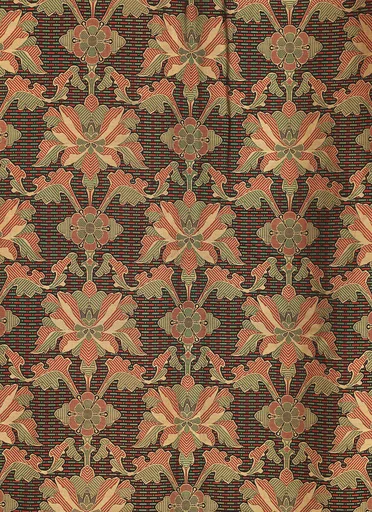
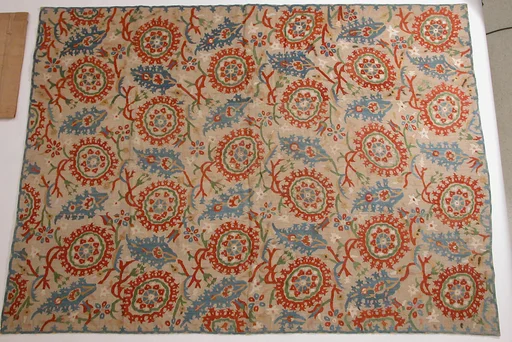
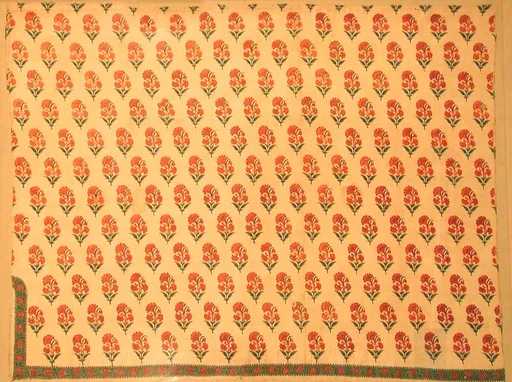
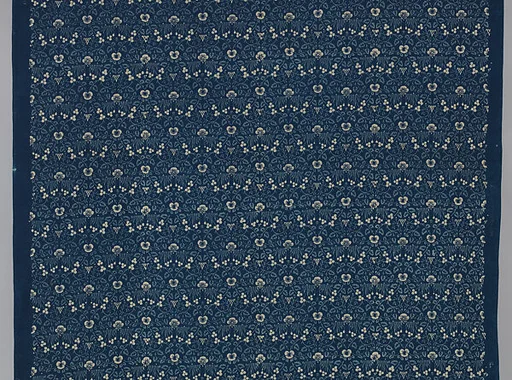
The exceptional length of this cloth—more than seven feet—suggests its possible use as part of a waistband (obi). Indian sarasa was particularly popular in the Edo period (1615–1868) for obi and robe (kosode) linings. Although the fabric was made in India, the repeating pattern of regularly spaced rosettes and roundels was based on Japanese sources. The motifs evoke Japanese Buddhist iconography—the lotus and the wheel—as well as the traditional chrysanthemum. This type of design is present in late eighteenth-century Japanese sarasa manuals published in Edo and Kyoto. These manuals, with color directives that encouraged Japanese textile printers to copy the Indian designs, confirm that sarasa were widely circulated even before such publications appeared. cat. no. 34
- Artist
- Unknown
- Date
- 18th century
- Medium
- Cotton (painted resist and mordant, dyed)
- Culture
- India (Coromandel Coast), for the Japanese market
- Department
- Asian Art
- Credit line
- Purchase, Friends of Asian Art Gifts, 2010