Untitled
Unknown
first half of the 18th century · Cotton (painted mordant, dyed) with applied gold leaf · Asian Art
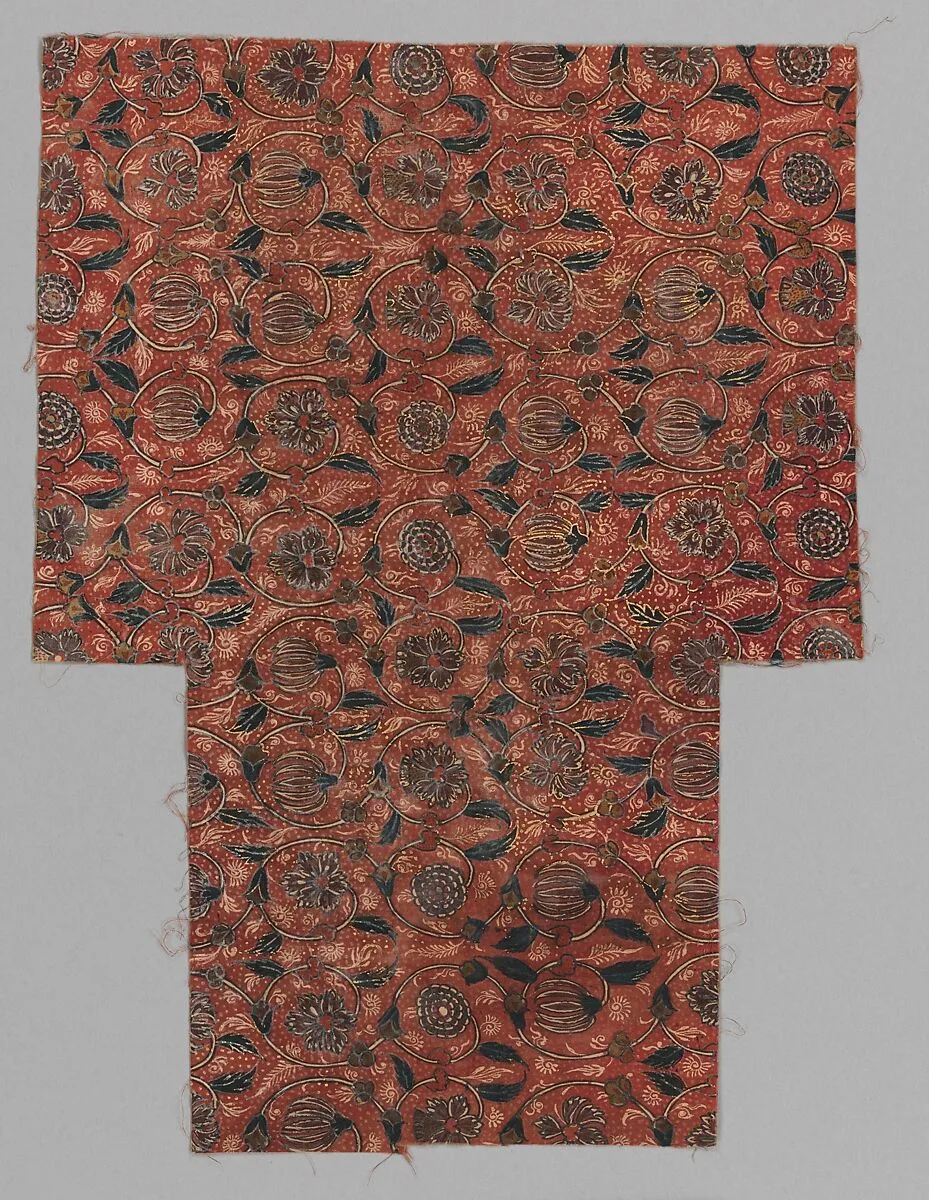
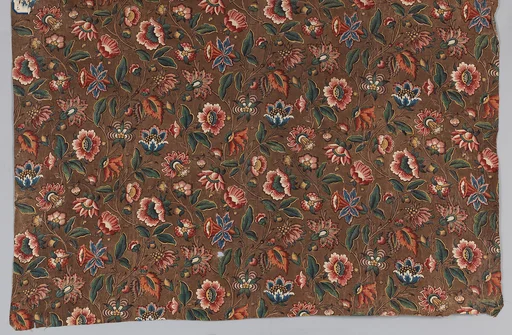
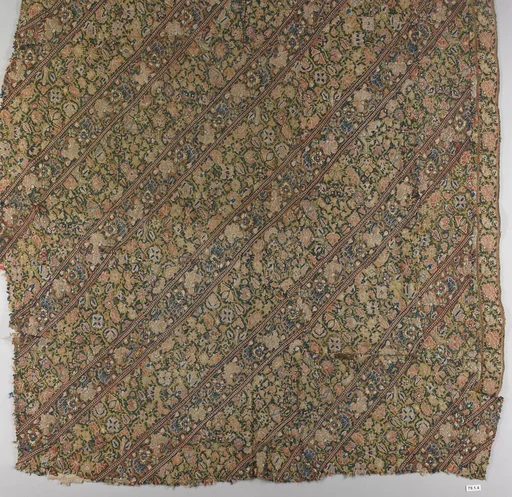
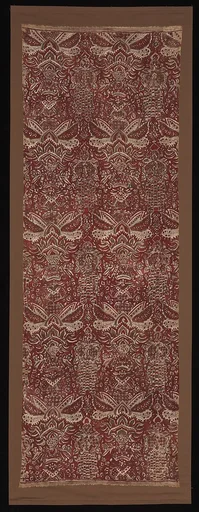
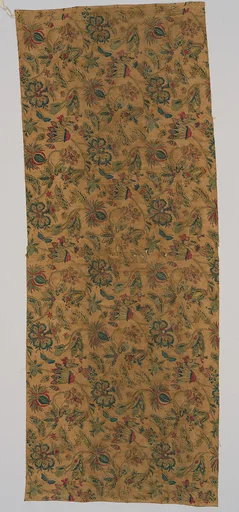
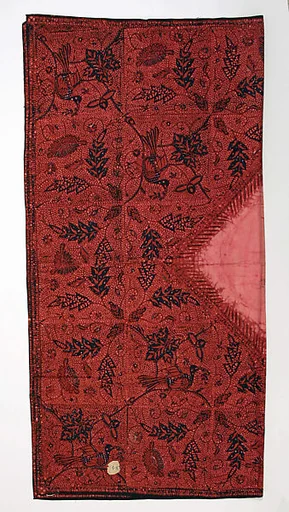
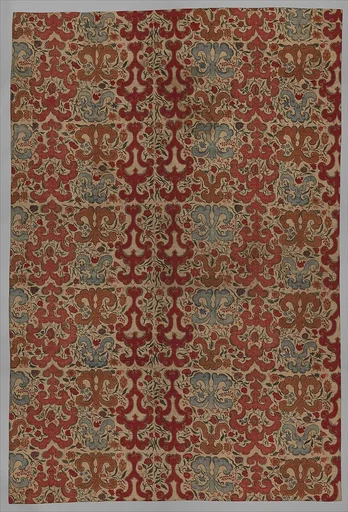
Indian painted and dyed cotton textiles, called sarasa in Japan, were treasured by their Japanese owners. This example relates to contemporary Indian embroideries, which were in turn partly inspired by earlier English embroideries such as the coif (cat. no. 12). The design features a scrolling vine-and-floral pattern (see also cat. no. 11) that has been embellished with delicately applied gold leaf. In the late Edo period (1615–1868), fragments of such cloths were routinely mounted in sample books known as meibutsugire (“famed fabrics”). Others were tailored into precious wrappers for tea-ceremony containers, display mats, tobacco pouches, and scroll-box covers. cat. no. 13
- Artist
- Unknown
- Date
- first half of the 18th century
- Medium
- Cotton (painted mordant, dyed) with applied gold leaf
- Culture
- India for the Japanese market
- Department
- Asian Art
- Credit line
- Funds from various donors, by exchange, 2010