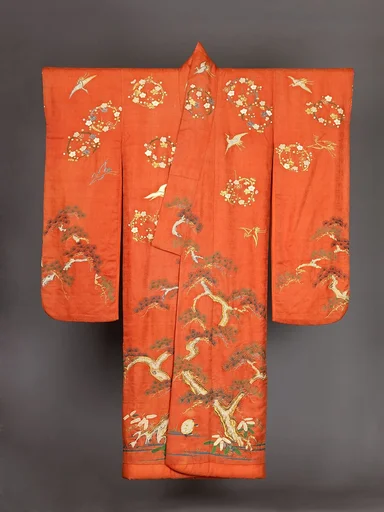
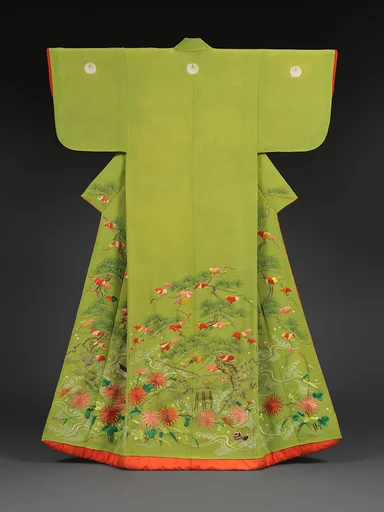
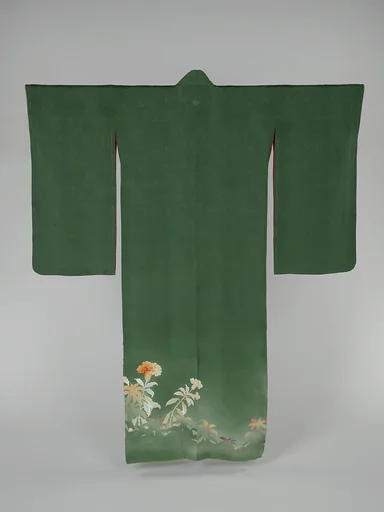
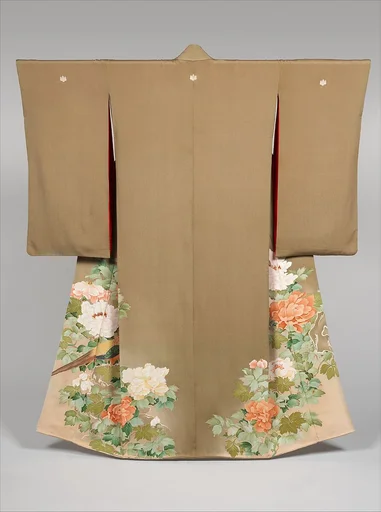
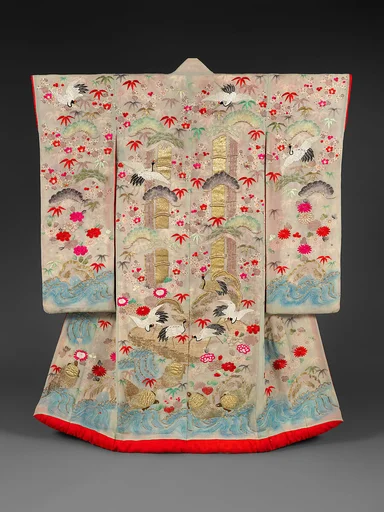
赤緞子地牡丹梅蝶々打掛|Outer Robe (Uchikake) with Peonies, Plum Blossoms, and Butterflies
Unknown
late 18th–early 19th century · Silk damask embroidered with silk and metallic thread · Asian Art
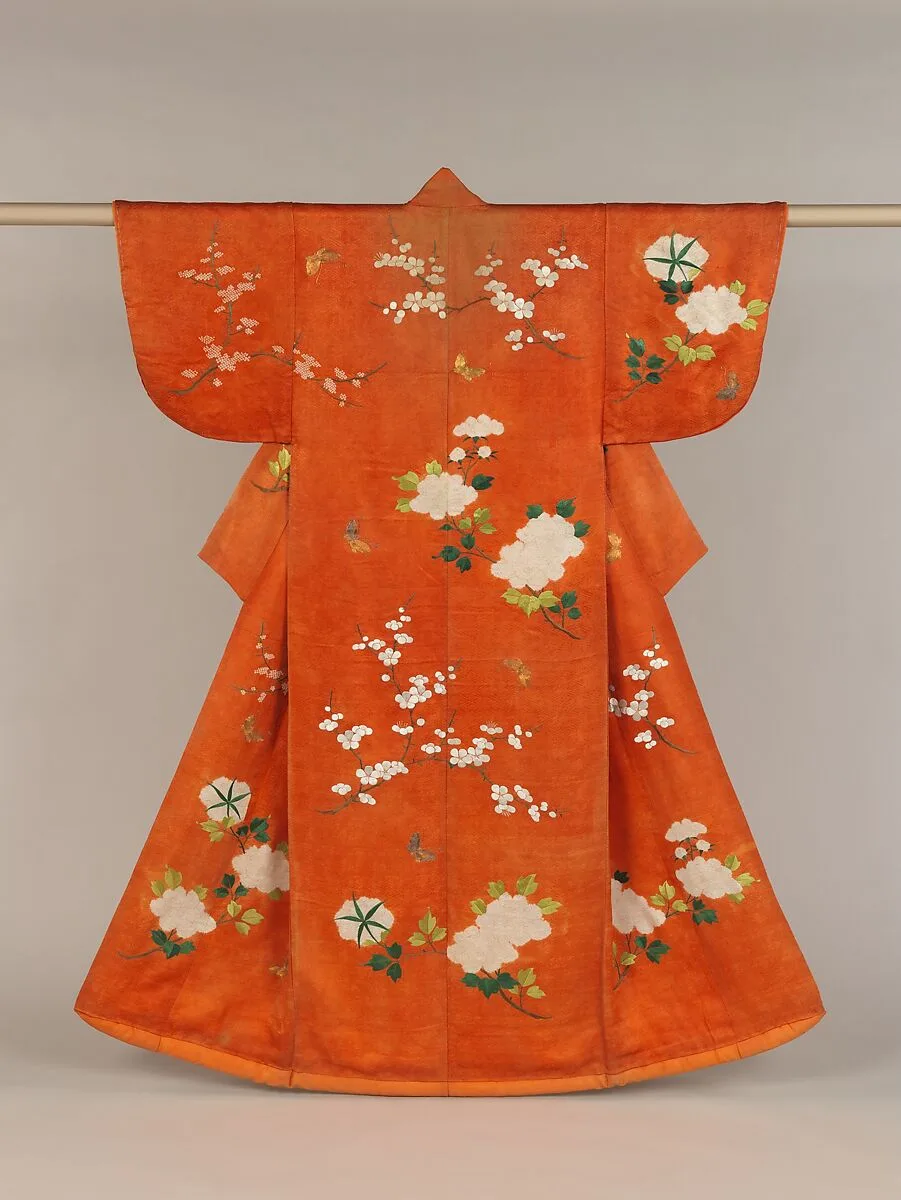
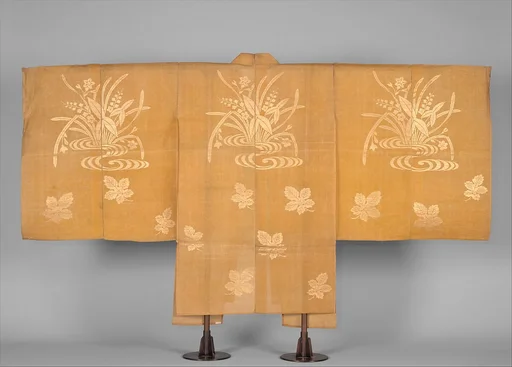
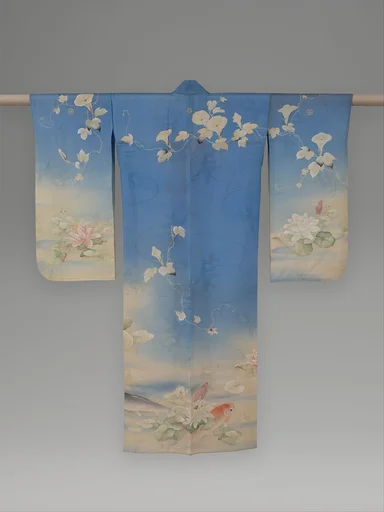
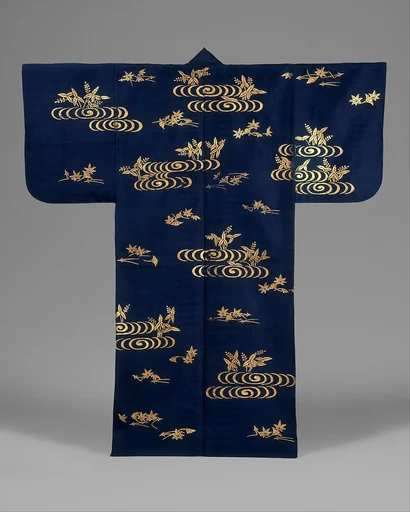
The uchikake is a lined silk robe with a wadded or padded hem, worn over another garment without a sash, usually for formal occasions or stage performances. The origins of the use of this garment among women of the samurai elite can be traced back to the Kamakura period (1185–1333). In the early Muromachi period (1392–1573) it was worn from early May to early September; from the end of the Muromachi period it was part of formal winter attire and made of thick materials. Starting in the mid-Edo period, it was constructed with white, black, and red figured satin and often fully embroidered with multicolored threads and gold. The uchikake is still worn over a kimono in the traditional wedding ceremony. This example is embellished with auspicious symbols, such as peonies—king of flowers, the first blossom of the spring—plum blossoms, and butterflies, which represent joy and longevity as well as marital happiness.
- Artist
- Unknown
- Date
- late 18th–early 19th century
- Medium
- Silk damask embroidered with silk and metallic thread
- Culture
- Japan
- Department
- Asian Art
- Credit line
- Purchase, Friends of Asian Art Gifts, 2008