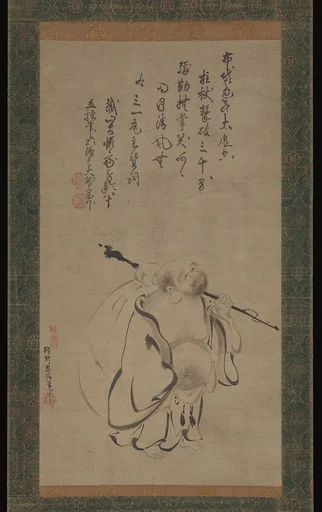
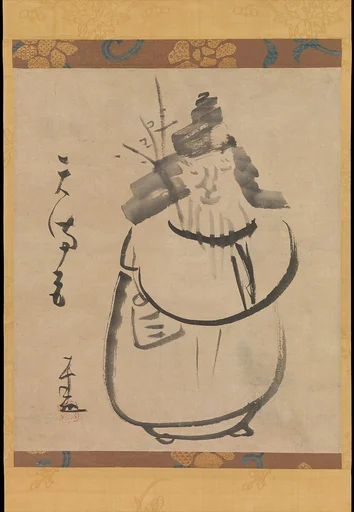
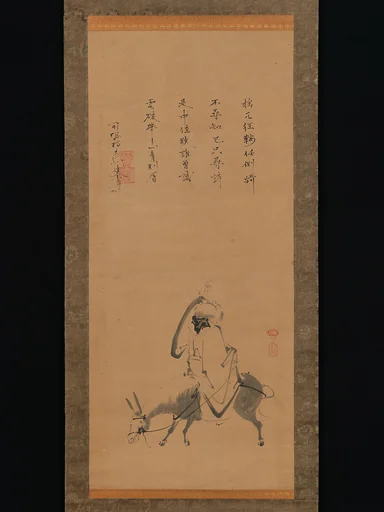
芦葉達磨図 (Royō Daruma zu)|Bodhidharma Crossing the Yangzi River on a Reed
Kano Genshun 狩野元俊|Gyokushitsu Sōhaku
before 1641 · Hanging scroll; ink on paper · Asian Art
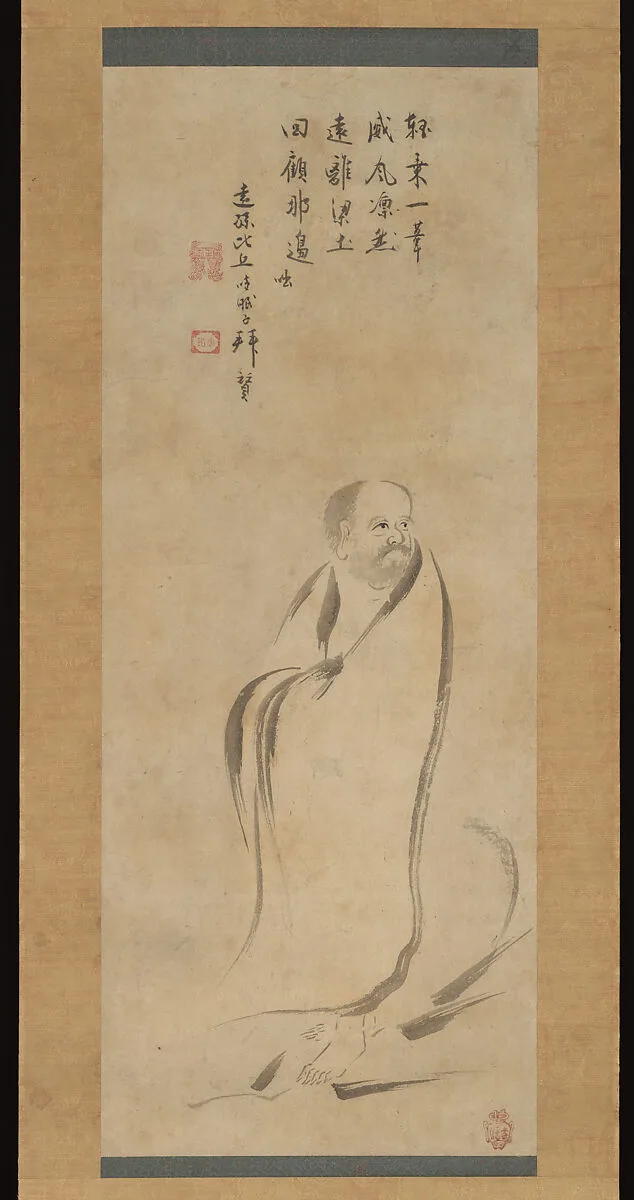
Bodhidharma (Japanese: Daruma) was a sixth-century Indian sage who is credited with transmitting Zen Buddhist teachings to China. After an unsuccessful encounter with the Chinese Liang-dynasty Emperor Wu, Bodhidharma is said to have sailed up the Yangzi River on a single reed to continue his journey to promote Zen. Executed in an abbreviated style using only a few long, flowing strokes to define the sage’s robes, this work reflects an ink-painting style that was introduced from China in the late Kamakura period (1185–1333). The colophon above the figure, composed and inscribed by the noted Zen monk Gyokushitsu Sōhaku, reads: Lightly sailing on a single reed, He is majestic and commanding. Far from Liang territory, Ah, what does he recall? Although this painting was previously attributed to the Momoyama-period artist Kano Sōshū (1551–1601), a reevaluation of the seal impressed at lower right has revealed the artist to be Kano Genshun (also called Hayato), a Kano painter of the early Edo period and first head of the minor Yamashita Kano studio.
- Artist
- Kano Genshun 狩野元俊|Gyokushitsu Sōhaku
- Date
- before 1641
- Medium
- Hanging scroll; ink on paper
- Culture
- Japan
- Department
- Asian Art
- Credit line
- Purchase, Friends of Asian Art Gifts, 2007